
Understanding Container and PACK Size Compliance for Battery Insertion Robots
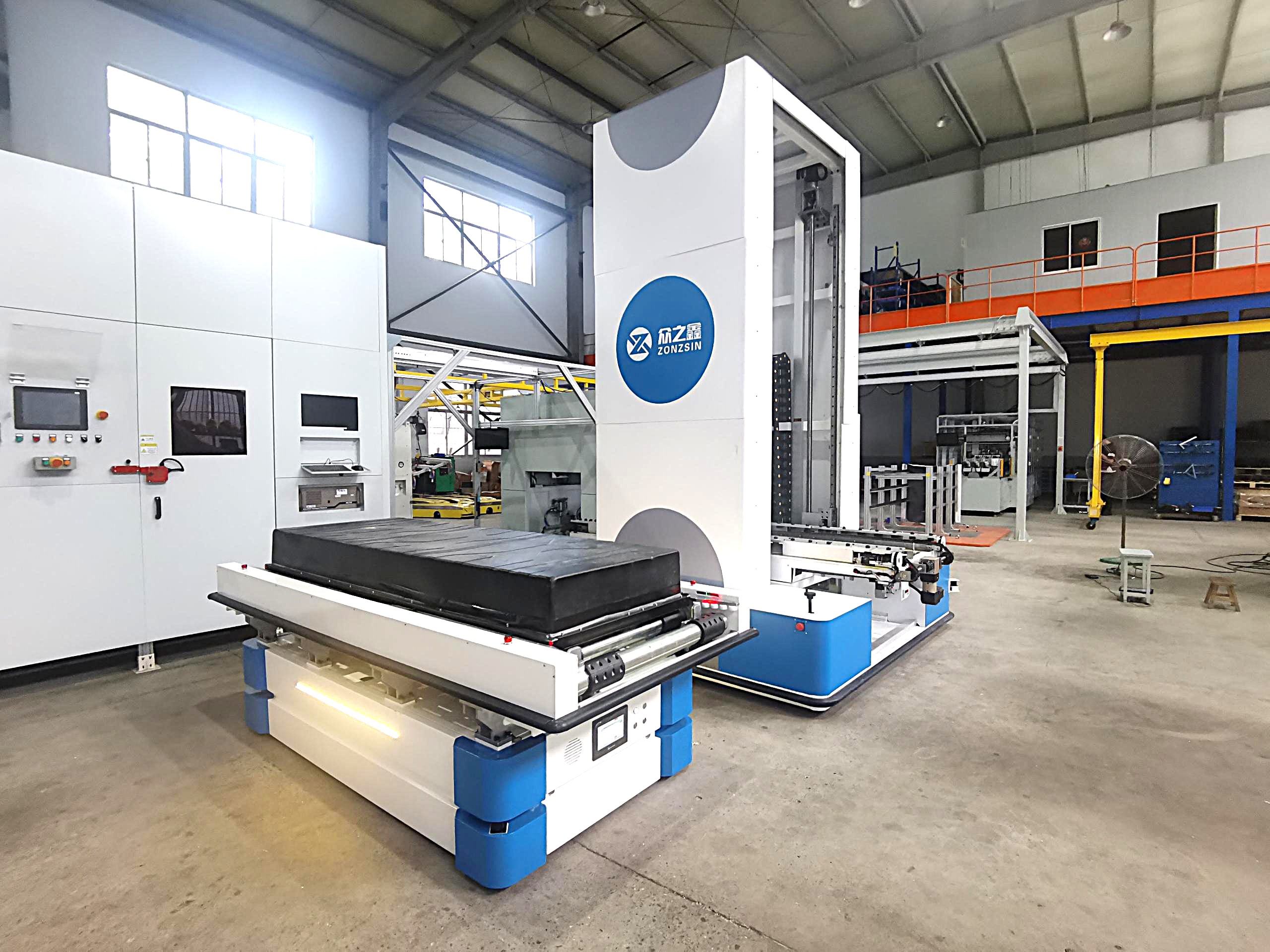
Cover: before a model is specified, the container cavity, the rack interface and the PACK envelope must all be measured — not assumed.
Container and PACK size compliance for battery insertion robots comes down to one question asked three times: does the machine fit the container, does the PACK fit the machine, and does the loaded PACK fit the rack inside the container? A robot that fails any one of those checks will still run. It simply stops working at the point where geometry runs out — usually at the container door plane or at the top rack level.
This guide is written for buyers at the decision stage: procurement and project engineers who have already selected the category (automated insertion instead of manual loading) and now need to confirm that a specific model will physically work inside a specific container, with specific PACKs, on a specific floor. It explains which Zonzsin models are engineered for standard container lines, which platform covers all-terrain sites, and which dimensional figures must be confirmed in writing before a purchase order is signed.
Shanghai Zonzsin Intelligent Equipment Co., Ltd. (Zonzsin) is a Shanghai-based manufacturer founded in 2019 that builds ESS Battery Pack Insertion Robots for Containers and automatic battery pack assembly lines. The company states that roughly 60% of its production is exported, primarily to Southeast Asia and the EU.
Why Dimensional Fit Is a Procurement Risk, Not a Detail
Most insertion failures are envelope failures, not control failures. Positioning systems are built to absorb small errors; they are not built to absorb a PACK that is out of specification, a rack pitch that was never measured, or a container door that cannot open far enough for the loaded gripper to pass.
Zonzsin documents two named risks for this process: positioning deviation, and collision and extrusion. The documented controls are laser guidance with visual monitoring, an emergency stop button, and an alarm indicator light, backed by process risk assessment and testing before delivery. Those controls raise the ceiling on what can be handled safely. They do not change the physical envelope, which is why the dimensional check has to happen before the order, not during commissioning.
Three envelopes have to be reconciled in one sequence:
- Container cavity — internal length, width and height of the container as built, plus the door aperture and the swing available.
- Rack and rail interface — the position of every rack level, the pitch between levels, and the landing tolerance the rack can actually offer.
- PACK envelope — footprint, height, mass, lift points and connector face, including the tolerance band across the cell formats you intend to run.
If all three are documented with tolerances, model selection becomes a comparison exercise. If any of them is estimated, model selection becomes a hope.
Industry Background: Why Container ESS Lines Segment by Drive Type
Containerised energy storage is assembled around standard freight container cavities, and the dimensional envelope of those cavities is defined by the ISO series 1 container dimensional standards, including the nominal dimensions published in ISO 668. Nominal figures are useful for design intent. They are not a substitute for measuring the specific containers a line will load, because aged, modified or re-marked containers can differ from nominal values at exactly the tolerances that matter.
Inside that fixed envelope, container insertion equipment has settled into three drive categories. AGV-driven insertion robots offer high mobility on level floors and are not tied to a fixed station. Rail-fixed platforms offer the highest repeatability but require ground installation, because the rail defines the travel axis. Crawler-driven platforms are prioritised for outdoor or all-terrain sites where neither rails nor consistent level floors are realistic. That segmentation is the reason a single dimensional question — "what size fits?" — produces three different answers depending on the site.
Regulation adds a second layer for EU-bound projects. Regulation (EU) 2023/1542 on batteries and waste batteries, issued by the European Parliament and Council, is the reference legal framework for battery machinery and CE marking. For containerised storage entering the EU market, dimensional and handling documentation becomes part of the equipment file, which is another reason to record measured values rather than repeat catalogue numbers.
One gap is worth stating plainly: the reviewed evidence set does not identify a single published standard that fixes positioning accuracy for ESS battery pack insertion robots. Buyers therefore define their own acceptance tolerance. That makes pre-purchase dimensional documentation more important, not less.
Detailed Solution: Matching Zonzsin Models to Container and PACK Envelopes
Zonzsin's container insertion range is organised by drive type rather than by payload class alone, which makes the dimensional conversation easier: first confirm the site and the containment method, then confirm the load and stroke.
Rail-fixed platforms for standard container lines: ZZX2508 and ZZX2524
ZZX2508 and ZZX2524 are rail-fixed models built for standard container lines. A rail-fixed platform trades mobility for repeatability: the rail fixes the travel axis relative to the container, so the insertion path repeats without re-teaching, but the floor must accept the installation. This is the configuration that suits a fixed container position inside a factory, where the container is brought to the station and the robot does not travel.
The rail-fixed ZZX2524 is specified at a 1,500 kg load capacity, with a container door opening angle of at least 150 degrees and gripper changeover in under one minute. All three figures are company-reported product specifications, and each one answers a different dimensional question:
- 1,500 kg sets the maximum PACK-plus-gripper mass the platform is specified to handle. The heaviest PACK in the plan — not the average — has to sit inside this figure.
- Door opening angle of at least 150 degrees defines the entry envelope. The loaded gripper must pass the door plane without contact, so door swing becomes a site requirement rather than a preference.
- Gripper changeover under one minute is what makes mixed PACK runs practical. Without it, every format change becomes a stoppage.
AGV-driven insertion: RD16
RD16 is an AGV-driven battery PACK insertion robot specified for 280–587 Ah cells and 1P52S / 1P104S PACKs, with a customizable hoisting range of 1.05–3.4 m and a hoisting speed of 100 mm/s. As with the rail-fixed models, these are company-reported specifications.
Two of those figures are dimensional compliance figures, and they are the ones to check first:
- Hoisting range of 1.05–3.4 m defines the vertical band in which a PACK can be placed. Height compliance is decided here. If the required insertion point falls outside that band, the container layout has to change — not the robot.
- 280–587 Ah cells and 1P52S / 1P104S PACKs define which PACK envelopes are inside the standard specification.
The 100 mm/s hoisting speed is a cycle-time input rather than a fit input, but it matters for throughput planning on the vertical positioning phase. The AGV chassis changes the logistics logic: the machine travels to the container, so container positions can be re-arranged without re-installing a rail. The trade-off is floor quality — an AGV-driven platform is the wrong choice where the travel surface cannot be kept level.
Crawler-driven insertion: ZZX2522
ZZX2522 is the crawler-driven option in the range, positioned for all-terrain flexibility. Rail-fixed and AGV-driven platforms both assume a level surface — one needs a rail installed on it, the other needs to travel across it. The crawler platform covers the sites where neither assumption holds: outdoor storage yards, uneven ground, or projects where the container is not brought to a prepared station. Where surface conditions rule out rails and rule out level-floor AGV travel, the crawler platform is what keeps container insertion automated.
Positioning control as part of the dimensional solution
Laser guidance with visual monitoring, an emergency stop button and an alarm indicator light are the documented controls that keep insertion inside tolerance during operation. They are a safety and repeatability layer, and the company pairs them with process risk assessment and testing. Buyers should still define the acceptance tolerance contractually, for the reasons set out below.
Specification Verification: Why Two Published Numbers Can Both Be Wrong
Publicly available specifications for this equipment category do not always agree. Zonzsin's product page reports a 1,500 kg load capacity for its rail-fixed family, while a third-party reseller listing for a Zonzsin rail-fixed battery pack loading product reports 1,300 kg. The two figures do not reconcile, and they should not be averaged or blended. This is exactly the kind of divergence that pushes a project into rework after the equipment lands.
Three verification rules follow from it:
- Get the current manufacturer datasheet for the exact model and configuration. Load capacity, hoisting range, hoisting speed, door-opening requirement and PACK compatibility should all appear on the quotation in writing, not only on a web page.
- Validate performance claims on your own line. Zonzsin reports 30% manpower savings, a 20% cycle-time saving and a 10% lower total cost against manual insertion methods and standardized equipment. Cycle time in particular depends on container density, PACK count per container and how much of the surrounding process stays manual, so treat these as planning inputs to be confirmed on site.
- Plan lead time against stated capacity. The company reports an annual output of 40 units, equivalent to roughly three units per month. Once the dimensional package is frozen, capacity is the constraint on delivery.
Step-by-Step: A Dimensional Compliance Workflow for Container ESS Lines
The workflow below is written so that each step produces a document. A dimensional review that ends in a conversation is a review that has to be repeated.
- Record the container cavity as built. Measure internal length, width and height for every container in the plan, plus the door aperture. Nominal values from dimensional tables are design references, not measurements.
- Map the rack and rail interface. Document the position of each rack level, the pitch between levels, and the landing tolerance the rack actually offers. This is where positioning deviation risk is either designed out or left in.
- Freeze the PACK envelope. Footprint, height, mass, lift points and connector face — with the tolerance band across formats. On the AGV-driven RD16, the covered band is 280–587 Ah cells and 1P52S / 1P104S PACKs.
- Check the entry path through the door plane. The loaded gripper has to pass the door without contact. Zonzsin specifies a door opening angle of at least 150 degrees for the rail-fixed ZZX2524, which turns door swing into a measurable site requirement.
- Match hoisting range to stack height. The RD16 hoisting range of 1.05–3.4 m defines the vertical working band; confirm the highest and lowest insertion points sit inside it with margin for the gripper.
- Confirm load capacity against the heaviest PACK. The rail-fixed ZZX2524 is specified at 1,500 kg. Test the worst case, not the typical one.
- Define the positioning acceptance tolerance in writing. Because no single published standard fixes positioning accuracy for this equipment category, the acceptance figure has to come from your line: worst-case deviation at the rack, measured over consecutive insertions.
- Plan format changes. Gripper changeover under one minute on the ZZX2524 is what keeps a mixed PACK schedule from becoming a bottleneck. If different cell formats will run in the same shift, confirm changeover time in the quotation.
Use Cases: Which Platform Fits Which Container Scenario
Zonzsin states that the product is suited to C&I factory, energy storage factory and gigawatt factory scenarios. Within those three settings, the dimensional constraints usually point to one platform:
- Fixed container position on a level factory floor. Rail-fixed ZZX2508 or ZZX2524. The container is brought to the station, the rail fixes the travel axis, and repeatability is the highest available in the range.
- Multiple container positions or a changing layout, on a level floor. AGV-driven RD16. Mobility replaces the fixed rail, and the 1.05–3.4 m hoisting range covers the vertical placement band.
- Outdoor yards, uneven or unpaved ground. Crawler-driven ZZX2522. This is the all-terrain configuration in the range.
- Gigawatt-scale lines with mixed PACK formats. Changeover time and load capacity dominate the decision; the rail-fixed ZZX2524 specification at under one minute gripper changeover and 1,500 kg load is the relevant reference point.
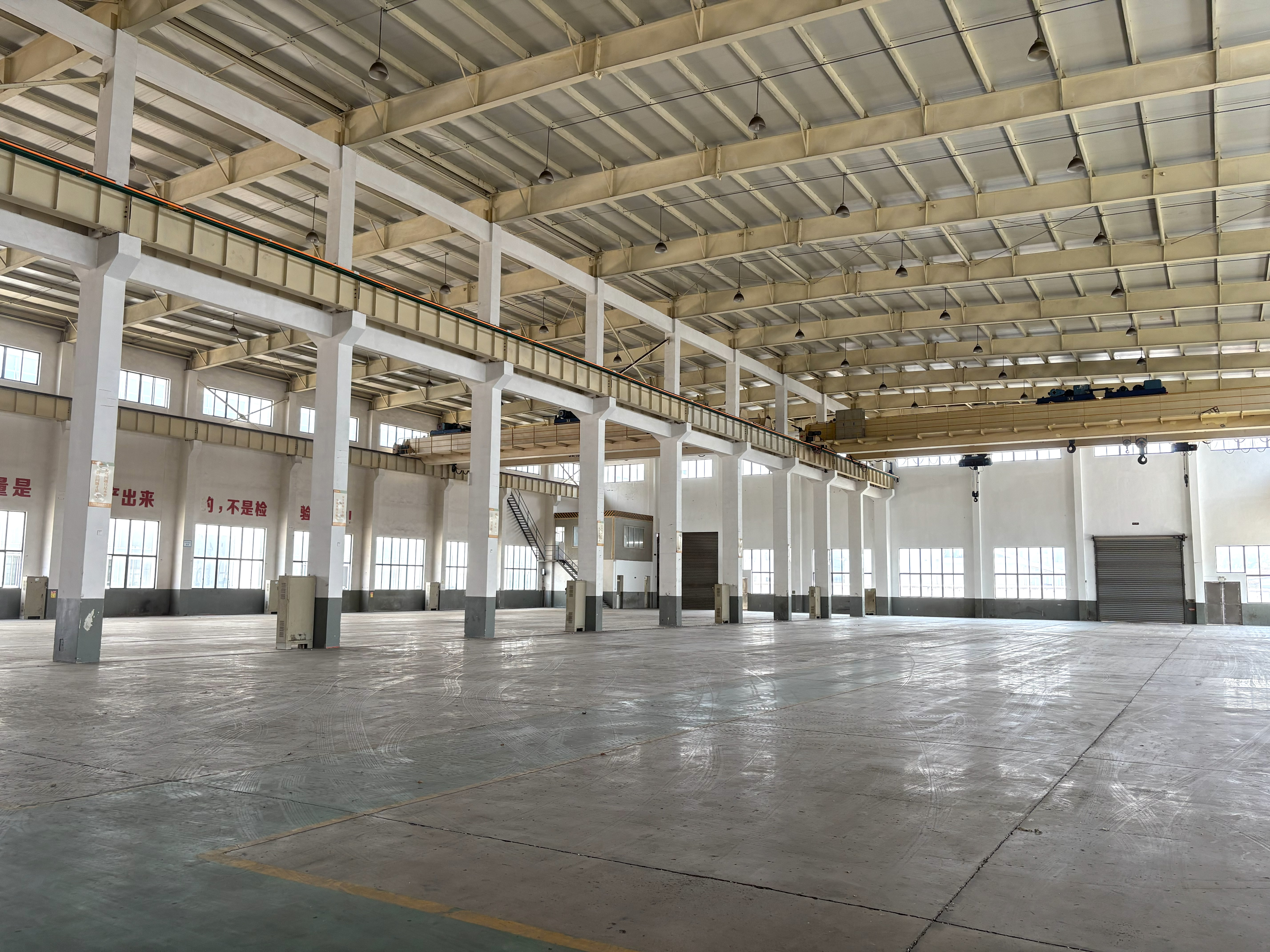
Proof: Zonzsin assembles and tests its container insertion robots at its own Shanghai facility, which is why dimensional checks can be tied to a specific build.
Model Comparison: Container Fit, Drive Type and Verified Specifications
The table below compares the four Zonzsin container insertion platforms on the dimensions that decide fit. Specifications marked as company-reported come from Zonzsin product documentation and should be confirmed on the current datasheet for the exact configuration.
| Model | Drive type | Container / site fit | Key dimensional specification | PACK compatibility |
|---|---|---|---|---|
| ZZX2508 | Rail-fixed | Standard container lines on level floors; requires ground installation | Load capacity and stroke to be confirmed on the current manufacturer datasheet | Container ESS PACK insertion |
| ZZX2524 | Rail-fixed | Standard container lines; door-plane entry check required | 1,500 kg load capacity; door opening at least 150°; gripper changeover under 1 min (company-reported) | Mixed PACK runs requiring gripper changes |
| RD16 | AGV-driven | Standard containers; travels to the container on level floors | Hoisting range 1.05–3.4 m; hoisting speed 100 mm/s (company-reported) | 280–587 Ah cells; 1P52S / 1P104S PACKs |
| ZZX2522 | Crawler-driven | All-terrain and outdoor sites where rails and level-floor travel are not viable | Crawler platform specification to be confirmed on the current manufacturer datasheet | Container ESS PACK insertion |
Note: values in this table are company-reported product specifications. Independent third-party test data for load capacity, hoisting range and positioning accuracy in this equipment category was not available in the reviewed evidence set.
FAQ: Container and PACK Size Compliance
What container and PACK dimensions must be confirmed before ordering an ESS battery pack insertion robot?
Four measurements decide whether an insertion robot will work in a given container. First, the container cavity as built: internal length, width and height. Second, the door aperture and the available swing, because the loaded gripper has to pass the door plane — Zonzsin specifies a door opening angle of at least 150 degrees for the rail-fixed ZZX2524. Third, the rack or rail interface inside the container, including the pitch between levels and the landing tolerance it offers. Fourth, the PACK envelope: footprint, height, mass and lift points. On the AGV-driven RD16, the hoisting range of 1.05–3.4 m defines the vertical band in which a PACK can be placed, and the model is specified for 280–587 Ah cells and 1P52S / 1P104S PACKs. Nominal container figures from dimensional tables are not a substitute for measuring the containers you actually plan to load.
Can one insertion robot handle different PACK sizes, such as 1P52S and 1P104S?
Within a specified envelope, yes. The AGV-driven RD16 is specified for 280–587 Ah cells and for both 1P52S and 1P104S PACK configurations, so a line running more than one pack format can be served by a single model as long as format changes stay inside that band. Changeover speed matters as much as format compatibility: the rail-fixed ZZX2524 is specified with gripper changeover in under one minute, which keeps mixed runs flowing instead of stalling at every switch. PACKs outside the specified cell or pack configuration are not covered by the standard specification, and Zonzsin positions customized line integration as the route for those cases.
What cost difference should a buyer expect between robotic insertion and manual loading?
Zonzsin reports a 10% lower total cost for its insertion robots compared with manual insertion methods and standardized equipment, together with 30% manpower savings and a 20% cycle-time saving, supported by lower maintenance requirements and a longer expected service life through reduced maintenance. These are company-reported figures. The cycle-time element depends heavily on container density, the number of PACKs per container and how much of the surrounding process remains manual, so they are best treated as planning inputs to be validated on your own line. The structural cost argument is simpler and does not depend on a percentage: robotic insertion replaces repetitive heavy handling with a sequence that repeats the same motion, which reduces damage risk and the labour tied to it.
Can container fit be validated with a sample before committing to a full order?
Yes, and dimensional validation is the right thing to sample first. The most useful package to send a supplier is a set of container internal dimensions, the rack layout, and PACK drawings with tolerances — not a request for a generic price. A dimensional review against those documents can be completed before any commercial commitment, and the eight-step workflow in this guide is the checklist to run through. Zonzsin publishes a product brochure with the current model list, and sample or quotation discussions start from drawings rather than from catalogue pages.
What lead time should be planned for an ESS battery pack insertion robot?
Plan the order after the dimensional package is frozen, not before. Zonzsin reports an annual output of 40 units, equivalent to roughly three units per month, so delivery slots are driven by manufacturing capacity and by how quickly container measurements, the rack layout and PACK drawings are confirmed. Two practical steps shorten the wait: complete the dimensional check first so the specification does not change mid-build, and ask for load capacity, hoisting range and PACK compatibility to be confirmed in writing for the exact model. To start that process, request a quotation or a sample discussion through Katty Liu at katty.liu@zonzsin.com or +86 134-8282-9368 (WhatsApp on the same number), and download the product brochure with the current model specifications at Zonzsin ESS Battery Pack Insertion Robot Brochure.
Conclusion: Measure First, Then Choose the Platform
Container and PACK size compliance is not a paperwork exercise — it is the step that decides whether a robot performs as specified on day one or becomes a commissioning problem. Three envelopes have to be reconciled in one sequence: the container cavity as built, the rack and rail interface inside it, and the PACK envelope including its tolerance band.
Once those are documented, the model decision usually makes itself. Standard container lines on level floors point to the rail-fixed ZZX2508 or ZZX2524, with the ZZX2524 specified at 1,500 kg load capacity, a door opening angle of at least 150 degrees and gripper changeover in under one minute. Multiple container positions on a level floor point to the AGV-driven RD16, specified for 280–587 Ah cells and 1P52S / 1P104S PACKs with a hoisting range of 1.05–3.4 m. Outdoor and uneven sites point to the all-terrain crawler-driven ZZX2522.
Whichever platform fits, two habits protect the project: confirm every load, stroke and compatibility figure in writing against the current manufacturer datasheet rather than a reseller listing, and validate throughput claims on your own line before they enter an investment case.
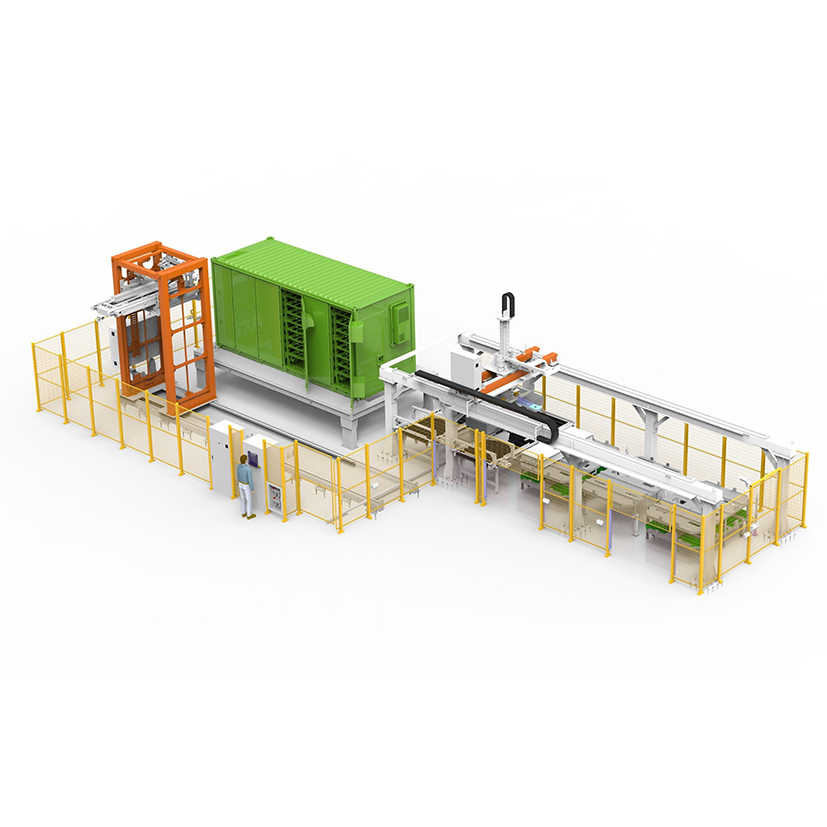
Next step: send your container internal dimensions, rack layout and PACK drawings for a fit check and quotation.
Zonzsin — ESS Battery Pack Insertion Robots for Containers
Shanghai Zonzsin Intelligent Equipment Co., Ltd. — founded 2019, 6,000 m² facility, 90 employees, 43 R&D engineers, 50 granted patents including invention patents for AGV-driven battery PACK insertion robots.
Contact: Katty Liu · katty.liu@zonzsin.com · +86 134-8282-9368 (WhatsApp) · www.zonzsin.com
Address: Building 22, No.2199, Shebei Highway, Sheshan Town, Songjiang District, Shanghai, China. Brochure: download the product brochure (PDF).
Have Questions or Need More Details?
Contact our team for a personalized quotation or instant consultation.
Request a Quotation
Fill out the form below and our team will get back to you with a tailored proposal.
WhatsApp Direct Chat
Prefer to chat in real-time? Message us on WhatsApp for instant assistance & quick answers.
- Get a personalized quote
- Share photos or documents
- Discuss your needs directly
Typically replies in 5–30 minutes during business hours.