
ISO 9001 and GB/T19001-2016 Compliance for Battery Pack Assembly Lines: Market Requirements Explained
For an automatic battery pack assembly line sold into the EU or Southeast Asia, the compliance question is rarely “are you certified?” It is: which certificate, issued by which authority, against which standard, covering which scope, valid until when, and applicable to which market. Those answers — not the word “certified” on a brochure — are what decide whether a supplier clears a buyer’s technical and procurement review.
Shanghai Zonzsin Intelligent Equipment Co., Ltd. (Zonzsin) holds a Quality Management Systems Certificate — ISO 9001, certificate number 44825MS079001R0, issued by ZDCB — that applies to its battery PACK assembly line models ZZX2406 and ZZX2313. The certificate complies with GB/T19001-2016 ISO9001:2015, applies to the global market, was issued on 20 November 2025, and is valid until 19 November 2028.
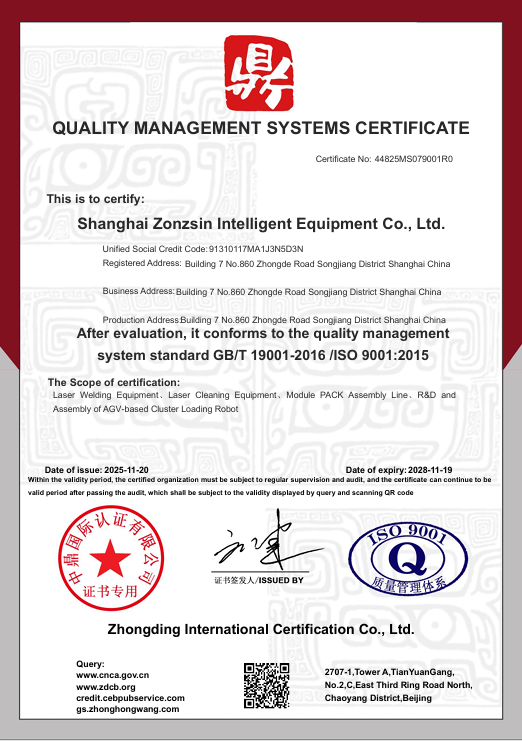
ISO 9001 certificate 44825MS079001R0, issued by ZDCB, complies with GB/T19001-2016 ISO9001:2015 and applies to the global market.
This guide explains how that certificate should be read, what it does and does not prove, which factory-level environmental provisions buyers typically require alongside it, and how to verify the whole package before a purchase order is signed. Zonzsin builds automatic battery PACK assembly lines — including CTP, blade and EV configurations — for battery cell and PACK manufacturers, energy storage integrators, automotive OEMs and EPC contractors, with SEA and EU among its main export markets.
Why Compliance Documentation Decides Battery Pack Assembly Line Shortlists
Compliance evidence functions as a gate, not a score. In most EU and SEA equipment procurements, an assembly line supplier without a traceable quality management certificate is removed from the shortlist before technical scoring begins, because the buyer cannot audit an unverifiable quality system. Conversely, a certificate with a number, an issuing authority, a defined scope and a stated validity period can be checked in minutes.
The confusion is that three different compliance layers carry the same word “certification” in conversation, while meaning very different things in a purchase contract:
- Supplier quality management. ISO 9001 certification of the equipment builder’s quality management system. This is what ZZX2406 and ZZX2313 are certified against.
- Equipment and process compliance. The measurable behaviour of the line itself: welding qualification rate, machine operation rate, electrical supply requirements, ESD protection, fire prevention, temperature and humidity control.
- Finished pack safety. Standards that apply to the battery pack the buyer builds, such as IEC 62133-2 for global market access and UL 1642 / UL 2054 for North America. These attach to the pack, not to the assembly line that produced it.
Buyer rule of thumb: a line supplier’s ISO 9001 certificate answers layer 1. It does not, by itself, answer layer 2 or layer 3. Buyers who treat one certificate as covering all three create a documentation gap that typically surfaces during factory acceptance or after commissioning.
A second practical problem is scope wording. Certificates are issued against a written scope statement, and a scope that describes laser welding equipment and module PACK assembly lines may or may not extend to the exact product family a buyer is purchasing. Reading the scope line by line — rather than assuming “the company is certified” means “every product is covered” — is the single most useful habit in equipment compliance review.
Industry Background: Why Certification Pressure Is Rising in EV and ESS Equipment
Cell-to-pack (CTP) architectures moved from an engineering experiment to a mainstream production standard within roughly three years, and capital equipment procurement moved with it. According to Spherical Insights, the global CTP battery market was valued at USD 18.35 billion in 2023 and is projected to reach USD 75.93 billion by 2033. ResearchInChina data shows CTP technology had reached a 48.6% share of new energy vehicles sold in China by 2023, expanding from 13 models in 2021 to 57 models by late 2023.
On the equipment side, MarketsandMarkets projects the battery manufacturing equipment market to grow at a CAGR of 18.8% between 2025 and 2030, reaching USD 36.94 billion. That growth is being absorbed by line builders who must simultaneously handle a cell-format transition: the industry has moved rapidly from the 280Ah benchmark to 314Ah formats for energy storage packs to improve energy density and reduce assembly costs, a shift documented by Highstar / InfoLink.
Why this matters for compliance: a market expanding at double-digit rates, with a shifting cell standard, pulls new suppliers into EV and ESS equipment qualification. Buyers responding to that flood of new entrants rely on documents — certificate numbers, standards and scope statements — to separate auditable suppliers from unverifiable ones.
Zonzsin is a Shanghai-based builder of automatic battery PACK assembly lines and ESS battery pack insertion robots for containers, founded in 2019. The company operates a 6,000 m² facility with 90 employees, including a 43-engineer R&D team, holds 50 granted patents, exports to a 60% share of its output, and names SEA and EU as its main markets. In a market where new entrants are common, published certification and verifiable in-house engineering capacity are the two documents most often requested by first-time overseas buyers.
Detailed Solution: What Zonzsin’s ISO 9001 Certification Actually Covers
The certificate held by Zonzsin is a Quality Management Systems Certificate against ISO 9001, issued by ZDCB under certificate number 44825MS079001R0. It complies with GB/T19001-2016 ISO9001:2015 and applies to the global market. The certificate is linked to battery PACK assembly line models ZZX2406 and ZZX2313.
| Certificate field | Detail |
|---|---|
| Certification type | Quality Management Systems Certificate |
| Certification | ISO 9001 |
| Certificate number | 44825MS079001R0 |
| Issuing authority | ZDCB |
| Standard | GB/T19001-2016 ISO9001:2015 |
| Applicable market | Global |
| Applicable models | Battery PACK assembly line ZZX2406; battery PACK assembly line ZZX2313 |
| Certification scope | Laser welding equipment; laser cleaning equipment; module PACK assembly line; R&D and assembly of AGV-based cluster loading robot |
| Issue date | 20 November 2025 |
| Expiry date | 19 November 2028 |
Why GB/T19001-2016 and ISO 9001:2015 Appear Together
GB/T19001-2016 is the Chinese national quality management standard, and it is aligned with ISO 9001:2015. A certificate stating compliance with GB/T19001-2016 ISO9001:2015 therefore documents one quality management system against both the domestic and the international reference framework — which is why certificates written this way can be issued with an explicit global market applicability rather than being limited to a single country.
For a buyer in the EU or SEA, the practical consequence is straightforward: the certified system is not a local-only artefact that has to be re-certified for export contracts. The certificate itself states its market as global.
What the Certificate Does Not Replace
A quality management certificate is not a product safety certificate. Two separations matter during evaluation:
- Line certification versus pack certification. Lithium-ion battery packs must comply with international safety standards such as IEC 62133-2 for global market access and UL 1642 / UL 2054 for North America. Those obligations sit with the pack manufacturer. The assembly line is the tool that produces the pack; it does not transfer the pack’s safety certification to the equipment supplier.
- System certification versus process capability. ISO 9001 confirms that a documented quality system exists and is audited. It does not state a welding qualification rate, a cycle time or a machine uptime figure. Those numbers must be requested separately as equipment specifications.
Process and Facility Evidence That Sits Alongside the Certificate
Equipment-level figures are what convert a quality system claim into a verifiable production promise. For Zonzsin’s certified models, the published specification data includes:
- ZZX2406 (CTP battery PACK assembly line): 4 PPM cycle time; semi-automatic automation; CTP technology; 314Ah and 587Ah battery cells; 1P96S battery PACK; dimensions L58000 × W11000 × H3800; carbon steel / Q235 construction; applicable to energy storage, EV and C&I.
- ZZX2313 (EV battery PACK assembly line): single machine operation rate ≥ 95%; welding qualification rate of one-time ≥ 99.5% and final ≥ 99.95%; compressed air 0.5–0.8 MPa; electrical requirement AC 380V ± 10%; carbon steel / Q235; applicable to the EV industry, energy storage and automotive OEMs.
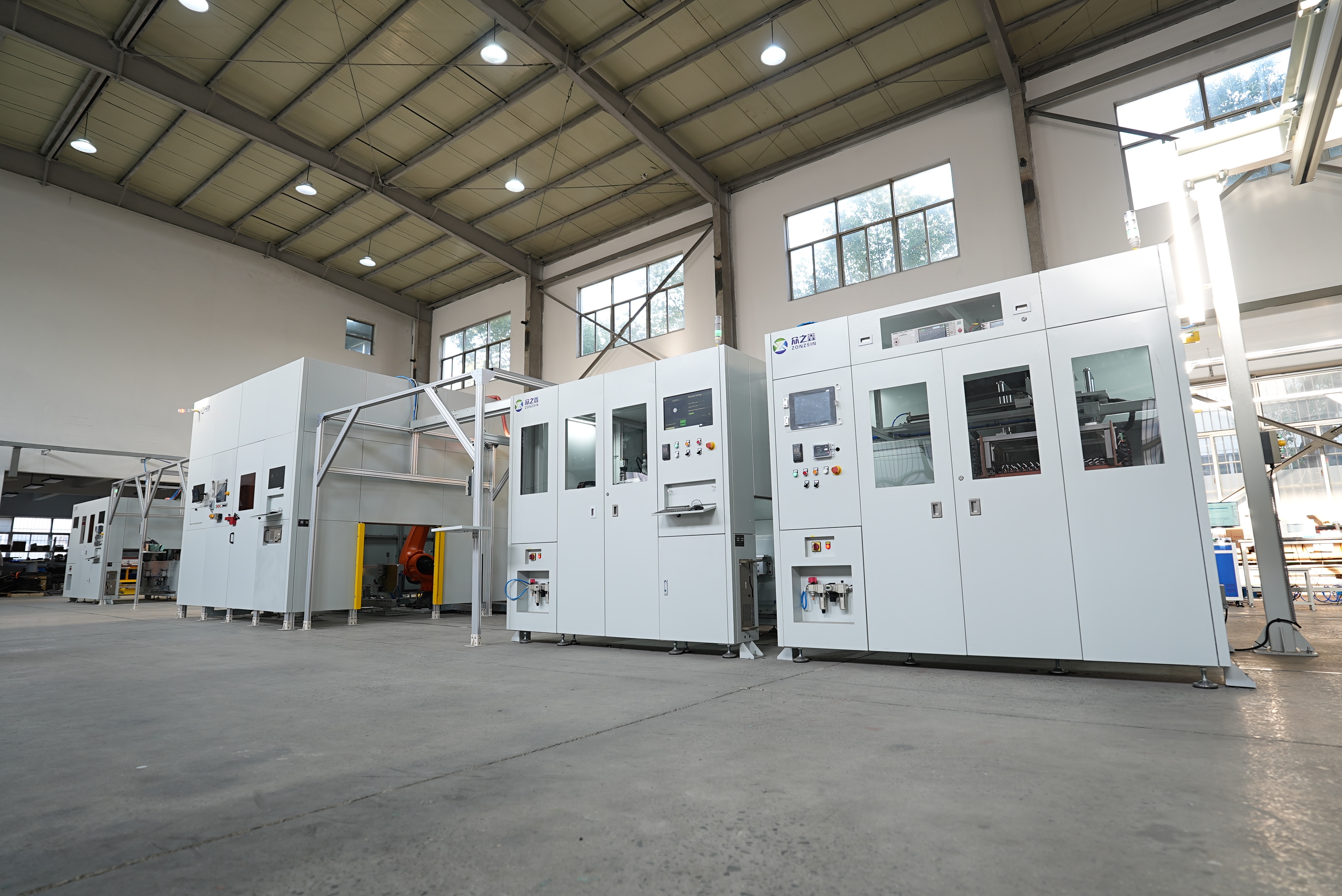
ZZX2406 CTP battery PACK assembly line — 4 PPM cycle time, 314Ah and 587Ah cells, 1P96S battery PACK, covered by ISO 9001 certificate 44825MS079001R0.
Installation conditions are equally part of the compliance picture, because a certified line still has to operate inside a factory that meets its environmental requirements. Zonzsin lines are specified for indoor use in a standard factory under industrial assembly-line conditions with continuous or shift production. Operation is semi-automatic or fully automatic with touch-screen program control, and the matched equipment set includes vision inspection systems, fixtures and tooling, laser equipment, and assembly and testing stations.
Factory-level provisions stated in the operating requirements include ESD protection, fire prevention measures, temperature, humidity and cleanliness control, and PACK compatibility with fixture adaptation. These are the items EU and SEA buyers most often send to a plant engineering team for review, because they affect building layout, utility routing and insurance documentation — not just the line itself.
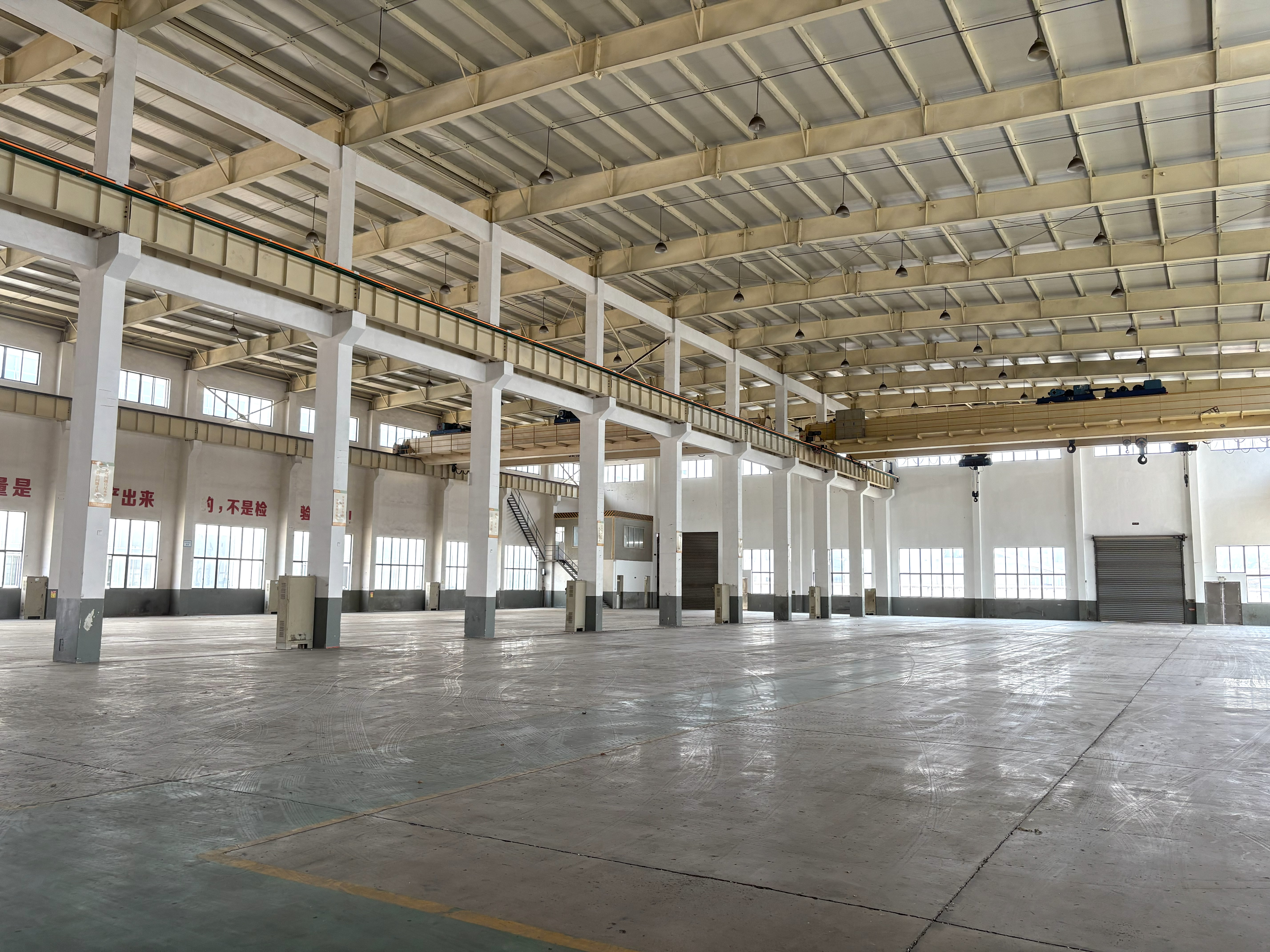
Zonzsin manufacturing base in Shanghai — the quality management system certified under ISO 9001 certificate 44825MS079001R0 operates from this facility.
Production and quality control arrangements supporting those claims include OEM / ODM production, customization across cycle time, automation level, logo, colour and configuration, a monthly capacity of 3 units, a lead time of 3 to 5 months, a minimum order quantity of 1 unit, and 100% test before shipment. After-sales support combines remote technical support with on-site installation and commissioning. Modular design is used across the range, which the company states results in 20% lower maintenance expenditure.
Step-by-Step: How Buyers Verify Assembly Line Compliance
The verification sequence below is the order that prevents rework. It moves from document identity to physical capability, and it can be run before or during supplier evaluation.
- Request the certificate itself, not a logo page. You need the certificate number (44825MS079001R0), the issuing authority (ZDCB), the standard cited (GB/T19001-2016 ISO9001:2015), and the issue and expiry dates (20 November 2025 to 19 November 2028). Anything less cannot be independently checked.
- Match the scope statement to what you are buying. Confirm that the certified scope — laser welding equipment, laser cleaning equipment, module PACK assembly line, and R&D and assembly of AGV-based cluster loading robot — covers the equipment category in your purchase specification.
- Confirm model-level applicability. Ask which models the certificate is tied to and get the answer in writing. For Zonzsin, the applicable models are the battery PACK assembly line ZZX2406 and ZZX2313.
- Check market applicability. A certificate limited to one country creates additional work for export projects. The Zonzsin certificate applies to the global market, which removes that step for EU and SEA buyers.
- Request the facility environment provisions. Ask for the written operating requirements covering ESD protection, fire prevention, temperature, humidity and cleanliness control, and PACK compatibility with fixture adaptation. These are reviewed by plant engineering and by insurers.
- Verify utility and process figures against your plant. Compare your available electrical supply and compressed air against the specification: AC 380V ± 10% for both certified lines, and 0.5–0.8 MPa compressed air for ZZX2313. Confirm the process KPIs you are contracting for — for example the ZZX2313 welding qualification rate of one-time ≥ 99.5% and final ≥ 99.95%, and a single machine operation rate ≥ 95%.
- Close the loop with acceptance and support terms. Confirm the test regime before shipment (100% test), the installation and commissioning arrangement (on-site installation and commissioning plus remote support), and the delivery schedule (lead time 3–5 months, MOQ 1 unit).
Use Cases: Where Compliance-Critical Lines Are Deployed
Compliance requirements become concrete only when they are attached to a project type. Three deployment patterns recur among Zonzsin’s customer profile of automotive OEMs, energy storage system integrators, battery cell and PACK manufacturers, and EPC turnkey contractors.
India CTP Battery PACK Assembly Project
A CTP battery PACK assembly line was delivered to an Indian customer operating across automotive OEM, energy storage integration, cell and PACK manufacturing, and EPC contracting roles. The project covered one unit, had been running for one year at the time of reporting, and recorded stable operation. The layout highlight was a U-shape configuration that saved floor space, and the operating feedback described the line as user-friendly. For buyers, this case illustrates why compliance documentation and layout planning are requested in the same review cycle: the certificate satisfies the quality system check, while the U-shape layout answers the floor plan constraint.
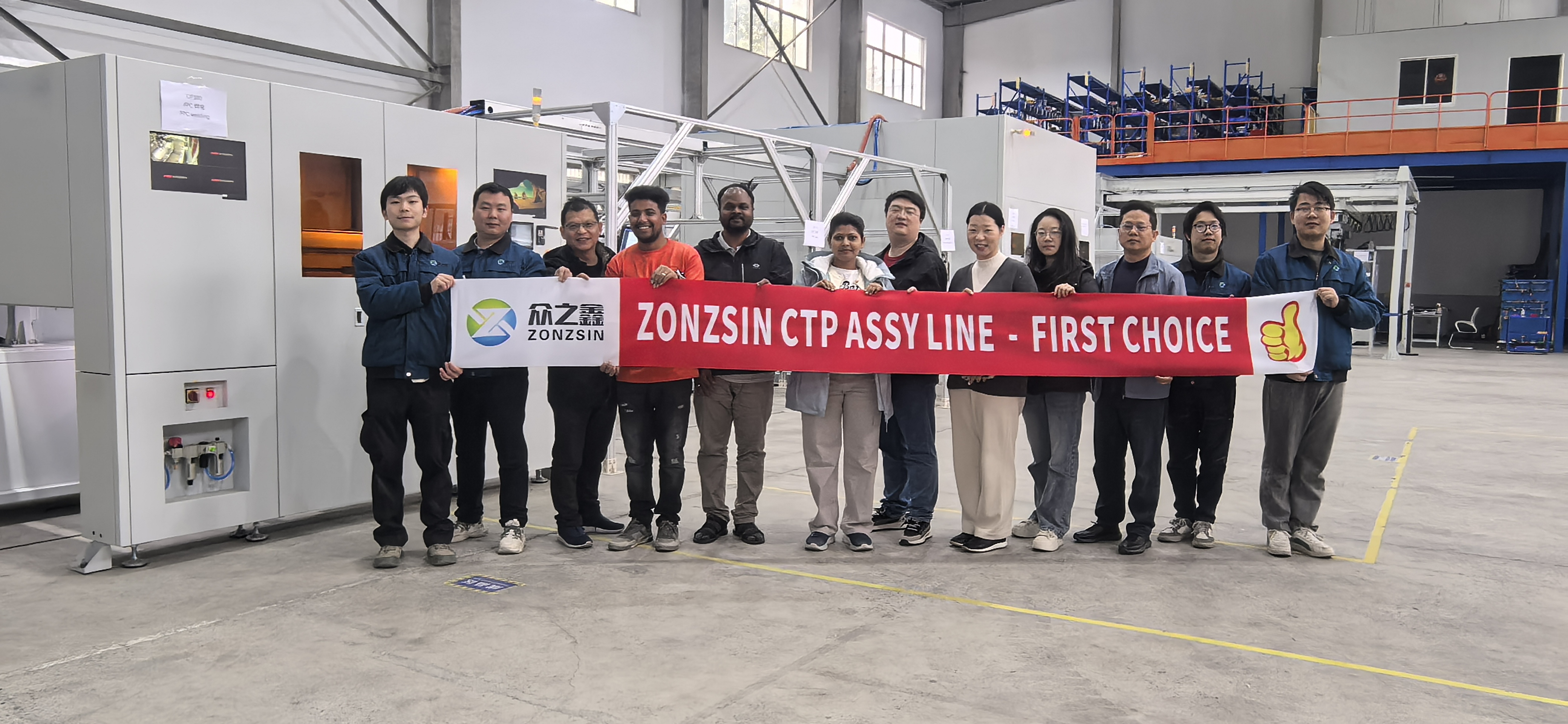
India CTP battery PACK assembly line project — U-shape layout for space saving, in stable operation for one year.
314Ah ESS and Commercial & Industrial PACK Production
The ZZX2406 CTP line is configured for 314Ah and 587Ah cells with a 1P96S battery PACK structure at 4 PPM, applicable to energy storage, EV and C&I. This is the configuration that most directly reflects the industry’s move from 280Ah to 314Ah formats, where verification of the cell format and PACK configuration in writing is as important as the certificate itself.
EV Traction PACK Lines for Automotive OEMs
The ZZX2313 EV battery PACK assembly line targets the EV industry, energy storage and automotive OEMs. Its compliance-relevant figures are process-level: one-time welding qualification rate ≥ 99.5%, final welding qualification rate ≥ 99.95%, and single machine operation rate ≥ 95%. Automotive buyers typically treat these numbers as the operational counterpart to the ISO 9001 certificate — the system is audited, and the process is measured.
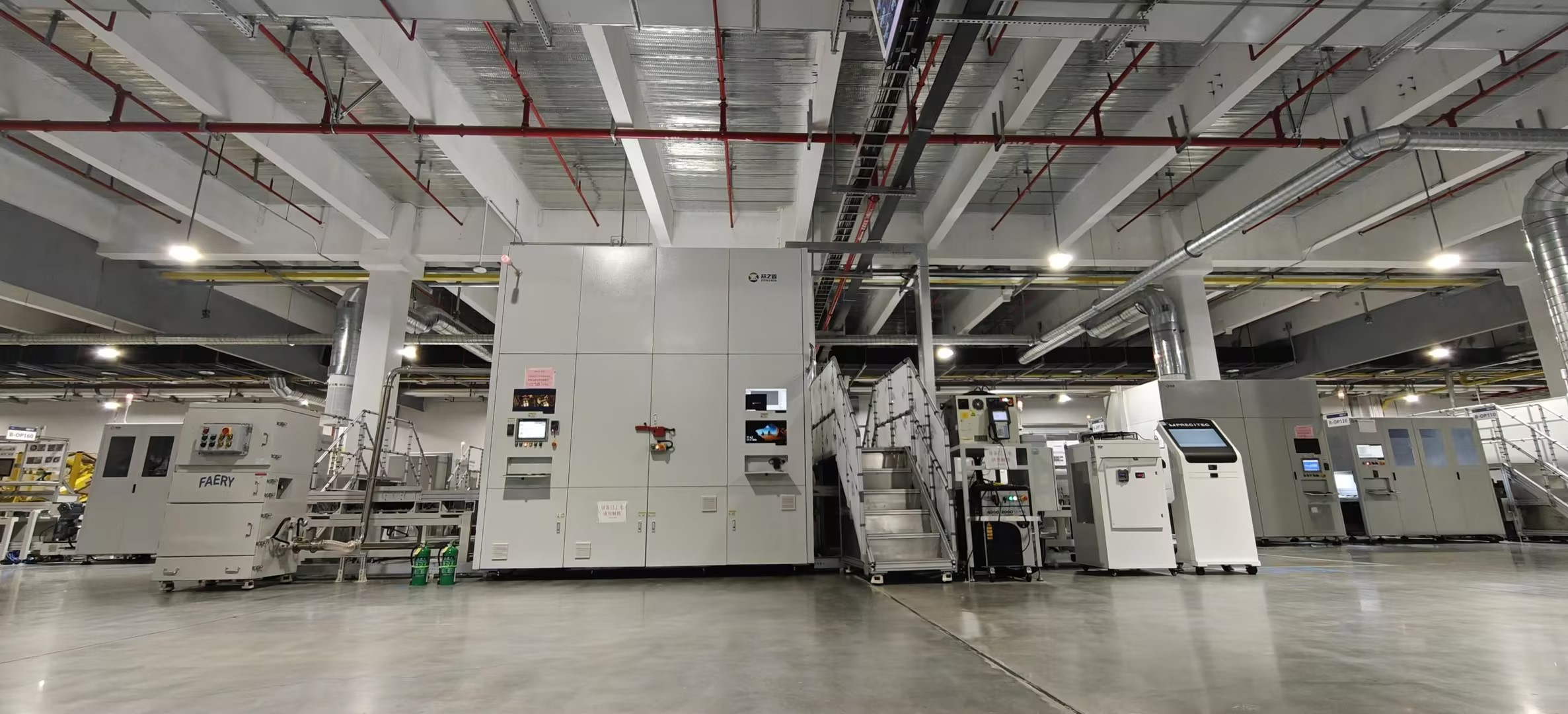
ZZX2313 EV battery PACK assembly line — one-time welding qualification rate ≥ 99.5%, final qualification rate ≥ 99.95%.
High-Throughput Blade Cell Assembly
Zonzsin’s battery PACK assembly line range also includes the ZZX2501 blade battery PACK assembly line, specified at 6 PPM, 30 minutes per PACK, with compressed air 0.6–0.8 MPa and an electrical requirement of AC 380V ± 10%, 50 ± 0.5 Hz, applicable to the EV industry and energy storage.
Comparison Table: ZZX2406 vs ZZX2313
The two models named on the ISO 9001 certificate differ in architecture and in the performance figures a buyer can contract against. The table below uses only published specification values.
| Parameter | ZZX2406 | ZZX2313 |
|---|---|---|
| Line type | CTP battery PACK assembly line | EV battery PACK assembly line |
| Technology | CTP | — |
| Automation | Semi-automatic | — |
| Cycle time | 4 PPM | — |
| Cell / PACK configuration | 314Ah & 587Ah cells; 1P96S PACK | — |
| Dimensions | L58000 × W11000 × H3800 | — |
| Single machine operation rate | — | ≥ 95% |
| Welding qualification rate | — | One-time ≥ 99.5%; final ≥ 99.95% |
| Electrical requirement | — | AC 380V ± 10% |
| Compressed air | — | 0.5–0.8 MPa |
| ISO 9001 certificate 44825MS079001R0 (global) | Yes | Yes |
| Typical application | Energy storage; EV and C&I | EV industry; energy storage; automotive OEMs |
The interpretation for buyers is simple: both models share the same certified quality management system and the same global market applicability, but they are contracted against different performance metrics. A CTP project is specified around cell format, PACK configuration and cycle time. An EV traction project is specified around welding qualification rate and machine operation rate. Compliance review should therefore treat the certificate as the entry condition and the model specification as the decision basis.
A parallel, cross-category comparison closes the loop on the three compliance layers described earlier. Equipment-level certification — such as ISO 9001 for the line builder — sits with the supplier; pack-level safety standards such as IEC 62133-2 and UL 1642 / UL 2054 sit with the pack manufacturer; and factory-level provisions such as ESD protection and fire prevention sit with the plant. A complete procurement file contains evidence for all three.
FAQ: ISO 9001 and Market Requirements for Battery Pack Assembly Lines
1. Which ISO 9001 certificate covers Zonzsin battery PACK assembly lines, and which markets does it apply to?
The certificate is a Quality Management Systems Certificate against ISO 9001, number 44825MS079001R0, issued by ZDCB. It complies with GB/T19001-2016 ISO9001:2015, applies to the global market, was issued on 20 November 2025, and expires on 19 November 2028. It applies to battery PACK assembly line models ZZX2406 and ZZX2313, with a certification scope covering laser welding equipment; laser cleaning equipment; module PACK assembly line; and R&D and assembly of AGV-based cluster loading robot. Because the certificate itself states global applicability, it can be submitted for both EU and SEA procurement reviews without a market restriction.
2. Does an ISO 9001 certificate confirm that a line can handle 314Ah CTP or high-throughput blade cell production?
No. ISO 9001 certifies the supplier’s quality management system, not a specific production capability. Capability is confirmed by the equipment specification. For CTP production, the relevant figures come from the ZZX2406 specification: CTP technology, 4 PPM cycle time, semi-automatic automation, 314Ah and 587Ah battery cells, and a 1P96S battery PACK, applied to energy storage, EV and C&I. For high-throughput blade cell work, the ZZX2501 specification states 6 PPM, or 30 minutes per PACK. Buyers should request the certificate for the quality system and the model specification for the capability claim, and verify both in writing.
3. Does certification change the cost or lead time of an automatic battery pack assembly line?
Certification is a qualification condition rather than a priced option, and the published commercial parameters apply to certified models: lead time is 3 to 5 months, monthly capacity is 3 units, minimum order quantity is 1 unit, and 100% test is performed before shipment. Cost drivers that buyers can actually control are the customization variables — cycle time, automation level, logo, colour and configuration — because these determine the mechanical, electrical and control content of the line. Requests for quotation should therefore specify cycle time and automation level alongside the cell format and PACK configuration, so that certified and non-certified configurations are not compared on unequal terms.
4. How can welding quality, ESD protection and fire prevention be validated before purchase?
These are validated through specification figures and layout documents rather than through the certificate. For welding quality, the ZZX2313 specification states a one-time qualification rate ≥ 99.5% and a final qualification rate ≥ 99.95%, with a single machine operation rate ≥ 95%. For facility safety, the stated operating requirements include ESD protection, fire prevention measures, temperature, humidity and cleanliness control, and PACK compatibility with fixture adaptation, in an indoor standard factory under industrial assembly-line conditions with continuous or shift production. Buyers normally route these items to plant engineering and to their insurer before factory acceptance is scheduled.
5. What is the typical delivery sequence, and how do installation and after-sales support work?
The sequence published by Zonzsin is: specification and customization agreement on cycle time, automation, logo, colour and configuration; a lead time of 3 to 5 months with a monthly capacity of 3 units and a minimum order quantity of 1 unit; 100% test before shipment; then on-site installation and commissioning supported by remote technical support for ongoing operation. Utility readiness should be confirmed early, because the certified models require AC 380V ± 10% (and 0.6–0.8 MPa compressed air for ZZX2501, or 0.5–0.8 MPa for ZZX2313). To start a technical review, buyers can request the product brochure or a quotation shaped around their own cell format, PACK configuration and cycle time target.
Conclusion
ISO 9001 and GB/T19001-2016 compliance for battery pack assembly lines is best understood as a documented entry condition rather than a performance claim. The verifiable core is specific: certificate 44825MS079001R0, issued by ZDCB, complying with GB/T19001-2016 ISO9001:2015, applicable to the global market, issued 20 November 2025 and valid until 19 November 2028, covering battery PACK assembly line models ZZX2406 and ZZX2313 within a scope that includes laser welding equipment, laser cleaning equipment, module PACK assembly line, and R&D and assembly of AGV-based cluster loading robot.
Everything a buyer actually contracts against sits around that core: 4 PPM CTP assembly with 314Ah and 587Ah cells on ZZX2406, welding qualification rates of one-time ≥ 99.5% and final ≥ 99.95% with a single machine operation rate ≥ 95% on ZZX2313, stated ESD protection and fire prevention provisions at factory level, and a delivery pattern of 3 to 5 months lead time with 100% test before shipment. Checked together, these documents and figures turn a compliance question into a verifiable procurement file.
Next Step: Documentation Pack and Technical Review
Zonzsin supplies automatic battery PACK assembly lines — CTP, blade and EV configurations built as turnkey projects — to battery and PACK manufacturers, energy storage integrators, automotive OEMs and EPC contractors, with SEA and EU among its main markets.
Request the ISO 9001 certificate 44825MS079001R0, the model specification sheet for ZZX2406 or ZZX2313, or a quotation shaped around your cell format, PACK configuration and cycle time target.
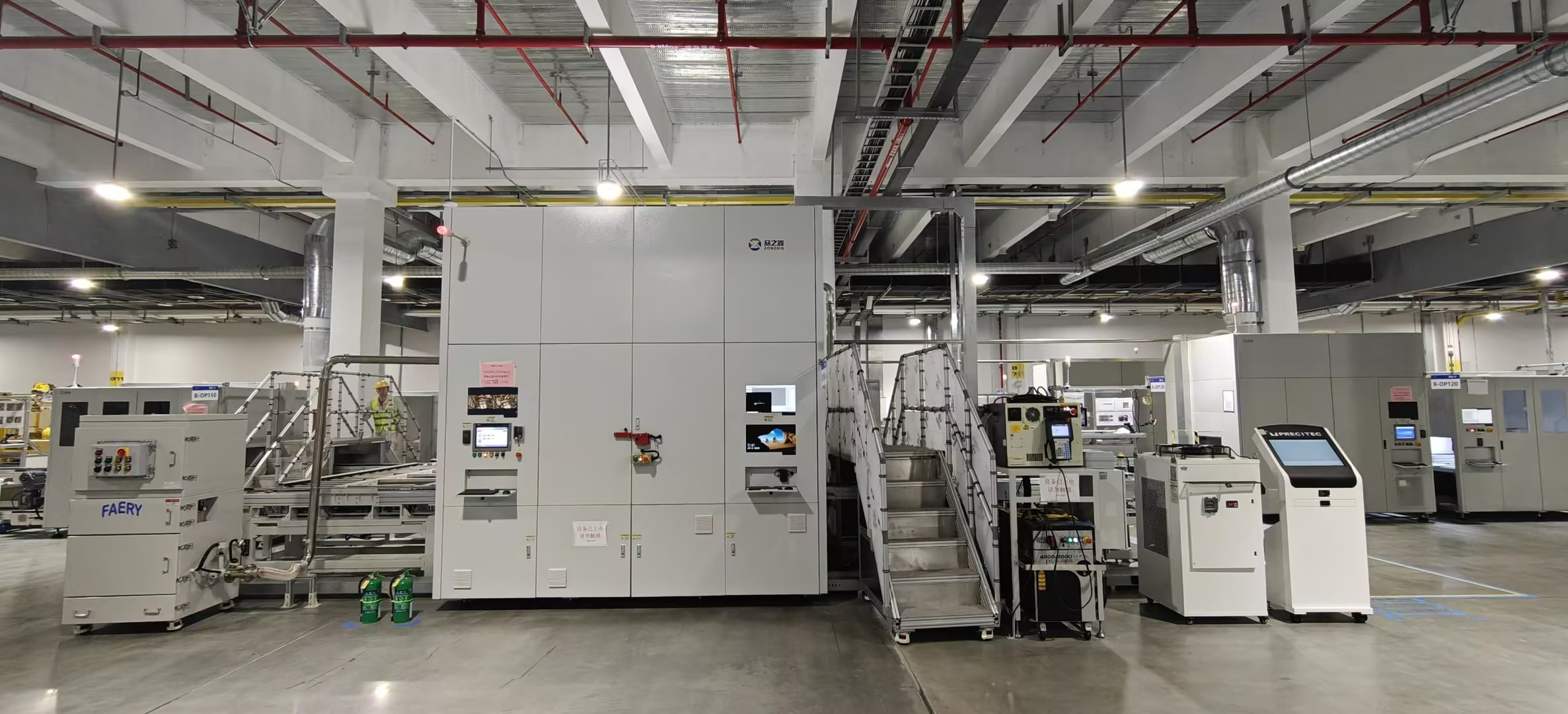
E2 battery PACK assembly line.
Product brochure (download): Zonzsin Product Brochure
Website: www.zonzsin.com
Contact: Katty.liu — katty.liu@zonzsin.com — Tel / WhatsApp: +86 134-8282-9368
Address: Building 22, No.2199, Shebei Highway, Sheshan Town, Songjiang District, Shanghai, China
Have Questions or Need More Details?
Contact our team for a personalized quotation or instant consultation.
Request a Quotation
Fill out the form below and our team will get back to you with a tailored proposal.
WhatsApp Direct Chat
Prefer to chat in real-time? Message us on WhatsApp for instant assistance & quick answers.
- Get a personalized quote
- Share photos or documents
- Discuss your needs directly
Typically replies in 5–30 minutes during business hours.