Automatic Battery Pack Assembly Line Partnership FAQ: Long-Term Service & Spare Parts Support
Automatic Battery Pack Assembly Line Partnership FAQ: Long-Term Service & Spare Parts Support
A long-term partnership for an Automatic Battery Pack Assembly Line is measured after commissioning, not on the day the line passes acceptance. What determines monthly pack output in year two and year three is service response, calibration discipline and spare parts availability — not the quotation alone. For EV, ESS and battery pack manufacturers in the decision and execution stage, the working answers sit in four service pillars: trained technical personnel for maintenance, periodic calibration, spare parts management, and remote support, delivered alongside on-site installation & commissioning.
Shanghai Zonzsin Intelligent Equipment Co., Ltd. is a Shanghai-based intelligent equipment manufacturer founded in 2019 that designs and builds Automatic Battery Pack Assembly Lines and ESS Battery Pack Insertion Robots for Containers. It serves lithium battery manufacturers, energy storage integrators and automotive OEMs, with delivered equipment now trusted in Europe, the USA, Japan, South Korea and India.
This FAQ answers the questions that arrive once configuration decisions are finished: what support is included, who maintains the line, how calibration and spare parts are managed, what the commercial terms look like, and how to validate the supplier before committing to a multi-year relationship.
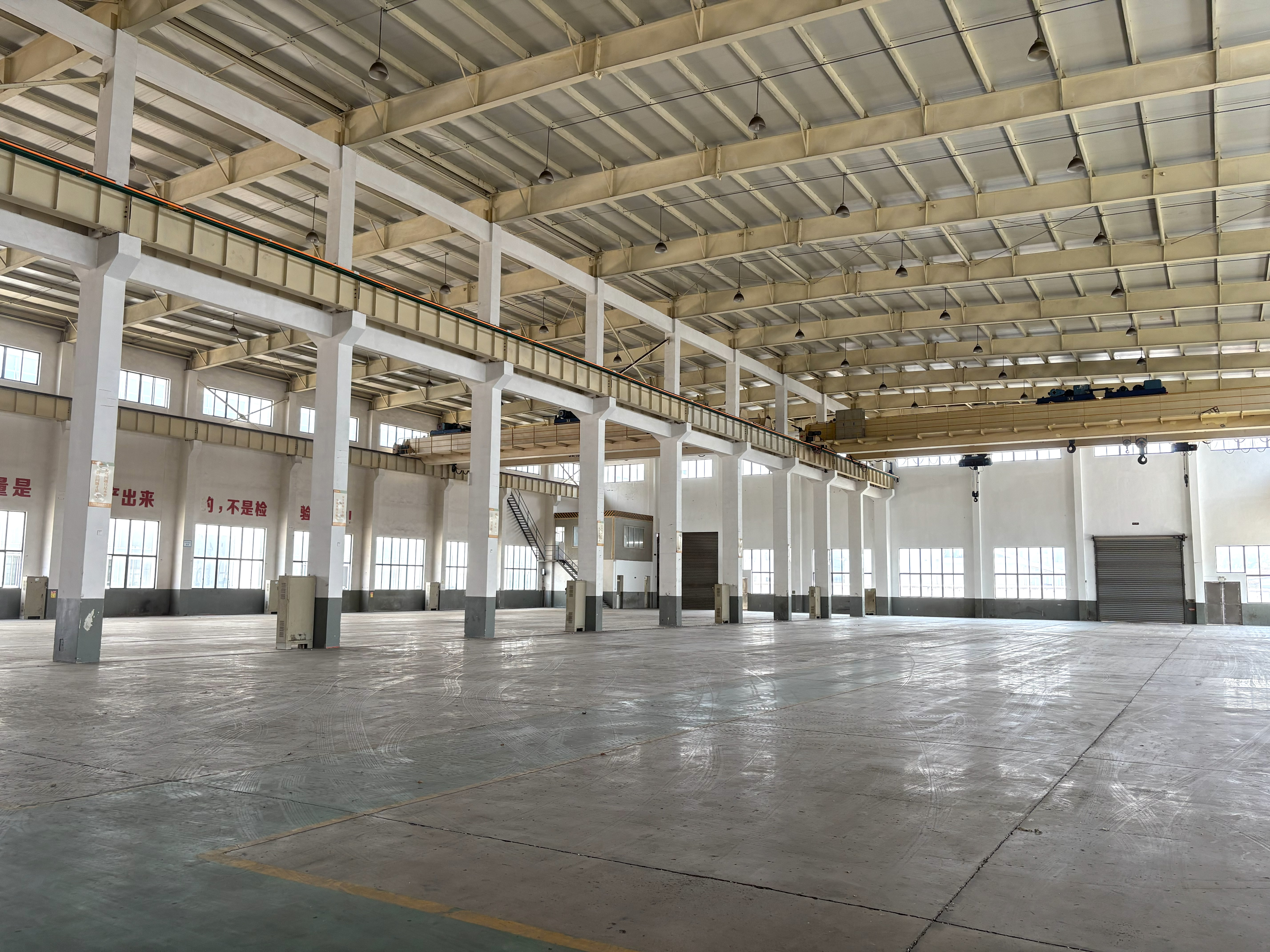
Zonzsin manufacturing facility, Shanghai — automatic battery pack assembly lines are built and pre-tested in-house before shipment.
Problem Definition: Why the Partnership Question Appears After the Purchase Order
Most evaluation effort goes into the front end of a project: CTP versus MTP architecture, cell format, cycle time, footprint and capital cost. Those comparisons matter, but they end at acceptance. Once the line is running, the questions that decide output change.
- Who calibrates the welding, placement and inspection stations, and on what schedule?
- Who holds critical spare parts, and how long does a replacement take to reach the plant?
- Who diagnoses a fault remotely before a shift is lost?
- Who trains the next maintenance technician when the first team moves on?
A pack assembly line is a multi-year asset, so these questions carry more weight in total cost of ownership than the price difference between two otherwise comparable suppliers. Poorly supported lines rarely fail outright; they lose availability gradually, through calibration drift, undocumented adjustments, and parts that are ordered only after a stoppage has already begun.
Zonzsin treats service as part of the line specification rather than an optional add-on. Remote support and on-site installation & commissioning sit inside the after-sales scope, and modular design is applied deliberately so that maintenance expenditure stays lower over the life of the line — the company documents a 20% lower maintenance expenditure as a design outcome.
Industry Background: Why Service Models Are Being Re-Specified Now
Three structural shifts are pushing after-sales service into the procurement conversation.
CTP has become mainstream. By 2023, CTP technology was integrated into nearly 50% of new energy vehicles sold in China, rising from 13 models in 2021 to 57 models by late 2023, according to ResearchInChina. The global cell-to-pack battery market was valued at USD 18.35 billion in 2023 and is projected to reach USD 75.93 billion by 2033 (Spherical Insights). More integrated pack architectures mean a single station issue can affect a larger share of the process, which raises the value of fast diagnosis.
Equipment demand keeps expanding. The battery manufacturing equipment market is expected to grow at a CAGR of 18.8% from 2025 to 2030, reaching USD 36.94 billion, according to MarketsandMarkets. When more lines are installed across the industry, engineering attention becomes a finite resource — so the practical question is not whether a supplier offers service, but how much service capacity it can actually allocate.
The cell standard keeps moving. The industry has transitioned from the 280Ah cell benchmark to 314Ah formats for energy storage packs in order to improve energy density and reduce assembly costs, as noted by Highstar / InfoLink. Lines specified around one format increasingly must accommodate the next, which places pressure on calibration routines, tooling changes and spare parts planning.
Compliance adds another layer. Lithium-ion battery packs must comply with international safety standards such as IEC 62133-2 for global market access and UL 1642 / UL 2054 for North America (UL Solutions). Traceability, test records and change control form part of that obligation — and they are maintained by the same engineering team that supports the line.
The supplier field is established: Lead Intelligent Equipment, Yinghe Technology and Hitachi High-Tech are among the major players in battery assembly equipment (MarketsandMarkets). Buyers are therefore rarely choosing between having a supplier and having none; they are choosing between service models.
What a Long-Term Zonzsin Partnership Actually Covers
For an Automatic Battery Pack Assembly Line, Zonzsin documents a service scope that maps directly onto the questions raised at contract stage.
On-site installation and commissioning
Remote support and on-site installation & commissioning form the documented after-sales baseline. Commissioning is performed on the buyer's site, which is also where footprint decisions — including space-saving U-shape layouts — are finalized against the real building rather than a drawing.
Technical personnel for maintenance
Maintenance is handled by technical personnel rather than by general contractors. This matters on CTP and MTP lines, where welding parameters, placement accuracy and inspection thresholds interact: work on one station can shift the behaviour of the next.
Periodic calibration
Periodic calibration is part of the ongoing service structure, not a one-time handover activity. Calibration frequency is defined at project level, because it depends on duty cycle, cell format and the tolerances the pack design requires.
Spare parts management
Spare parts management and remote support operate together. The intent is to keep critical components identifiable and replenishable before a stoppage forces an emergency order — particularly for buyers running medium-to-high volume lines, where a day of downtime is measured in lost packs rather than lost hours.
Remote support
Remote support provides the first response layer. Many faults can be diagnosed without travel; when they cannot, remote triage shortens the time before the right engineer arrives with the right part.
Engineering depth behind the service model
Service capacity is a function of engineering headcount and design philosophy. Zonzsin operates with 43 engineers in its R&D team, holds 50 granted patents — including invention patents for its AGV-driven battery pack insertion robot — and works from a 6000 m² facility with 90 employees. Modular design is used deliberately to improve reliability and to reduce maintenance expenditure. The company holds ISO 9001 certification, certificate 44825MS079001R0 issued by ZDCB.
Design choices that reduce the number of service events
Service load depends heavily on what a line does when something goes wrong. The risk categories Zonzsin designs against are battery safety, battery short circuit and battery overheating. Countermeasures include protective design and interlocks, safety sensors, and ESD grounding and protection. On the process side, the company applies process risk assessment and testing supported by test stations, and quality control follows 100% testing rather than sampling.
Step-by-Step: How the Support Model Runs Across the Lifecycle
- Scope and line architecture. CTP or MTP architecture, cell format (including 314Ah large prismatic cells), target output, available floor space and automation level are fixed. Where floor space is tight, a U-shape layout is one option to evaluate.
- Commercial agreement. Minimum order quantity is 1 unit. Delivery terms are EXW Shanghai, FOB Shanghai or FCA Shanghai. Payment terms are 50% advance payment by T/T and 50% balance payment by T/T within 3 business days after the BL date.
- Build and in-house pre-test. Typical production lead time is 3 to 5 months, and monthly production capacity is 3 units. Quality control follows 100% testing.
- Acceptance. Acceptance criteria are FAT and online FAT, so the buyer validates performance before shipment and again during the live run, rather than only at the end of installation.
- Shipment, installation and commissioning. On-site installation and commissioning are part of the delivered scope, not a separate service contract.
- Training and documentation handover. Operators and maintenance staff are brought onto the line so that routine interventions do not depend on the supplier being physically present.
- Periodic calibration and preventive maintenance. Technical personnel for maintenance and periodic calibration keep the line inside its tolerance window as the production mix shifts between pack variants.
- Spare parts management and remote support. Remote support handles first-line diagnosis, spare parts management keeps critical components available, and unresolved issues escalate to on-site intervention.
Use Cases: Where Long-Term Support Matters Most
EV traction battery pack assembly. Medium-to-high volume traction lines run continuously and tolerate little variation in weld quality or placement accuracy. High consistency and high yield are the operating targets, and both degrade quietly without calibration discipline.
Stationary storage pack assembly. ESS pack assembly increasingly uses insertion robots for containers, where pack weight and geometry make manual handling unattractive. Support here is as much about safe handling practice as about the line itself.
314Ah large prismatic CTP lines. As the industry moves to 314Ah formats, lines need parameter adjustment and spare parts that fit the new format. A long-term partner is expected to hold that continuity across format transitions.
Space-constrained plants. Zonzsin completed a project in India within 1 year using a space-saving U-shape layout. That project illustrates the pattern: when a building cannot be extended, layout planning and service planning have to be solved together.
Comparison Table: What to Confirm Before Signing a Long-Term Agreement
The table below lists the service dimensions that decide long-term line availability, and the position Zonzsin documents for each.
| Support dimension | What it covers | Zonzsin documented position |
|---|---|---|
| Installation & commissioning | On-site setup, alignment, live run | Remote support and on-site installation & commissioning included in the after-sales scope |
| Maintenance | Who works on the line and how | Technical personnel for maintenance |
| Calibration | Frequency and tolerance control | Periodic calibration |
| Spare parts | Identification, stocking, replenishment | Spare parts management, delivered together with remote support |
| Remote diagnosis | First-line fault response | Remote support |
| Safety controls | Protection against thermal and electrical events | Protective design and interlocks, safety sensors, ESD grounding and protection |
| Quality verification | How output quality is assured | 100% testing; process risk assessment and testing; test stations |
| Certification | Management system evidence | ISO 9001, certificate 44825MS079001R0 issued by ZDCB |
| Engineering capacity | Who supports the line over time | 43-engineer R&D team; 50 granted patents; 6000 m² facility; 90 employees |
Commercial and delivery terms are equally relevant to a long-term relationship, because they set expectations for the first delivery and for every subsequent change order.
| Commercial item | Documented term |
|---|---|
| Minimum order quantity | 1 unit |
| Typical production lead time | 3 to 5 months |
| Monthly production capacity | 3 units |
| Delivery terms | EXW Shanghai / FOB Shanghai / FCA Shanghai |
| Acceptance criteria | FAT; online FAT |
| Payment terms | 50% advance payment by T/T; 50% balance payment by T/T within 3 business days after the BL date |
Procurement teams frequently evaluate Zonzsin alongside ATW and Lead Intelligent for automatic pack assembly projects. The documented differences Zonzsin presents are support for customized line integration, a price saving of 20%, manpower saving of 50%, and optimized space utility. The company states its best fit as medium-to-high volume production lines, pack assembly scenarios requiring high consistency and yield, and factories upgrading toward automation. On cost, the documented position is that initial investment is higher than purely manual solutions, while long-term per-unit cost may decrease through efficiency and yield gains — with the specific payback period requiring project-level calculation.
FAQ: Automatic Battery Pack Assembly Line Partnership, Service and Spare Parts
Is Zonzsin certified, and which standards apply to the packs the line produces?
Zonzsin holds ISO 9001 certification, certificate 44825MS079001R0 issued by ZDCB, which covers the manufacturer's quality management system. The packs themselves must meet the standards of the destination market — for example, IEC 62133-2 for global market access and UL 1642 / UL 2054 for North America (UL Solutions). Equipment acceptance for Zonzsin lines is defined by FAT and online FAT.
What engineering capability supports the line after commissioning?
Zonzsin operates a 43-engineer R&D team and holds 50 granted patents, including invention patents for its AGV-driven battery pack insertion robot. Manufacturing takes place in a 6000 m² facility with 90 employees. This engineering base is what stands behind maintenance, calibration and remote support across the service life of the line.
What exactly is included in after-sales service?
After-sales services include remote support and on-site installation & commissioning. Ongoing support is delivered through technical personnel for maintenance and periodic calibration, with spare parts management and remote support working together to reduce unplanned downtime.
How does the design reduce the need for emergency service?
The line is designed against battery safety, battery short circuit and battery overheating risks using protective design and interlocks, safety sensors, and ESD grounding and protection. On the process side, Zonzsin applies process risk assessment and testing with dedicated test stations, and quality control follows 100% testing.
What are the purchasing terms for an automatic battery pack assembly line?
Minimum order quantity is 1 unit. Delivery terms are EXW Shanghai, FOB Shanghai or FCA Shanghai. Acceptance criteria are FAT and online FAT. Payment terms are 50% advance payment by T/T and 50% balance payment by T/T within 3 business days after the BL date.
Can a single line be validated before committing to a multi-line program?
Yes. Validation is built into the acceptance process through FAT and online FAT, and the minimum order quantity is 1 unit, so one line can be ordered, tested and accepted before a wider rollout is considered.
What is the lead time and production capacity?
Typical production lead time is 3 to 5 months, and monthly production capacity is 3 units. Combined with 100% testing before shipment, this defines the realistic window between order confirmation and installation.
Conclusion: Service Is the Part of the Line You Keep Paying For
Architecture choices — CTP, MTP or a customized configuration — decide what a pack assembly line can produce. Service structure decides how much of that capacity you actually get in year three. For EV and ESS manufacturers at the decision and execution stage, the practical checklist is short: confirm who maintains the line, how calibration is scheduled, how spare parts are managed, how fast remote support responds, and what the acceptance and payment framework looks like. Zonzsin addresses each of those points with a documented position rather than a verbal assurance.
Next Step
If you are specifying an Automatic Battery Pack Assembly Line and want the service, calibration and spare parts scope reviewed against your project, the full product brochure is available for download: Zonzsin Product Brochure (PDF).
Shanghai Zonzsin Intelligent Equipment Co., Ltd.
Website: www.zonzsin.com
Email: katty.liu@zonzsin.com
Tel / WhatsApp: +86 134-8282-9368
Address: Building 22, No.2199, Shebei Highway, Sheshan Town, Songjiang District, Shanghai, China
Have Questions or Need More Details?
Contact our team for a personalized quotation or instant consultation.
Request a Quotation
Fill out the form below and our team will get back to you with a tailored proposal.
WhatsApp Direct Chat
Prefer to chat in real-time? Message us on WhatsApp for instant assistance & quick answers.
- Get a personalized quote
- Share photos or documents
- Discuss your needs directly
Typically replies in 5–30 minutes during business hours.