30 Minutes Per Pack, 6 PPM: Solving Battery Pack Assembly Throughput Bottlenecks
30 Minutes Per Pack, 6 PPM: Solving Battery Pack Assembly Throughput Bottlenecks
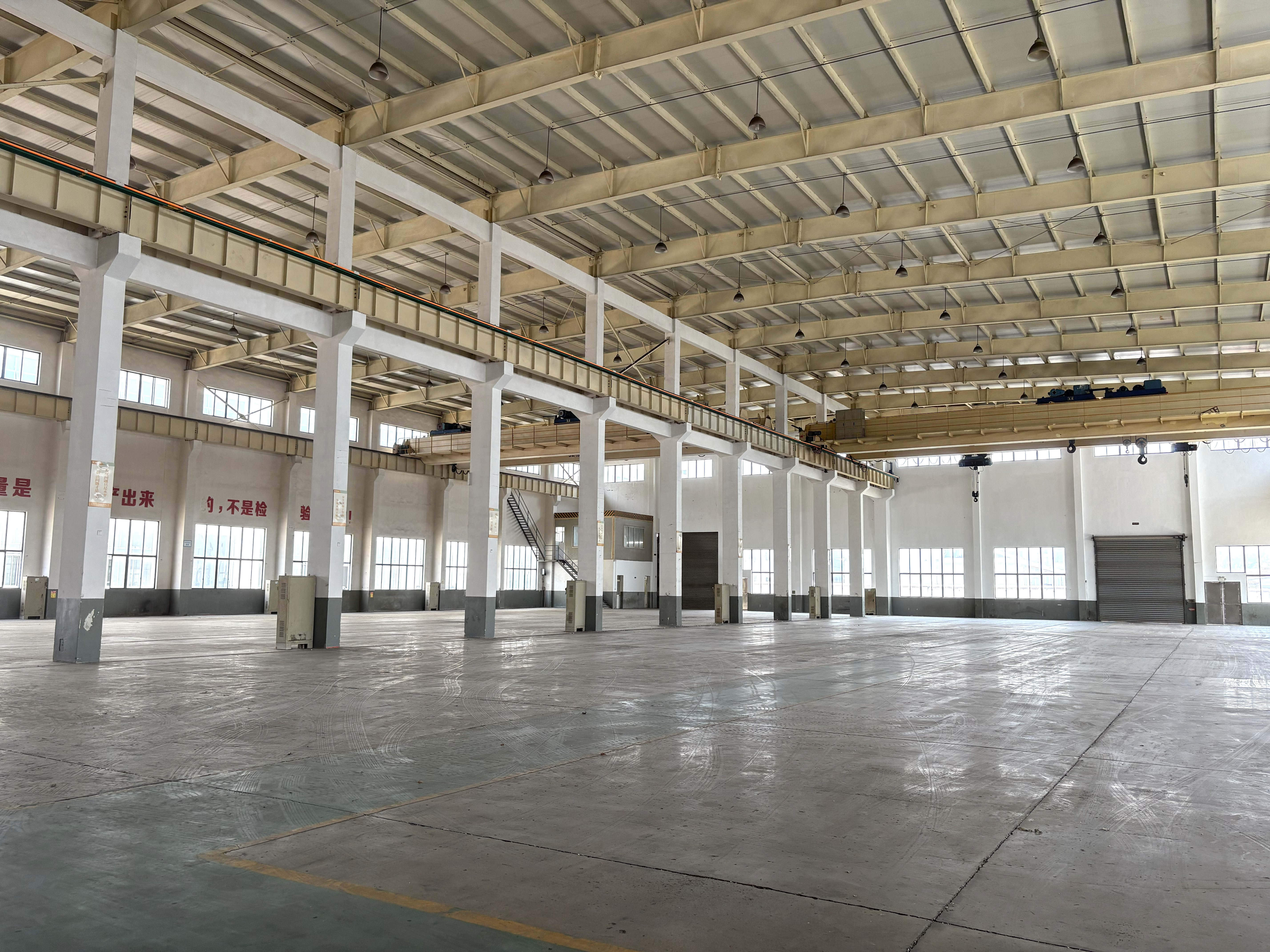
New factory - 3,113 m².
Throughput shortfalls on a battery pack assembly line are rarely caused by one dramatic breakdown. They accumulate in the gap between what the fastest station can do and what the slowest station, the least available machine, or the welding step actually delivers across a shift.
The ZZX2406 CTP battery pack assembly line from Shanghai Zonzsin Intelligent Equipment Co., Ltd. is specified around numbers that target that gap directly: a 30-minute takt per pack, automated station throughput of 6 PPM, a single machine operation rate of ≥95%, a one-time welding qualification rate of ≥99.5% and a final welding qualification rate of ≥99.95%. This article translates those parameters into real production meaning, shows where they remove bottlenecks for EV and ESS manufacturers, and lists what a buyer should still verify before committing capital.
Problem Definition: What a Throughput Bottleneck Really Is
A bottleneck is the step or resource that sets the pace of the entire line. On a battery pack assembly line, four different layers can become that constraint, and they are often confused with one another:
- Station-level rate. Automated process stations on the ZZX2406 line cycle at 6 PPM (parts per minute). This is the speed at which individual operations handle parts, not the speed at which finished packs leave the line.
- Pack-level takt. The line is specified at 30 minutes per pack. A pack contains many cells and modules and passes through many sequential stations, so a fast station rate and a 30-minute pack takt describe two different levels of the same line.
- Availability. A minimum single machine operation rate of ≥95% determines how much of the nameplate takt survives unplanned stops and tool changes.
- Quality loops. Every pack sent back for rework consumes line capacity twice. Welding qualification rates of ≥99.5% one-time and ≥99.95% after final welding are what keep capacity from leaking into the repair loop.
Doing the arithmetic on the nameplate figures makes the economics visible. A 30-minute takt equals 2 packs per hour at 100% availability. Applied across the specified ≥95% single machine operation rate, that is roughly 1.9 packs per hour, or approximately 46 packs per calendar day if the line ran continuously. This is arithmetic on the stated specifications, not a delivery guarantee: real daily output depends on shift pattern, product mix, cell supply and changeover frequency.
Three bottleneck patterns account for most missed targets: takt inversion (one station cannot keep pace, so work-in-process piles up), availability loss (unplanned stops and calibration time), and yield loss (rework loops that quietly halve effective capacity).
A fourth pattern is easy to overlook because it is not a machine at all. Line footprint and utility readiness — floor space, power quality and compressed air — decide whether a specified takt is reachable in a given building, and they are the most common cause of late starts in brownfield projects.
Industry Background: Why Pack Assembly Takt Is Under Pressure
The commercial case for faster, more reliable pack assembly follows the growth of cell-to-pack architecture itself. The global CTP battery market was valued at USD 18.35 billion in 2023 and is projected to reach USD 75.93 billion by 2033, according to Spherical Insights. Adoption has moved quickly in the largest manufacturing base: by 2023, CTP technology was integrated into nearly 50% of new energy vehicles sold in China, rising from only 13 models in 2021 to 57 models by late 2023, based on ResearchInChina data.
The equipment side is expanding at a similar pace. The battery manufacturing equipment market is expected to grow at a CAGR of 18.8% from 2025 to 2030, reaching USD 36.94 billion, per MarketsandMarkets.
Two structural changes sit underneath those figures. First, the industry has shifted from the 280Ah cell benchmark to 314Ah formats for energy storage packs to improve energy density and reduce assembly costs, a transition reported by Highstar and InfoLink. Second, packs remain subject to compliance requirements such as IEC 62133-2 for global market access and UL 1642 / UL 2054 for North America. Larger cells and stricter market access both push pressure onto the assembly and welding steps, because that is where cycle time and qualification rates are determined.
Detailed Solution: How the ZZX2406 CTP Line Is Specified
Shanghai Zonzsin Intelligent Equipment Co., Ltd. (Zonzsin), founded in 2019 in Shanghai, China, builds automatic battery pack assembly lines and ESS battery pack insertion robots for containers, serving lithium battery manufacturers, energy storage integrators and automotive OEMs, with roughly 60% of output exported and installations referenced in Europe, the USA, Japan, South Korea and India.
The ZZX2406 CTP line is the configuration that answers the throughput problem described above. Its verified parameters are:
- Station throughput: 6 PPM
- Pack cycle time: 30 minutes per pack
- Single machine operation rate: ≥95%
- One-time welding qualification rate: ≥99.5%
- Final welding qualification rate: ≥99.95%
- Line footprint: 58,000 × 11,000 × 3,800 mm
- Power supply: AC 380V ±10%, 50 ±0.5 Hz
- Compressed air: 0.6–0.8 MPa
Each parameter maps to a specific bottleneck rather than to a general capability claim:
| Bottleneck | Parameter | What it changes in production |
|---|---|---|
| Station starvation and WIP build-up | 6 PPM station throughput | Automated handling and process stations keep feeding the pack at a rate that does not throttle downstream steps. |
| Takt drift | 30 minutes per pack | Gives planning a fixed drumbeat: 2 packs per hour at nameplate, before availability is applied. |
| Unplanned downtime | ≥95% single machine operation rate | Protects the majority of nameplate takt against stops and calibration interruptions. |
| Rework loops | ≥99.5% one-time welding qualification | Limits how often a pack re-enters the line for a second pass. |
| Escape risk | ≥99.95% final welding qualification | Protects downstream capacity and customer-side quality cost. |
| Brownfield floor space | 58,000 × 11,000 × 3,800 mm footprint | Makes the layout decision measurable before purchase, including U-shape arrangements. |
| Utility readiness | AC 380V ±10%, 50 ±0.5 Hz; 0.6–0.8 MPa air | Turns power and air preparation into a checklist item rather than a commissioning surprise. |
Safety and process risk control
Throughput is only useful if it is safe. The risk types identified for battery pack assembly are battery safety, battery short circuit and battery overheating. Zonzsin's control approach combines protective design and interlocks, safety sensors, and ESD grounding and protection, supported at process level by risk assessment and testing plus dedicated test stations. These controls matter commercially as well as technically: a safety-related stop or a short-circuit event costs more output than any single station cycle time.
Where the line sits against ATW and Lead Intelligent
In Zonzsin's published comparison data, the core difference against ATW and Lead Intelligent is support for customized line integration — tailoring the line to a specific set of requirements rather than forcing the project into a fixed configuration. The same data records a 20% price saving, a 50% manpower saving, optimized space utilization and a 20% cycle-time gain. On cost structure, the comparison is explicit about the trade-off: initial investment is higher than a purely manual solution, while long-term per-unit cost can fall as efficiency and yield improve. The specific payback period is a project-level calculation, not a catalog figure.
Maintenance follows the same logic. The line requires trained technical personnel for maintenance and periodic calibration, spare parts management and remote support. Zonzsin's modular design approach is stated to achieve 20% lower maintenance expenditure, which is the parameter that most directly affects the second and third year of ownership. For context on the wider supplier landscape, Lead Intelligent Equipment, Yinghe Technology and Hitachi High-Tech are identified by MarketsandMarkets among the major players in the battery assembly equipment market.
Step-by-Step Breakdown: From Bottleneck Audit to Stable Output
- Audit the real constraint before specifying hardware. Measure three things first: actual pack takt, actual machine availability, and the percentage of packs entering a rework loop. If availability is the limit, a faster station solves nothing.
- Freeze the pack architecture and cell format. CTP and MTP architectures place different demands on handling, stacking and welding. Confirm the intended cell format and pack design before the line configuration is locked.
- Confirm the volume band. The ZZX2406 line is positioned for medium-to-high volume production lines and PACK assembly scenarios that require high consistency and yield. A 30-minute takt with 6 PPM station throughput is the reference point to compare against your own demand forecast.
- Plan layout and utilities in parallel with the order. The 58,000 × 11,000 × 3,800 mm footprint, the AC 380V ±10% / 50 ±0.5 Hz supply and the 0.6–0.8 MPa compressed air requirement should be validated against the building before installation is scheduled.
- Install in a defined sequence. The India project is a concrete reference: a U-shape layout with one unit installed, completed within one year. U-shape layouts are commonly chosen where operators must supervise several stations from a compact footprint.
- Ramp against welding acceptance criteria, not opinions. Treat ≥99.5% one-time welding qualification and ≥99.95% final welding qualification as pass/fail targets verified with the line's test stations during commissioning.
- Stabilize and hold the operation rate. Once the ≥95% single machine operation rate is reached, protect it with the calibration schedule, spare parts plan and remote support arrangement that the maintenance model requires.
Use Cases
EV traction pack assembly
For EV traction packs built on CTP architecture, the 30-minute takt and ≥99.95% final welding qualification address the two metrics that determine whether a module line can feed a vehicle program reliably: packs per hour and escape rate.
Stationary storage (ESS) pack assembly
Energy storage pack assembly runs longer pack variants and is sensitive to the same yield economics. With the industry moving toward 314Ah formats for ESS packs to improve energy density and cut assembly cost, a line specified for high consistency and yield protects that cost advantage instead of eroding it through rework.
Brownfield automation upgrades
Factories upgrading from semi-manual assembly usually face two hard constraints: available floor area and utility capacity. Publishing the footprint and utility requirements in advance makes the go/no-go decision measurable, and the documented 20% price saving and 50% manpower saving give the upgrade a cost baseline, while noting that initial investment is higher than a purely manual solution.
Projects with non-standard requirements
Where pack design, cell format or layout deviate from a standard configuration, customized line integration is the differentiating capability referenced against ATW and Lead Intelligent, with support for tailored integration per specific requirement.
Comparison Table: Evaluation Dimensions for CTP Pack Assembly Lines
The table below uses only documented figures. Where a comparable figure is not available in the source set used for this article, the cell says so rather than estimating.
| Evaluation dimension | Zonzsin ZZX2406 CTP line | ATW | Lead Intelligent |
|---|---|---|---|
| Customized line integration | Documented core difference: supports tailored line integration per specific requirement | No comparable figure in the source set — verify project-specifically | No comparable figure in the source set — verify project-specifically |
| Reported commercial advantage | 20% price saving; 50% manpower saving; optimized space utilization | No comparable figure in the source set | No comparable figure in the source set |
| Cycle time | 20% cycle-time gain reported in comparison data | No comparable figure in the source set | No comparable figure in the source set |
| Suitable production band | Medium-to-high volume production lines; PACK assembly requiring high consistency and yield | No comparable figure in the source set | Identified by MarketsandMarkets among major battery assembly equipment players |
| Documented throughput specification | 6 PPM station throughput; 30 minutes per pack; ≥95% operation rate; ≥99.5% / ≥99.95% welding qualification | No comparable figure in the source set | No comparable figure in the source set |
| Cost structure | Higher initial investment than pure manual solutions; per-unit cost can decrease with efficiency and yield gains; payback requires project-level calculation | No comparable figure in the source set | No comparable figure in the source set |
| Maintenance model | Technical personnel for maintenance and periodic calibration; spare parts management and remote support; modular design stated to achieve 20% lower maintenance expenditure | No comparable figure in the source set | No comparable figure in the source set |
FAQ
Which safety and compliance requirements apply to an automatic battery pack assembly line?
Two layers matter. At pack level, lithium-ion battery packs must comply with international safety standards such as IEC 62133-2 for global market access and UL 1642 / UL 2054 for North America. At equipment level, the risks that a pack line must control are identified as battery safety, battery short circuit and battery overheating; Zonzsin addresses these with protective design and interlocks, safety sensors, and ESD grounding and protection, supported by process risk assessment and testing through dedicated test stations.
Can the ZZX2406 CTP line keep up with medium-to-high volume production?
At specification level, yes. Automated stations run at 6 PPM, the pack cycle time is 30 minutes per pack, the single machine operation rate is ≥95%, and welding qualification is ≥99.5% on the first pass and ≥99.95% after final welding. The line is positioned for medium-to-high volume production lines and PACK assembly scenarios requiring high consistency and yield. Whether a given factory reaches those figures depends on its own shift pattern, product mix and upstream cell supply.
What drives the cost of a CTP battery pack assembly line?
The central trade-off is manual versus automated assembly. Documented comparison data records a 20% price saving and a 50% manpower saving against alternatives such as ATW and Lead Intelligent, while stating that initial investment is higher than pure manual solutions. Long-term per-unit cost may decrease through efficiency and yield gains, but the specific payback period requires project-level calculation. Maintenance costs cover technical personnel, periodic calibration, spare parts management and remote support; Zonzsin's modular design approach is stated to achieve 20% lower maintenance expenditure.
How can a manufacturer validate throughput and welding quality before committing?
Validation should be tied to measurable acceptance criteria rather than general claims. On this line, the relevant targets are the ≥99.5% one-time welding qualification rate, the ≥99.95% final welding qualification rate and the ≥95% single machine operation rate, all of which can be checked during commissioning using the line's test stations. The India project is a completed reference point: one unit installed on a U-shape layout, with the project completed within one year.
How long does installation and commissioning normally take?
Timing depends on project scope and factory readiness, but the India project provides a concrete reference: a single-unit installation on a U-shape layout was completed within one year. In practice, the schedule is usually set by site preparation rather than by the equipment itself — the 58,000 × 11,000 × 3,800 mm footprint, the AC 380V ±10% / 50 ±0.5 Hz supply and the 0.6–0.8 MPa compressed air requirement should be confirmed before installation begins. To review the configuration before requesting a quote, download the Zonzsin product brochure or contact the team directly:
Conclusion
Throughput on a battery pack assembly line is the product of four numbers working together: station rate, pack takt, availability and yield. The ZZX2406 CTP line ties them together at 6 PPM station throughput, 30 minutes per pack, a ≥95% single machine operation rate, and welding qualification of ≥99.5% one-time and ≥99.95% after final welding, within a 58,000 × 11,000 × 3,800 mm footprint served by AC 380V ±10% / 50 ±0.5 Hz power and 0.6–0.8 MPa compressed air. On nameplate figures that is roughly 2 packs per hour, and about 1.9 packs per hour once the specified operation rate is applied.
The practical lesson for EV and ESS manufacturers is to treat those numbers as acceptance criteria, not marketing: measure your own constraint first, confirm layout and utilities early, then hold welding qualification and operation rate during ramp-up. The India project — U-shape layout, one unit, one-year completion — shows what that sequence looks like when it is planned as a project rather than as an equipment purchase.

Next Step
Review the full configuration of Zonzsin's CTP and MTP automatic battery pack assembly lines before scheduling a technical discussion.
Product brochure: Download the Zonzsin Product Brochure (PDF)
Website: www.zonzsin.com
Contact: Katty Liu — katty.liu@zonzsin.com
Tel / WhatsApp: +86 134-8282-9368
Shanghai Zonzsin Intelligent Equipment Co., Ltd., Building 22, No.2199, Shebei Highway, Sheshan Town, Songjiang District, Shanghai, China.
Have Questions or Need More Details?
Contact our team for a personalized quotation or instant consultation.
Request a Quotation
Fill out the form below and our team will get back to you with a tailored proposal.
WhatsApp Direct Chat
Prefer to chat in real-time? Message us on WhatsApp for instant assistance & quick answers.
- Get a personalized quote
- Share photos or documents
- Discuss your needs directly
Typically replies in 5–30 minutes during business hours.