
Automatic Battery PACK Assembly Line vs. Cell Line: CTP, Blade and ESS Basics
An automatic battery PACK assembly line and a cell line are two different machines with two different outputs. A cell line manufactures cells. A PACK assembly line takes cells that already exist and builds them into a battery pack — the mechanical, electrical and thermal assembly that is installed in an electric vehicle or inside a stationary storage container. The dividing point is short to state: a finished, tested cell leaves the cell line as a product and enters the PACK line as a component.
Most early-stage confusion comes from that boundary being invisible in catalogues, where both stages are described as a “battery production line”. This guide separates the two categories, explains what CTP, MTP and Blade actually describe, and places three published models on the map: the ZZX2406 CTP battery PACK assembly line, the ZZX2501 Blade battery PACK assembly line, and the ZZX2313 EV battery PACK assembly line from Shanghai Zonzsin Intelligent Equipment Co., Ltd. It then connects those categories to typical EV manufacturing and energy storage (ESS) projects.
Shanghai Zonzsin Intelligent Equipment Co., Ltd. (Zonzsin) is an equipment manufacturer established in 2019 that builds automatic battery PACK assembly lines and an ESS battery pack insertion robot for containers. The company states that it has delivered intelligent battery PACK assembly lines to domestic and overseas markets, with Southeast Asia and the European Union among its main markets and export business accounting for 60% of total sales.
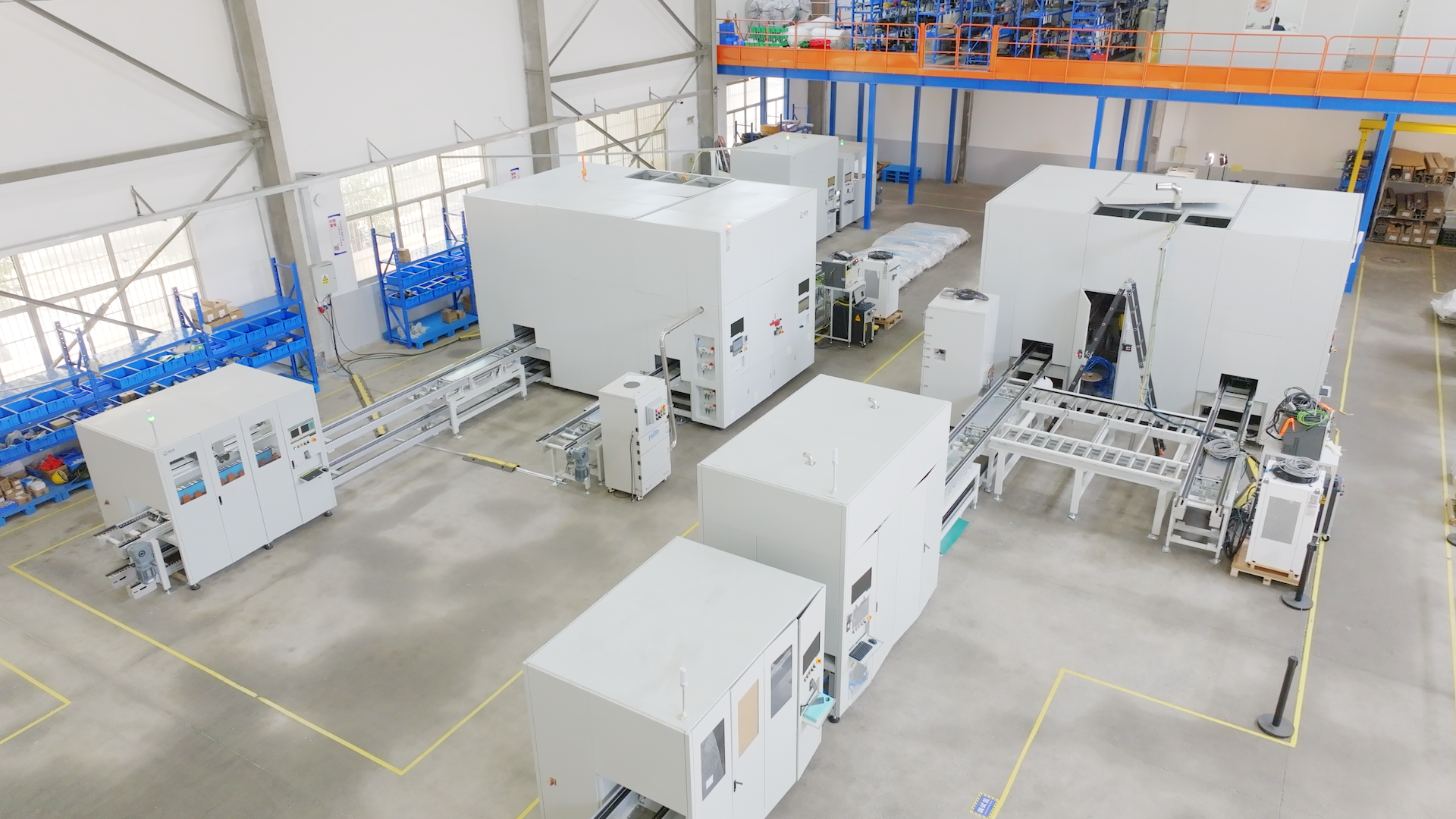
The dividing line: cell manufacturing ends where PACK assembly begins
The two categories can be separated by input, output and the parameter that drives the specification of each.
What a cell line produces
A cell line starts upstream of the pack. Electrode materials, current-collector foils, separator and electrolyte go in; coating, electrode assembly by winding or stacking, filling, formation, aging and grading follow; and a sealed cell with a defined format and capacity comes out. The cell line’s specification is driven by cell chemistry, cell format and cell capacity. Everything the PACK line later does depends on those decisions, but the cell line does not make packs.
What a PACK assembly line produces
A PACK assembly line starts where the cell line stops. Incoming cells are grouped into modules or arranged directly at pack level, joined electrically, fitted with insulation, sensing and wiring, enclosed and tested before shipment. The output is a pack that can be installed in a vehicle chassis or in a storage container. Zonzsin describes its PACK-line coverage as a one-stop scope running from cell feeding, stacking and insulating through wire harness installation to end-of-line (EOL) test and charging and discharging test.
| Stage | Typical input | Typical output | Primary specification driver | Where the published models sit |
|---|---|---|---|---|
| Cell line | Electrode materials, foil, separator, electrolyte | Formed and graded cells | Cell chemistry, cell format, cell capacity | Outside the scope of this article |
| PACK assembly line | Incoming cells, busbars, BMS, harness, enclosure | Finished, tested pack | Pack architecture, cell format, weld and test coverage | ZZX2406 (CTP), ZZX2501 (Blade), ZZX2313 (EV PACK) |
Why the two categories get confused in early project scoping
Three habits make the boundary hard to see while a project is still being framed.
- Both stages are sold as “lines”. A cell line and a PACK line are both long, multi-station, automated systems, and both appear in the same supplier directories and equipment searches.
- Cell format is a PACK-line parameter. The ZZX2406, for example, is published for 314Ah and 587Ah cells in a 1P96S pack configuration. Cell choice therefore appears in PACK-line conversations — as an input requirement, not as something the PACK line produces.
- A PACK line is a system, not a single machine. Zonzsin lists supporting equipment that includes vision inspection systems, fixtures and tooling, laser equipment, and assembly and testing stations, and names PACK compatibility and fixture adaptation as a special requirement. A budget built only around the main conveyor usually understates the scope.
The practical fix is to describe the project by the pack rather than by the line name. Cell format, pack configuration, enclosure type, test scope and target application together define what the line has to do; the line category then follows from those answers.
Industry background: EV manufacturing and ESS run on the same PACK logic
Electric-vehicle production and stationary energy storage both end in a pack assembly step, but the pack leaves the line into a different environment — a vehicle chassis in one case, a container or cabinet in the other. That difference changes fixtures, enclosure handling and test scope more than it changes the basic sequence of feeding, joining, wiring and testing.
The published model range reflects the overlap. The ZZX2406 CTP line is listed for energy storage, EV and commercial and industrial (C&I) applications. The ZZX2501 Blade line is listed for the EV industry and energy storage. The ZZX2313 EV PACK line is listed for the EV industry, energy storage and automotive OEMs, with published welding figures of ≥99.5% one-time qualification rate and ≥99.95% final qualification rate, and a single-machine operation rate of ≥95%.
Shop-floor conditions are similar in both segments. Zonzsin specifies indoor operation in a standard factory under industrial assembly-line conditions with continuous or shift production, and lists ESD protection, fire prevention measures, temperature/humidity and cleanliness control, and PACK compatibility or fixture adaptation as special requirements. Those items are line-design inputs, not optional extras added at commissioning.
CTP, MTP and Blade describe pack architecture, not cell chemistry
Three terms dominate early PACK-line reading, and all three describe how a pack is structured and how the line is arranged around it.
CTP — cell-to-pack
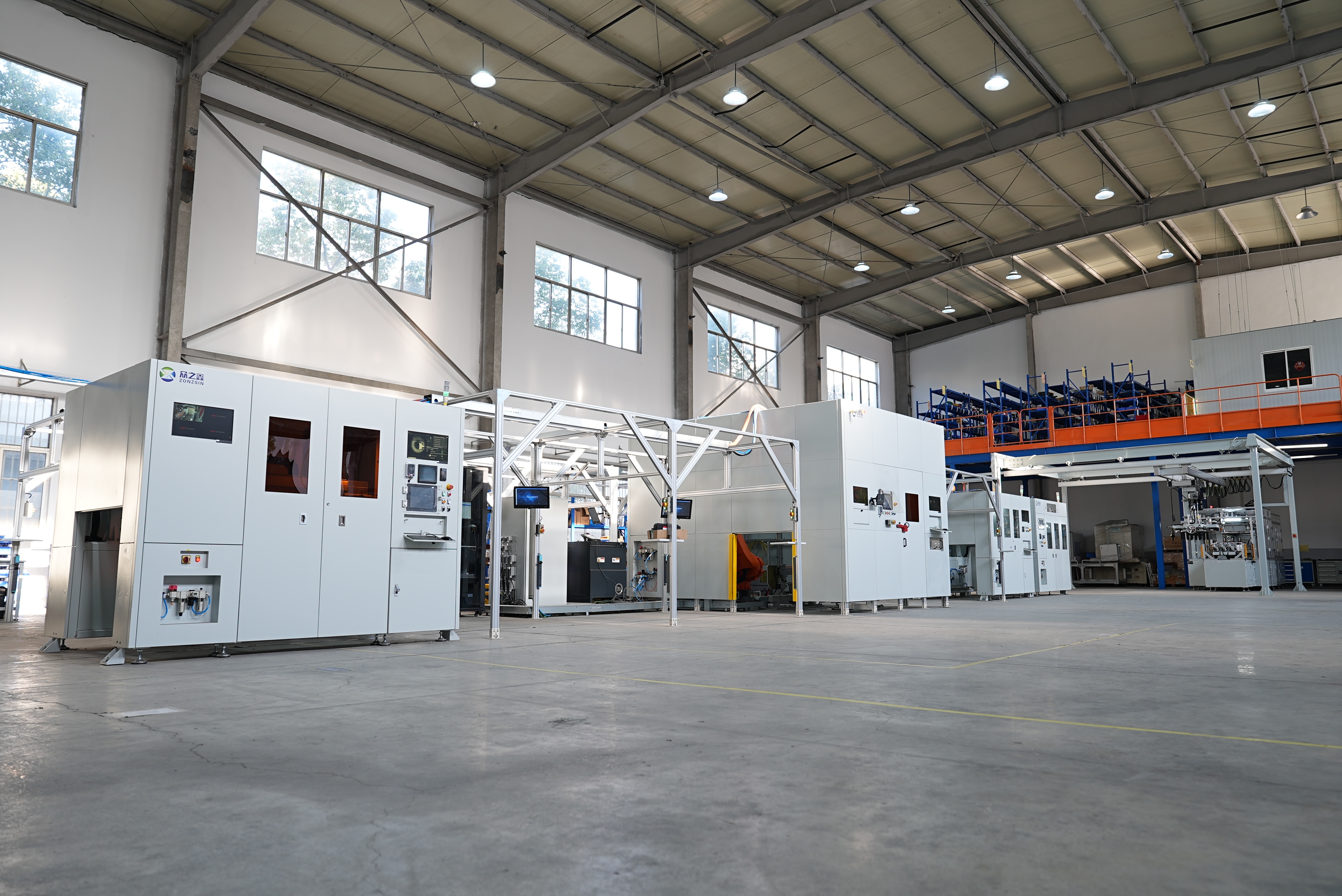
CTP, or cell-to-pack, describes a pack architecture in which cells are integrated at pack level with little or no module sub-assembly. For the line, that shifts work to pack-level handling: cells are fed, stacked, insulated and joined inside the pack structure, and the pack configuration becomes a first-order line parameter. The ZZX2406 is published as a CTP battery PACK assembly line with a 1P96S pack configuration, support for 314Ah and 587Ah cells, semi-automatic automation, a published cycle-time rating of 4 PPM, overall dimensions of 58000 × 11000 × 3800 mm, and a carbon steel Q235 build.
MTP — module-to-pack
MTP, or module-to-pack, keeps a module stage: cells are built into modules first, and the modules are then assembled into the pack. It is the natural contrast case for CTP, and it explains why “CTP or MTP” is a line-configuration question rather than a materials question.
Blade PACK lines
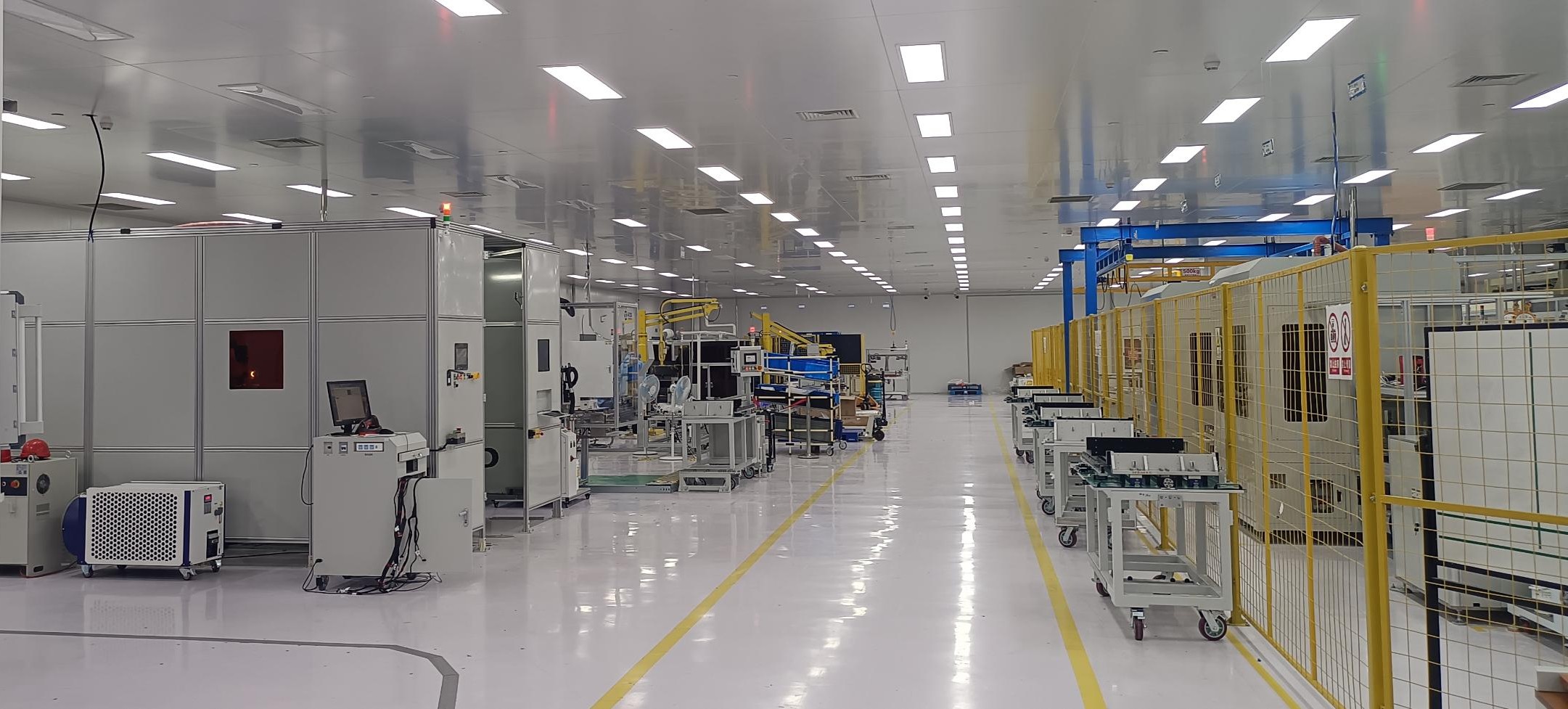
Blade describes a long, narrow cell format and the pack architecture built around it, so a Blade PACK line is arranged around that cell geometry. The ZZX2501 is published as a Blade battery PACK assembly line for the EV industry and energy storage, built in carbon steel Q235, with an electrical requirement of AC 380V ±10%, 50 ±0.5 Hz, a compressed air requirement of 0.6–0.8 MPa, and a published cycle time of 30 minutes per PACK.
None of the three names is a performance claim on its own. CTP, MTP and Blade say what the line is arranged to build; throughput, automation level and test coverage have to be specified separately.
The three published models side by side
The table below reproduces published specification points for the three models. Where a value is not listed for a model in the supplied specification, the cell is left blank rather than estimated.
| Specification point | ZZX2406 | ZZX2501 | ZZX2313 |
|---|---|---|---|
| Line category | CTP battery PACK assembly line | Blade battery PACK assembly line | EV battery PACK assembly line |
| Published cycle time | 4 PPM | 30 minutes per PACK | Not listed in this summary |
| Cell and pack compatibility | 314Ah and 587Ah cells; 1P96S PACK | Not listed in this summary | Not listed in this summary |
| Automation | Semi-automatic | Not listed in this summary | Not listed in this summary |
| Material | Carbon steel Q235 | Carbon steel Q235 | Q235 steel |
| Electrical requirement | Not listed in this summary | AC 380V ±10%, 50 ±0.5 Hz | AC 380V ±10% |
| Compressed air | Not listed in this summary | 0.6–0.8 MPa | 0.5–0.8 MPa |
| Published quality metric | Not listed in this summary | Not listed in this summary | Operation rate ≥95%; one-time weld qualification ≥99.5%; final weld qualification ≥99.95% |
| Overall dimensions | 58000 × 11000 × 3800 mm | Not listed in this summary | Not listed in this summary |
| Applications | Energy storage, EV, C&I | EV industry, energy storage | EV industry, energy storage, automotive OEMs |
Step by step: what happens inside a PACK assembly line
The sequence below follows Zonzsin’s published description of its PACK-line coverage, with the design input a buyer needs to confirm at each stage.
- Cell receiving and feeding. Cells arrive from the cell supplier and are loaded into the line. Cell format must match the line specification: the ZZX2406 is published for 314Ah and 587Ah prismatic cells.
- Stacking and pack-level arrangement. Cells are stacked into the pack configuration — 1P96S on the ZZX2406 — using fixtures and tooling that hold position and spacing.
- Insulation. Insulating layers separate cells and pack structures electrically and thermally. This stage sets the dielectric margin of the finished pack and depends on the insulation materials selected.
- Joining. Busbar or tab joining uses welding equipment, and laser equipment is listed among the supporting equipment for Zonzsin lines. Weld quality is the metric most often published: the ZZX2313, a different model in the range, is published at ≥99.5% one-time and ≥99.95% final welding qualification rate.
- Wire harness and sensing installation. Harness, sensing and communication wiring are installed and routed. On a semi-automatic line such as the ZZX2406, this is one of the stages where manual intervention should be planned and staffed.
- Vision inspection. Vision inspection systems are listed as supporting equipment and are used to confirm presence, position and orientation before enclosure.
- End-of-line (EOL) test. Functional and electrical checks are completed at end of line before the pack is released to the next stage.
- Charging and discharging test. The final electrical validation charges and discharges the pack and is the last gate before packing and shipment.
Behind those stations sit the utilities and building conditions. Published requirements include an AC 380V ±10% supply, compressed air in the 0.6–0.8 MPa range on the ZZX2501, indoor installation in a standard factory, ESD protection, fire prevention, and temperature/humidity and cleanliness control.
Use cases: EV traction packs, stationary storage and C&I
In EV manufacturing, the PACK line builds traction packs. The ZZX2501 Blade line is listed for the EV industry, the ZZX2313 EV PACK line is listed for EV, energy storage and automotive OEMs, and the ZZX2406 CTP line lists EV among its applications. Weld quality and electrical test coverage carry much of the quality weight at this stage, because the pack is a structural and safety-relevant assembly once it is installed in a vehicle.
In stationary storage, the pack is integrated into a container or cabinet rather than a chassis. Zonzsin builds an ESS battery pack insertion robot for containers alongside its PACK lines, and both the ZZX2406 and the ZZX2501 list energy storage among their applications. Pack configuration and fixture adaptation matter here because ESS programmes often run more than one pack variant through the same production area.
Commercial and industrial (C&I) storage is listed as an application for the ZZX2406. For projects of this type, a single line may be asked to handle more than one pack variant, which makes PACK compatibility and fixture adaptation a specification item rather than a commissioning detail.
Battery PACK assembly projects are also common in India. Zonzsin lists the same recurring supporting scope for those projects — vision inspection systems, fixtures and tooling, laser equipment, and assembly and testing stations — which is a usable checklist when a project team is building its first equipment budget.
What to verify before specifying a PACK assembly line
- Cell format and pack configuration. Confirm that the line is published for the cells you will actually buy — 314Ah and 587Ah with a 1P96S configuration on the ZZX2406, for example — and that the pack configuration matches your product plan.
- Automation level. Semi-automatic and fully automatic lines are different investments. The ZZX2406 is published as semi-automatic; confirm where manual intervention is expected and how that affects labour and takt.
- Footprint and building. The ZZX2406 is published at 58000 × 11000 × 3800 mm. Check clear height, floor loading, aisle width and services routing before the layout is frozen.
- Supporting equipment scope. Vision inspection, fixtures and tooling, laser equipment, and assembly and testing stations are separate scope items. Agree who supplies each one before comparing quotations.
- Environmental controls. ESD protection, fire prevention, and temperature/humidity and cleanliness control are listed special requirements; they affect building services and operating cost.
- Published performance figures and acceptance. Operation rate, weld qualification rate and cycle time are supplier-published values. Agree the acceptance test method and measurement conditions in the contract, and verify at factory acceptance rather than at commissioning.
- Application fit. Confirm that the model is listed for your application — EV, energy storage or C&I — and that every pack variant in the programme is covered by fixtures.
FAQ
What is the difference between a battery PACK assembly line and a cell line?
A cell line manufactures cells from electrode materials, foil, separator and electrolyte, and delivers formed and graded cells. A PACK assembly line takes those finished cells and builds them into a pack through feeding, stacking, insulation, joining, wiring and testing. The cell line’s output is the PACK line’s input.
What does CTP mean in a PACK assembly line?
CTP stands for cell-to-pack. Cells are integrated at pack level with little or no module sub-assembly, so the line handles cells directly inside the pack structure. The ZZX2406 is a CTP battery PACK assembly line published for 314Ah and 587Ah cells in a 1P96S pack configuration.
What is a Blade battery PACK line?
A Blade battery PACK line is arranged around a long, narrow cell format and the pack architecture built for it. The ZZX2501 is published as a Blade battery PACK assembly line for the EV industry and energy storage, with a published cycle time of 30 minutes per PACK and a compressed air requirement of 0.6–0.8 MPa.
Which cells and pack configuration does the ZZX2406 support?
The ZZX2406 is published for 314Ah and 587Ah cells in a 1P96S pack configuration, with semi-automatic automation, a 4 PPM published cycle-time rating and overall dimensions of 58000 × 11000 × 3800 mm. Cell format should be confirmed against the current specification sheet before an order is placed.
Can the same PACK line serve both EV and ESS production?
It depends on the model and the fixtures. The ZZX2406 lists energy storage, EV and C&I applications, while the ZZX2501 lists the EV industry and energy storage. Because PACK compatibility and fixture adaptation are separate requirements, a mixed programme should be specified with each pack variant named. Zonzsin’s product brochure summarises the published specifications, and a project-specific scope review is the practical next step for a mixed EV and ESS programme.
Conclusion: start from the pack, then choose the line
The difference between an automatic battery PACK assembly line and a cell line is a boundary, not a rivalry: one makes cells, the other turns cells into packs. Inside the PACK category, CTP, MTP and Blade describe pack architecture and cell handling rather than cell chemistry, and the published models make those categories concrete — the ZZX2406 for CTP with 314Ah and 587Ah cells in 1P96S, the ZZX2501 for Blade with a published 30-minute cycle per PACK, and the ZZX2313 as an EV PACK line with published welding qualification of ≥99.5% one-time and ≥99.95% final. Starting the specification from the pack — cell format, configuration, application and test scope — keeps the equipment enquiry in the correct category.
Next step
The full published specification set for the CTP and Blade PACK lines is collected in the Zonzsin product brochure, which can be downloaded directly. Project teams comparing a CTP line with a Blade line can use it to check cell format, pack configuration, utilities and footprint against their own pack programme before requesting a quotation.
Have Questions or Need More Details?
Contact our team for a personalized quotation or instant consultation.
Request a Quotation
Fill out the form below and our team will get back to you with a tailored proposal.
WhatsApp Direct Chat
Prefer to chat in real-time? Message us on WhatsApp for instant assistance & quick answers.
- Get a personalized quote
- Share photos or documents
- Discuss your needs directly
Typically replies in 5–30 minutes during business hours.