
CTP ZZX2406 vs Blade ZZX2501: Pack Line Decision Guide
Automatic Battery Pack Assembly Line: CTP ZZX2406 vs Blade ZZX2501 Decision Guide
The choice between the CTP ZZX2406 and the Blade ZZX2501 is a configuration decision, not a brand decision. Both are automatic battery pack assembly line configurations offered by Shanghai Zonzsin Intelligent Equipment Co., Ltd. (Zonzsin), a battery pack assembly equipment manufacturer founded in 2019 and supplying lithium battery manufacturers, energy storage integrators and automotive OEMs. In short: the ZZX2406 is the cell-to-pack (CTP) configuration, specified with a 58,000 × 11,000 × 3,800 mm footprint, a 6 PPM output figure and a 30-minute per-pack cycle, Q235 carbon steel construction, an AC 380 V ±10% / 50 ±0.5 Hz supply requirement and ISO 9001 certification issued by ZDCB under certificate 44825MS079001R0. The ZZX2501 is Zonzsin's Blade battery PACK line, also built in carbon steel / Q235; no certification for that configuration is listed in the supplied materials.
That asymmetry is the practical heart of this guide. At the decision stage, a buyer is not choosing between two identical machines with different paint, but between two pack architectures with different evidence trails, different civil-works demands and different acceptance-test scopes. The sections below convert the available specifications into purchasing terms and acceptance criteria, and mark clearly where a value must be confirmed in the RFQ rather than assumed from this page.
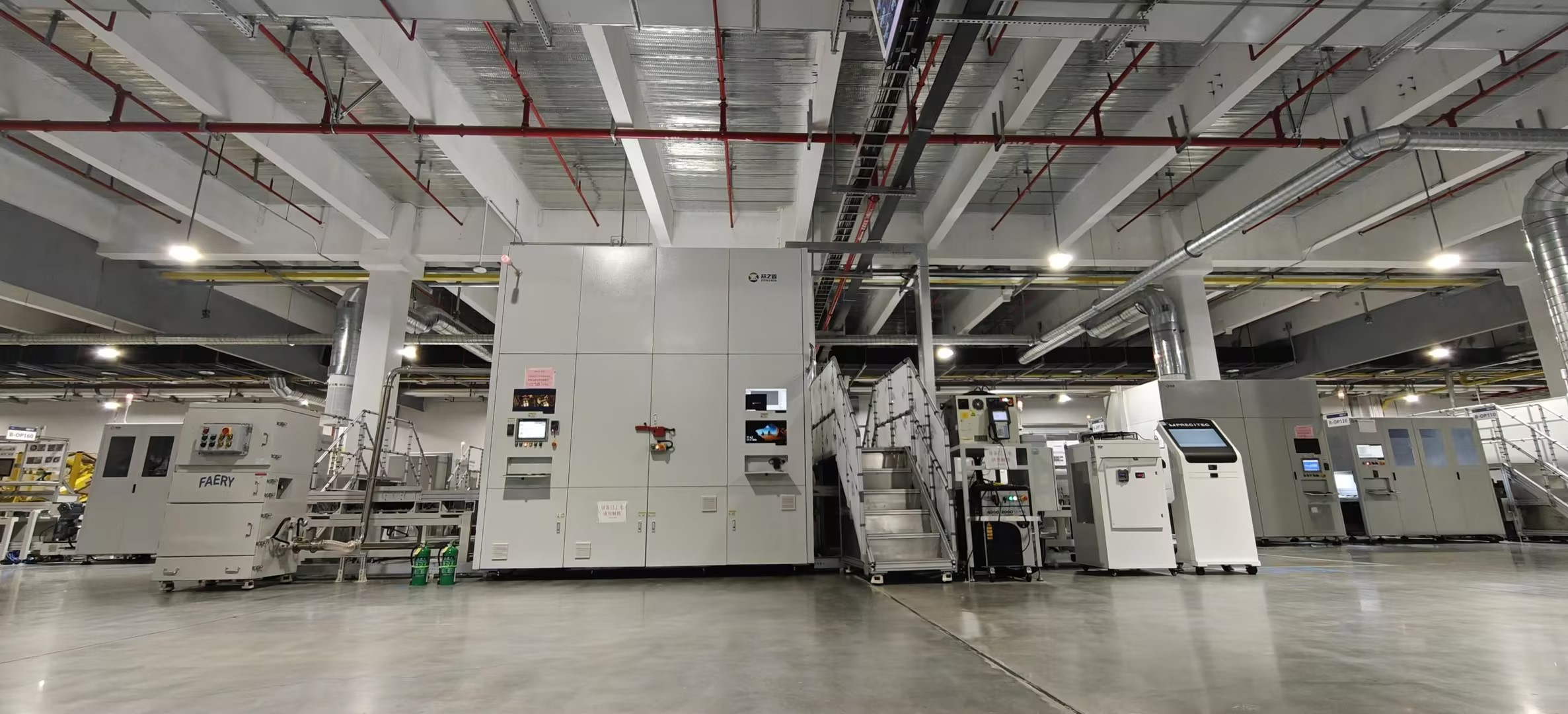
What Each Configuration Is
The ZZX2406 is an automatic battery pack assembly line built around cell-to-pack architecture. In CTP design, the module stage is reduced or removed and cells are integrated directly into the pack structure, which is why CTP lines are usually discussed together with large prismatic cells and pack-level structural design. Zonzsin's CTP line is documented as supporting 314Ah and 587Ah prismatic cells, which places it in the large-prismatic segment of EV traction and stationary storage pack production rather than in small-format consumer pack assembly.
The ZZX2501 is the Blade battery PACK line. Blade architecture uses long, thin cells arranged directly into the pack, a format that changes how cells are handled, oriented and restrained during assembly. The supplied specification for the ZZX2501 confirms two things only: its identity as a Blade battery PACK line and carbon steel / Q235 construction. It does not list footprint, throughput, electrical requirements or certification, and those gaps should be read as "not stated in the supplied material" — not as evidence that the configuration lacks any capability.
Both configurations belong to the same equipment family: fully automatic, customizable pack assembly systems intended for medium-to-high volume production lines and PACK assembly scenarios that demand high consistency and yield.
Side-by-Side: The Supplied Specifications
The table below contains only values that are supported in the supplied product and company materials. Where a field is blank for the ZZX2501, the correct action is to request the value during technical clarification.
| Decision dimension | ZZX2406 (CTP) | ZZX2501 (Blade) | What to confirm |
|---|---|---|---|
| Line identity | CTP automatic battery pack assembly line | Blade battery PACK line | Pack architecture and cell format in writing |
| Cell focus | 314Ah and 587Ah prismatic cells | Blade-format cells | Exact cell drawing and tolerance |
| Footprint | 58,000 × 11,000 × 3,800 mm | Not stated | Layout drawing incl. maintenance aisles |
| Throughput | 6 PPM; 30 minutes per pack | Not stated | Which metric governs acceptance, against which pack |
| Main structure | Carbon steel Q235 | Carbon steel / Q235 | Surface treatment and paint specification |
| Electrical supply | AC 380 V ±10%, 50 ±0.5 Hz | Not stated | Site voltage, phase count, installed load |
| Certification evidence | ISO 9001, ZDCB, certificate 44825MS079001R0 | Not listed | Certificate scope, issue and expiry date |
Fit by Cell Format and Application Scenario
The fastest way to eliminate one configuration is to start from the cell, not the machine. A project built on 314Ah or 587Ah prismatic cells sits inside the documented compatibility of the ZZX2406 CTP line, so the technical conversation can move directly to pack architecture, restraint design and end-of-line testing. A project built on blade-format cells points to the ZZX2501 Blade battery PACK line, where the handling, orientation and stacking logic is designed around that cell geometry.
Application scenario then filters the decision a second time. EV traction packs and stationary storage packs differ in pack mass, enclosure design, thermal interface and test routines, and both configurations are positioned for EV and ESS pack production rather than for a single vehicle program. For buyers, the practical question is not "which line is more advanced" but "which line is already engineered around the cell I have qualified and the pack I have homologated".
Volume expectation matters as much as format. Zonzsin positions these lines for medium-to-high volume production and for PACK assembly scenarios that require high consistency and yield. A pilot-scale or low-volume operation should therefore test whether a fully automatic line with this footprint and this throughput class is proportionate, or whether a semi-automatic cluster loading approach would fit the ramp-up curve better.
Footprint and Building Fit: 58,000 × 11,000 × 3,800 mm
The ZZX2406 is specified at 58,000 mm long, 11,000 mm wide and 3,800 mm high. Read as a building requirement, that is a 58-metre production hall with an 11-metre width allocation for this line alone, before incoming material storage, finished-pack staging, operator walkways and maintenance access are added. The 3,800 mm height figure is the one buyers most often overlook: it must be checked against clear height under roof trusses, sprinkler pipework, cable trays, crane runways and any HVAC ducting in the intended bay.
Because the length is fixed at 58 metres, building fit is usually the first hard constraint to test. A layout that appears to work on a site plan can fail once fire egress routes, forklift turning radii and utility trenches are drawn in. Request a dimensioned general-arrangement drawing with utility drop points and confirm that the drawing, not a marketing image, is the document your plant engineer signs off.
The ZZX2501 footprint is not stated in the supplied materials, so a Blade line project should treat floor-space planning as an open item until a layout drawing is issued. Do not transfer the ZZX2406 dimensions to the ZZX2501; two configurations in the same equipment family can differ materially in length once cell handling and stacking stations change.
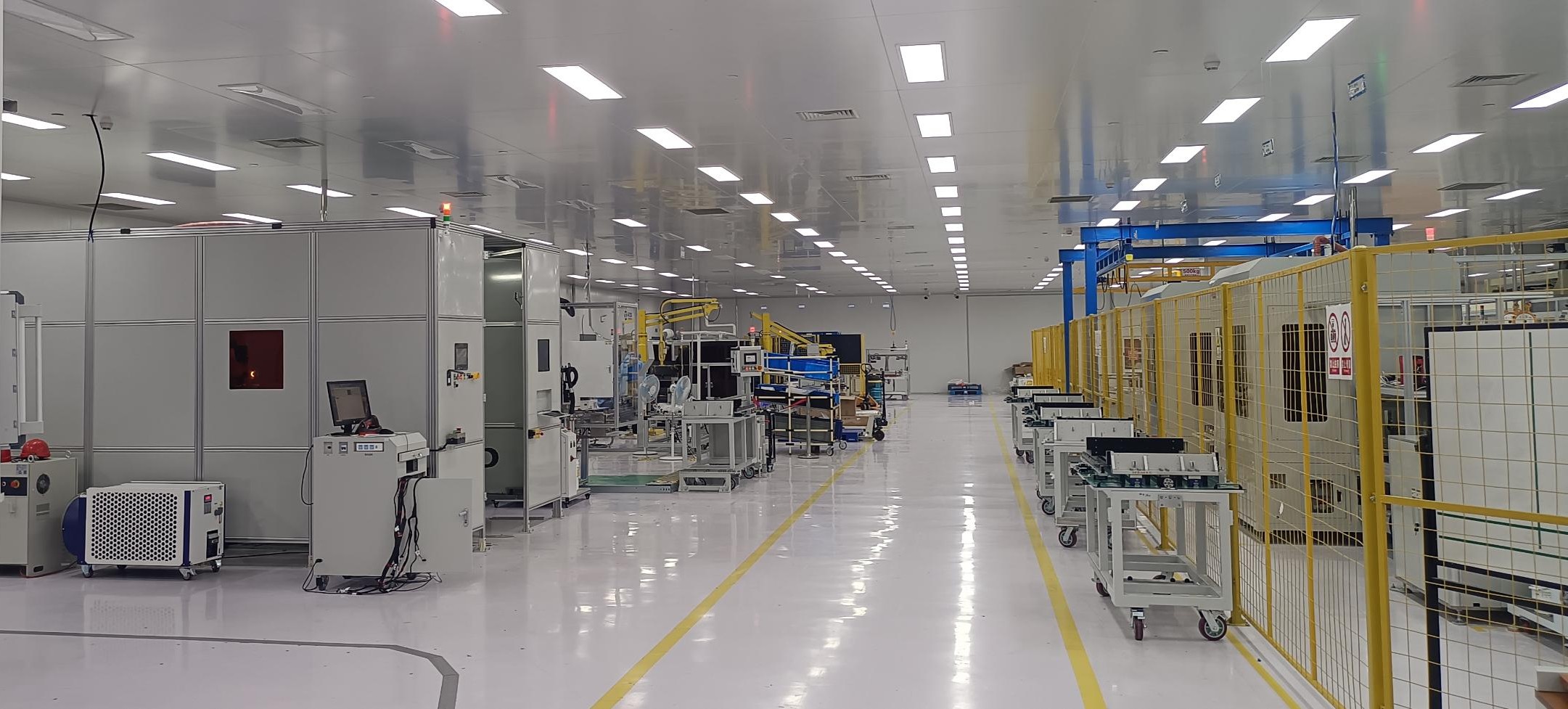
Utilities: AC 380 V ±10%, 50 ±0.5 Hz
The ZZX2406 electrical requirement is AC 380 V with a ±10% voltage tolerance and a frequency of 50 Hz ±0.5 Hz. The tolerance band is a design input, not a formality. A plant with heavy welding, large compressors or frequent motor starting can push supply outside a narrow band, which then shows up as nuisance trips, positioning faults or rejected packs during ramp-up rather than in the factory acceptance test.
For procurement, the useful step is to hand the ±10% / ±0.5 Hz specification to the plant electrical engineer and ask for a measurement of actual voltage and frequency behaviour at the intended connection point over a production week. If the site runs at 60 Hz or at a different nominal voltage, that is a configuration question to raise in technical clarification rather than something to resolve after shipment. The ZZX2501 electrical requirement is not stated in the supplied materials and must be requested with its installed load.
Throughput: 6 PPM and 30 Minutes per Pack
The ZZX2406 is specified with a 6 PPM output figure and a 30-minute per-pack cycle. These are two different statements about line performance — one describes line output, the other describes the time a pack occupies the line — and they only become a contractual commitment once the pack they refer to is defined. A 30-minute cycle on a small ESS pack and a 30-minute cycle on a large EV traction pack represent very different annual capacity.
This is why throughput should be written into the purchase order as a measured, bounded commitment rather than a headline number. Specify the reference pack by kWh and cell count, the shift pattern, the assumed uptime or OEE basis, the ramp-up allowance after commissioning, and the duration and pass criteria of the acceptance run. As market context, a commercial supplier listing for high-efficiency CTP lines handling large prismatic cells puts cycle time in the 4–8 PPM range; that is a third-party listing rather than a measurement of this line, but it indicates that 6 PPM sits inside a normal band for this equipment class rather than at an extreme.
Build Material and What ISO 9001 Evidence Covers
Both configurations are built in carbon steel Q235. Q235 is a general structural steel widely used for machine frames and line structures, and its practical behaviour depends heavily on surface preparation and coating rather than on the grade alone. For a pack assembly hall, ask for the surface-treatment sequence, the paint system and the dry-film thickness range, and inspect welds and frame rigidity at the pre-acceptance inspection. A Q235 frame that is well prepared and coated behaves very differently from the same frame finished without surface treatment.
On certification, Zonzsin's CTP configuration is documented against ISO 9001 certification issued by ZDCB under certificate 44825MS079001R0. Two verification steps belong in the buyer's file. First, confirm the certificate's scope and the site it covers, since a quality management system certificate supports process control at a defined manufacturing location rather than certifying every individual machine. Second, record the issue and expiry dates and set a reminder before expiry so the evidence does not go stale during a multi-year delivery programme.
For the ZZX2501 Blade battery PACK line, no certification is listed in the supplied materials. That is a request item, not a negative finding: the correct instruction to a supplier is "provide the certification evidence applicable to this configuration and manufacturing site", and the correct response is a document, not an assurance.
Safety and Process Risk Controls as Acceptance Items
Battery pack assembly concentrates three risks in one place: electrical short circuit, thermal events and mechanical handling damage. Zonzsin's stated control approach combines protective design and interlocks, safety sensors, and ESD grounding and protection, supported by process risk assessment and testing plus dedicated test stations. For a buyer, each of those becomes an inspection item rather than a sentence in a brochure.
In practice, that means walking the line and testing the emergency-stop chain and guard interlocks station by station, verifying that safety sensors are positioned to detect the access they are meant to detect, and measuring ESD grounding continuity at the points where operators and handling equipment touch cells and busbars. Ask for the process risk assessment and the test-station records, and confirm which tests run in-line and which run at end-of-line. For the Blade configuration, request the equivalent safety and risk-control documentation, since the cell format differs and the handling risk profile changes with it.
Purchasing Terms: Six Checkpoints Before You Sign
Treat the following as the minimum technical annex to a purchase order for either configuration. Each item converts a specification into something that can be accepted or rejected.
1. Scope and configuration freeze. List the cell format, pack model and station scope explicitly, including which processes are in scope from cell feeding through end-of-line and charging/discharging test. Zonzsin describes a one-stop scope covering cell feeding, stacking, insulating, wire harness installation, end-of-line test and charging/discharging test; the order should state exactly which of these apply to your pack.
2. Layout and civil works. Attach the dimensioned general-arrangement drawing, confirm the 58,000 × 11,000 × 3,800 mm envelope for the ZZX2406 or the issued drawing for the ZZX2501, and record who is responsible for floor preparation, pits, trenches and crane access.
3. Utilities and interface. Fix the supply conditions in the contract — for the ZZX2406, AC 380 V ±10%, 50 ±0.5 Hz — together with compressed-air quality, connection points and the boundary between buyer-supplied and supplier-supplied services.
4. Throughput commitment. Define the reference pack, the 6 PPM and 30-minute figures as applicable, the OEE or uptime basis, and the acceptance-run duration and pass criteria.
5. Quality and safety documentation. Require the ISO 9001 certificate (ZDCB, 44825MS079001R0) with scope and validity, the process risk assessment, the test-station list and the ESD and interlock verification records.
6. Handover and support. Specify operator training, spare-parts list, documentation language, warranty terms, response times and remote-support arrangements. Zonzsin's stated service model relies on technical personnel for maintenance and periodic calibration, combined with spare-parts management and remote support — so the maintenance staffing and calibration interval belong in the contract, not in a later conversation.
Commercial Comparison: What the 20% and 50% Figures Mean
Zonzsin's supplied comparison material states a 20% price saving, a 50% manpower saving and optimized space utilization relative to alternatives, alongside a 20% cycle-time improvement claim. It also states plainly that initial investment is higher than a pure manual solution and that per-unit cost may fall over time through efficiency and yield gains — with the caveat that a specific payback period requires project-level calculation.
The honest way to use these figures is as directional claims whose baseline must be named. A 20% price saving is only meaningful against a defined reference configuration; a 50% manpower saving depends on the labour model assumed for the manual alternative and on how many operators remain for inspection, material handling and changeover. Ask for the comparison basis in writing, then rebuild the calculation with your own labour rates, shift pattern and pack mix. Note also that a 20% cycle-time improvement and a fixed 30-minute per-pack cycle describe the line from different directions, so the acceptance test — not the headline — should be the number your finance team models.
Customization and Integration Scope
Zonzsin states that its advantage over ATW and LEAD INTELLIGENT lies in customized line integration — supporting tailored line integration per specific requirement. Read narrowly, that is a claim about engineering flexibility, not about yield, reliability or total cost, and it should be evaluated as such: ask for the customization boundary, meaning which elements are standard modules and which are engineered per project, and how a change request affects schedule and price.
Customization also carries an acceptance consequence. The more of the line that is engineered to your pack, the more of the acceptance criteria must be written specifically for your pack rather than inherited from a catalogue. Zonzsin's own R&D capability — a 43-engineer team within a 90-person organization, with 50 granted patents including invention patents for AGV-driven battery PACK insertion robots — is relevant context for evaluating that engineering capacity, but it is not a substitute for a documented scope of supply.
Use Cases: Which Profile Points to Which Configuration
Choose the ZZX2406 when the project is built on 314Ah or 587Ah prismatic cells and the pack is a CTP design for EV traction or stationary storage, when the hall can accommodate a 58-metre line with 11 metres of width and 3.8 metres of clear height, and when the site can hold a 380 V / 50 Hz supply inside a ±10% voltage and ±0.5 Hz frequency band.
Choose the ZZX2501 when the product is a Blade-format pack and the assembly logic must follow that cell geometry, accepting that footprint, throughput, utilities and certification evidence must be obtained during technical clarification before a layout or a business case can be finalized.
In both cases the deciding factor is evidence, not preference: a configuration whose layout, throughput basis and acceptance criteria are documented can be scheduled, financed and handed over; one whose key parameters are still unstated cannot.
FAQ
What certification applies to the ZZX2406 CTP line, and what should a buyer verify?
Zonzsin's CTP configuration is documented against ISO 9001 certification issued by ZDCB under certificate number 44825MS079001R0. A buyer should verify three things before relying on it: the certificate scope, the manufacturing site it covers, and the current validity dates. ISO 9001 is a quality management system certification, so it supports confidence in process control at a defined site rather than certifying the performance of an individual machine. No certification is listed in the supplied materials for the ZZX2501 Blade battery PACK line; that absence should be resolved by requesting the applicable certification evidence for that configuration and site, and it should not be read as a statement that the configuration is uncertified.
Can one automatic battery pack assembly line run both CTP and Blade packs?
The supplied materials describe the ZZX2406 as a CTP configuration supporting 314Ah and 587Ah prismatic cells, and the ZZX2501 as a Blade battery PACK line; they do not state that either configuration handles both cell formats. The practical route is to treat format compatibility as an engineering question for the RFQ: provide your cell drawing, pack architecture and target output, and ask the supplier to confirm in writing which stations change, what the changeover time would be, and whether the change is a standard option or a customization. Zonzsin positions its lines as customizable, which makes a written compatibility statement a realistic request — but it remains a statement to be obtained, not assumed.
How should budget be compared between the ZZX2406 and the ZZX2501?
Neither configuration carries a published price in the supplied materials, so a comparison must be built from quotations scoped to the same station list, pack and output. Two reference points help frame the discussion. Zonzsin's comparison material states a 20% price saving versus alternatives, with higher initial investment than a pure manual solution and a payback period that requires project-level calculation. Separately, a commercial supplier listing for a complete turnkey CTP battery pack production line indicates a range of roughly US$1,000,000 to US$3,000,000 per set; that is third-party market context, not a Zonzsin quote. Budget the line, the utilities, the civil works and the ramp-up together, and require each supplier to quote against the same scope.
What can be validated before the line is shipped and commissioned?
Three validation layers are supported by the supplied materials. First, documentation: the process risk assessment, the test-station list, the ISO 9001 certificate with scope and dates, and the dimensioned layout drawing. Second, factory inspection: emergency-stop and guard-interlock testing, safety-sensor placement checks, ESD grounding continuity measurement, and visual and dimensional checks on the Q235 frame and its surface treatment. Third, throughput planning: agree the reference pack, the 6 PPM and 30-minute figures as applicable, the uptime basis and the acceptance-run duration before shipment so that commissioning tests have pass criteria rather than opinions. For project-specific validation such as a trial pack run, confirm the scope directly with the supplier, since trial arrangements are project-dependent.
What lead-time and footprint factors should be fixed in the contract?
For the ZZX2406, fix the 58,000 × 11,000 × 3,800 mm envelope and the AC 380 V ±10%, 50 ±0.5 Hz supply condition, then attach the general-arrangement drawing and name who prepares floors, trenches and utility connections. Model-specific lead time is not published in the supplied materials, so delivery schedule, milestone payments, shipping terms and commissioning duration must be agreed in the quotation and written into the purchase order. Zonzsin reports an export share of about 60% with customers in Europe, the USA, Japan, South Korea and India, which makes documentation language, spare-parts logistics and remote support realistic items to negotiate up front rather than after installation. For the ZZX2501, treat footprint and lead time as open items to be obtained with the quotation.
Conclusion
The decision between the CTP ZZX2406 and the Blade ZZX2501 resolves faster when it is driven by the cell and the building rather than by a general impression of automation. The ZZX2406 brings a documented package: a 58-metre, 11-metre, 3.8-metre envelope, 6 PPM and 30-minute per-pack throughput figures, Q235 construction, a defined AC 380 V ±10% / 50 ±0.5 Hz supply requirement, and ISO 9001 certification by ZDCB under certificate 44825MS079001R0. The ZZX2501 brings a specific architecture — a Blade battery PACK line built in carbon steel / Q235 — with its footprint, throughput, utilities and certification evidence still to be confirmed.
For a buyer at the decision stage, that difference is the checklist. Lock the configuration and the acceptance criteria first, then negotiate price, manpower and payback against a named baseline. To review the wider equipment range and specifications before issuing an RFQ, the Zonzsin product brochure is available for download, and configuration questions can be directed to the Zonzsin team at katty.liu@zonzsin.com.

Have Questions or Need More Details?
Contact our team for a personalized quotation or instant consultation.
Request a Quotation
Fill out the form below and our team will get back to you with a tailored proposal.
WhatsApp Direct Chat
Prefer to chat in real-time? Message us on WhatsApp for instant assistance & quick answers.
- Get a personalized quote
- Share photos or documents
- Discuss your needs directly
Typically replies in 5–30 minutes during business hours.