
What Counts as an ESS Battery Pack Insertion Robot? A Primer
A battery pack insertion robot is a powered machine that lifts a finished battery PACK, carries it to an energy storage container and places it into a defined rack position inside that container under machine-controlled hoisting and alignment. Transport, lifting and staging equipment may move the same PACK, but the insertion robot is the device that performs the final positioning step. That single function, not the container, is what puts a machine in this category.
Category definitions look academic until a container assembly line is being specified. In containerised BESS work the terminology is still loose: cranes, forklift attachments, roller conveyors, transfer AGVs and genuine insertion robots are all described with overlapping words, and a buyer at the awareness stage needs a working test rather than a catalogue.
Shanghai Zonzsin Intelligent Equipment Co., Ltd. (Zonzsin) is a Shanghai-based equipment manufacturer established in 2019 that builds ESS battery pack insertion robots for containers and automatic battery pack assembly lines. Its container insertion range covers four models — the crawler-driven ZZX2522, the rail-fixed ZZX2508 and ZZX2524, and the AGV-driven RD16 — and those four models are used below as the reference set for the category vocabulary.
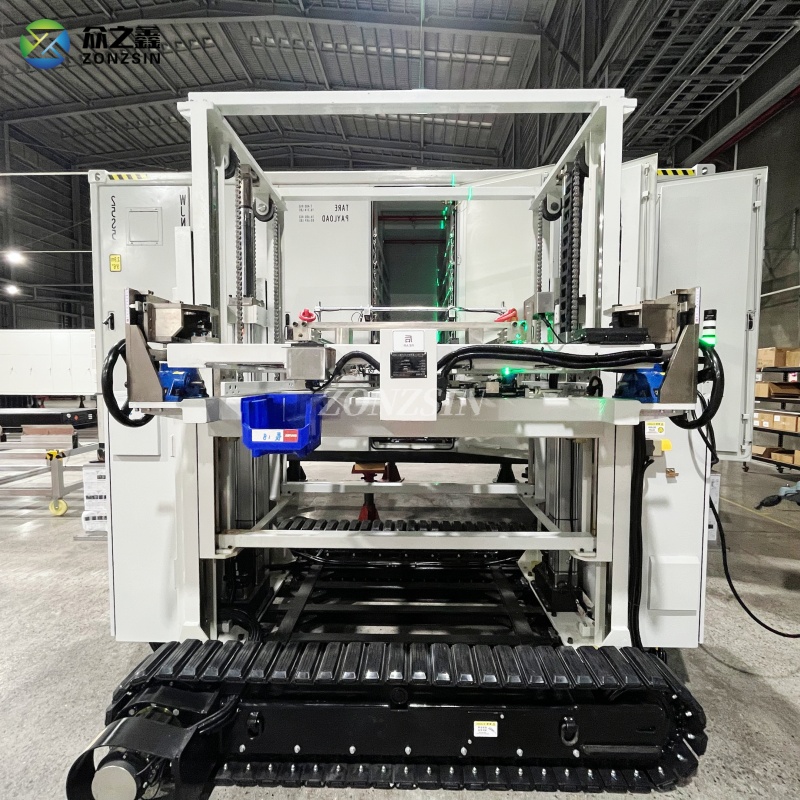
Crawler-driven battery PACK insertion and removal equipment at a container position.
The definition, unpacked into six terms
Most confusion around this equipment comes from using one word for several different things. Six terms cover the working vocabulary of a container insertion line.
- PACK — the load unit. The robot handles an assembled pack, not cells or modules. The AGV-driven RD16 is specified for 280/314/587 Ah cells assembled into 1P52S or 1P104S PACKs, which shows how far cell format reaches into robot specification: the PACK type determines the gripper, the load and the clearance needed at the rack slot.
- Insertion — the machine-controlled motion that moves a PACK from outside the container door to its rack position. It combines a hoisting axis with horizontal feed and alignment.
- Removal — the reverse operation, used when a pack must come out for service or replacement. Only some models are described as insertion-and-removal; the ZZX2522 is one of them.
- Hoisting range — the vertical travel available for reaching rack levels. Published values are 1.05–3.4 m for the RD16 (customizable) and 0.8–3.4 m for the ZZX2522 (customizable).
- Gripper changeover — the time needed to exchange the PACK interface. The rail-fixed ZZX2524 is specified at under 1 minute, which is often the difference between a line that can run mixed PACK batches and one that cannot.
- Compatibility envelope — the container and PACK dimensions a model is designed to accept. The ZZX2508 publishes both, which makes it the clearest example of what an envelope statement should contain.
Where the category boundary gets blurry
Four kinds of equipment are routinely described in language that sounds like insertion, and only one of them belongs in the category.
- Transport-only equipment. A transfer AGV, roller conveyor or forklift moves a PACK from one place to another. None of them positions the load inside the rack slot.
- Lifting equipment. An overhead crane or hoist with a spreader can raise a PACK to container height but cannot present it at slot-level alignment inside a confined opening.
- Manual insertion aids. Roller beds, guide rails and hydraulic pushers reduce effort but leave alignment and final placement with the operator.
- Stuffing machines for other cargo. Equipment built to load cartons or pallets shares the word container but not the load class, the fixture or the positioning requirement of a PACK.
A single rule resolves most cases: if the machine cannot place the load into the rack position by its own controlled motion, it is handling equipment that supports insertion, not an insertion robot.
Five tests that decide whether a machine counts
Apply the tests in order. A machine that fails test one or two is outside the category; a machine that fails tests three to five may be an insertion robot for a different application or a different container class.
| Test | Question to ask | Why it decides membership |
|---|---|---|
| 1. Load unit | Does the machine handle a finished battery PACK as a single load? | Cell-level or module-level handling is a different category with different fixtures. |
| 2. Insertion control | Is final placement inside the rack performed by the machine rather than the operator? | This is the defining function; without it the device is transport or lifting equipment. |
| 3. Container interface | Is the machine designed around a container opening, floor and rack layout? | Door opening, sill height and rack depth shape the structure and the hoisting axis. |
| 4. PACK interface | Is there a dedicated gripper or fixture, with a stated changeover time? | PACK geometry varies; the interface is what makes repeated insertion repeatable. |
| 5. Declared envelope | Are container and PACK dimension ranges published? | A machine without a stated envelope cannot be checked against a project before purchase. |
Tests two and five most often disqualify a candidate. Insertion control is easy to claim and hard to verify from a photograph: the useful question is which axis performs the final approach, and whether the operator only supervises or actually guides the pack into the slot. A declared envelope is the opposite — it is either in the specification or it is not, and its absence suggests the machine was configured per project rather than designed against a defined range.
The ZZX2508 shows what a usable envelope statement contains: container length 6058–7000 mm, width 2438–2700 mm and height 2896–3000 mm, plus PACK length 1100–2200 mm, width 780–1260 mm and height 230–260 mm. Those six numbers let an engineer check a project in minutes, before any commercial discussion begins.
Insertion-only and insertion-and-removal are different scopes
Most container insertion robots are specified for loading. A smaller group is specified for both directions, and the difference changes how a line is planned rather than how it is bought.
In Zonzsin's range the distinction is explicit in the model descriptions: the ZZX2522 is described as a crawler-driven battery PACK insertion and removal robot, while the ZZX2508, ZZX2524 and RD16 are described as insertion robots. Removal capability matters wherever packs have to come back out of a container — service access, pack replacement, rework after a failed test — because it determines whether that operation uses the same machine, a crane or a manual procedure.
The practical consequence is a line on the requirement sheet: which operations must the machine perform, loading only or loading and unloading, and if unloading, at which rack levels. The answer affects the gripper, the control logic and the leveling arrangement, so it belongs in the specification rather than in a later conversation.
The three drive configurations, in plain terms
Drive configuration describes how the machine reaches the container and where its stability comes from. The three configurations in this reference set differ on mobility, on what must be installed in the floor, and on the ground they tolerate.
Rail-fixed: ZZX2508 and ZZX2524
A rail-fixed insertion robot travels on a defined path rather than steering freely. That constraint is the point: the machine repeats the same approach to the same container position, which suits a line where containers are presented at fixed stations. Both models are built from carbon steel / Q235 and both state a door opening angle of at least 150 degrees, the clearance needed to present a PACK squarely at the container opening.
The two models cover different parts of the job. The ZZX2508 is the envelope model: it publishes the container and PACK ranges quoted above, plus utility requirements of AC380V ±10 percent, 50 ±2 Hz and compressed air at 0.5–0.8 MPa. The ZZX2524 is the load-and-changeover model: 1500 kg load capacity, the same 150-degree door opening, gripper changeover in under one minute, and double-layer racks used to save space on the line.
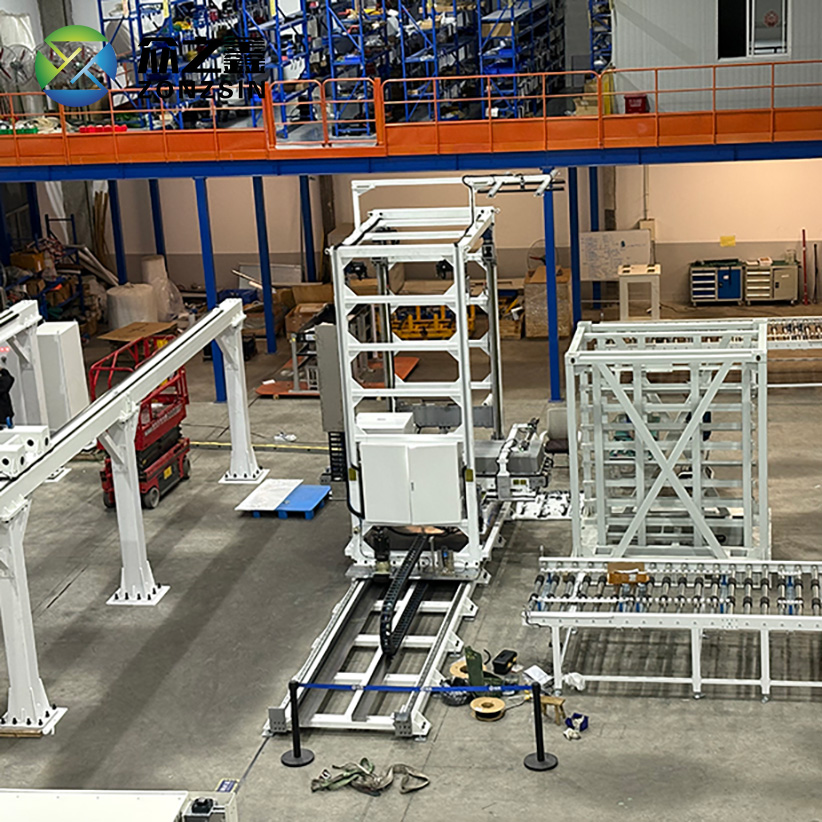
ZZX2508 rail-fixed battery PACK insertion robot for containers.
Rail installation is the trade-off. The path has to be built and the floor has to suit it, but once installed, the approach position is fixed and repeatable.
AGV-driven: RD16
An AGV-driven insertion robot carries its own mobility. The RD16 is specified at 3100 mm long, 2600 mm wide and 3800 mm high, with a hoisting range of 1.05–3.4 m (customizable) and a hoisting speed of 100 mm/s, and it is compatible with 280/314/587 Ah cells and 1P52S/1P104S PACKs. It is built from carbon steel and is intended for the C&I energy storage industry.
Mobility changes line design rather than the insertion function. Where containers arrive at several stations, or where a fixed rail would block other traffic, an AGV platform can move between them. The published comparison of drive types in this product family characterises the AGV option as high mobility on level floors, the rail option as stability-oriented with a fixed installed path, and the crawler option as suited to outdoor or all-terrain sites. That is a design trade-off, not a performance ranking: none of the three is universally better.
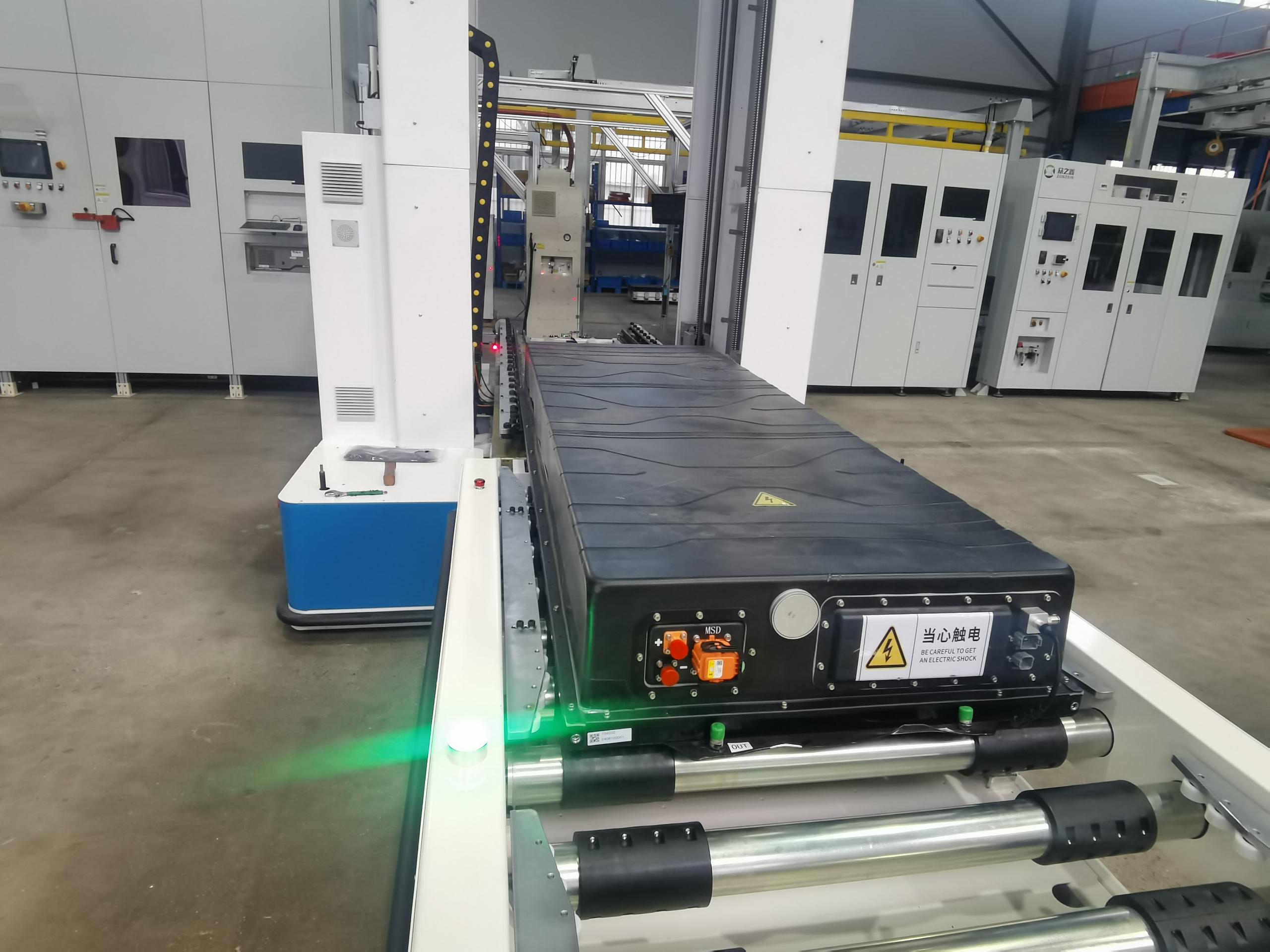
RD16 AGV-driven battery PACK insertion robot for containers.
Crawler-driven: ZZX2522
The crawler platform is the one built for ground that is not a prepared factory floor. The ZZX2522 works on all-terrain surfaces, uses manual handwheel leveling, has a hoisting range of 0.8–3.4 m (customizable), a load capacity of 1500 kg and Q235 steel construction, and it is described as an insertion and removal machine rather than a loading-only machine.
Manual leveling sets an operating expectation worth reading carefully: the machine is leveled by handwheel at the working position rather than self-leveling. On a site where the robot moves between uneven positions, that is a step in the procedure to plan into the shift — not a defect.
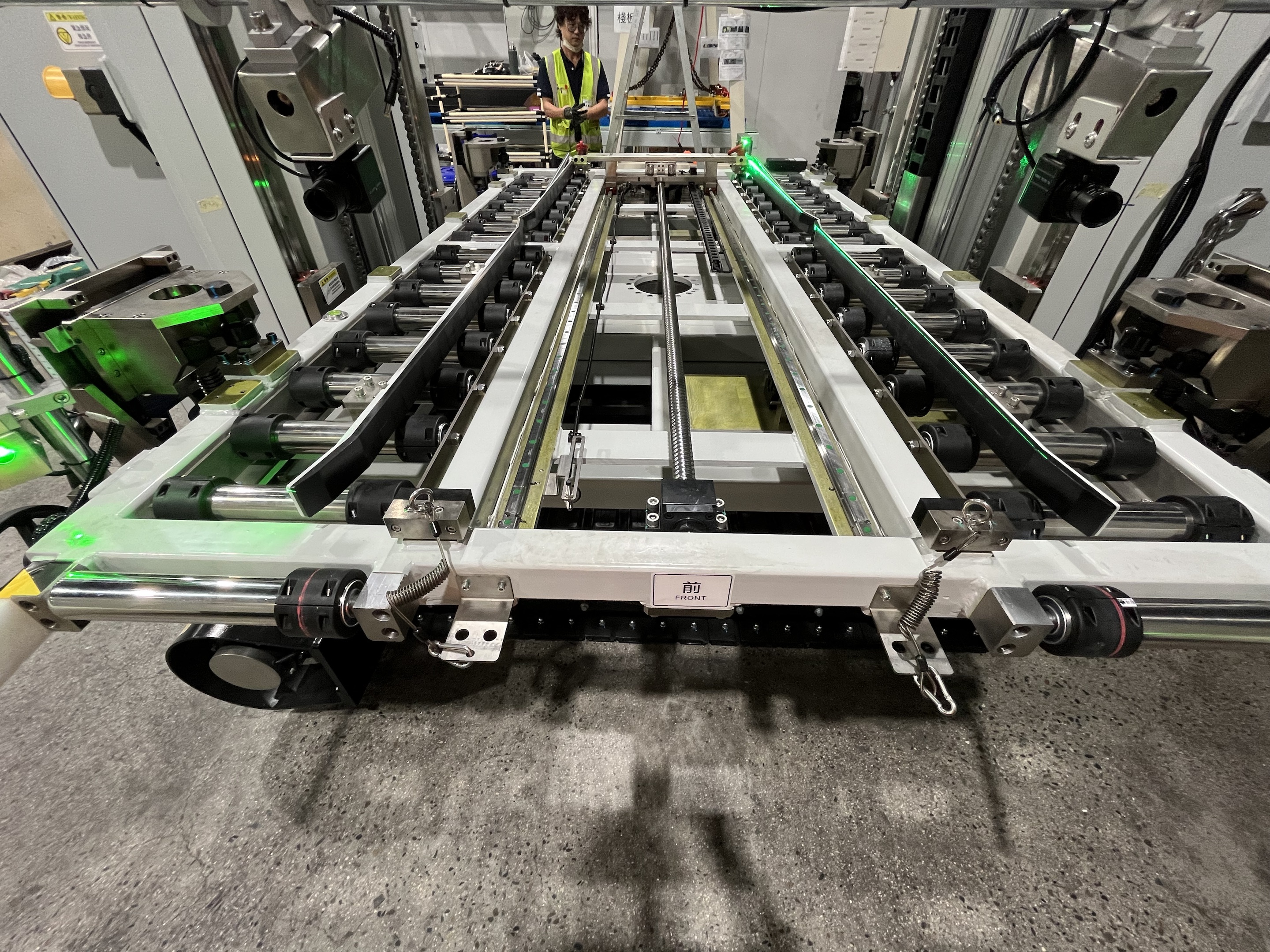
Crawler-driven battery PACK insertion and removal equipment for all-terrain container sites.
The numbers that define the envelope
Specifications are only useful if they can be compared. The table collects the published values that recur in category discussions, with the model each value belongs to, so a value is never detached from the machine it describes.
| Parameter | Published value | Model | What it tells a buyer |
|---|---|---|---|
| Load capacity | 1500 kg | ZZX2524, ZZX2522 | Upper load class for the PACK plus fixture. |
| Hoisting speed | 100 mm/s | RD16 | Speed of the vertical positioning phase, not the container cycle. |
| Hoisting range | 1.05–3.4 m (customizable) | RD16 | Reach across rack levels. |
| Hoisting range | 0.8–3.4 m (customizable) | ZZX2522 | Lower start point for low-sill or ground-level work. |
| Container envelope | L 6058–7000 mm; W 2438–2700 mm; H 2896–3000 mm | ZZX2508 | Container classes the machine is designed around. |
| PACK envelope | L 1100–2200 mm; W 780–1260 mm; H 230–260 mm | ZZX2508 | PACK sizes accepted without redesign. |
| Door opening angle | At least 150 degrees | ZZX2508, ZZX2524 | Clearance for presenting a PACK at the opening. |
| Gripper changeover | Under 1 minute | ZZX2524 | Feasibility of mixed PACK batches on one line. |
| Power supply | AC380V ±10 percent, 50 ±2 Hz | ZZX2508 | Site electrical preparation. |
| Compressed air | 0.5–0.8 MPa | ZZX2508 | Utility requirement at the station. |
| Machine dimensions | 3100 × 2600 × 3800 mm | RD16 | Travel and working-space planning. |
| Operating temperature | 20–30 degrees C | Container line application | Environment control expected around the line. |
Two habits keep this table honest. First, a hoisting speed is not a cycle time: 100 mm/s describes one axis of the RD16 during vertical positioning, while a full container cycle also includes approach, fine alignment, gripper actuation, retraction and return travel. Second, a load figure belongs to a model. Published load capacity of 1500 kg applies to the ZZX2524 and ZZX2522; the RD16 and ZZX2508 specification sets in this reference cover dimensions, reach and compatibility, so the load rating for a specific configuration should be confirmed on that model's datasheet.
A step-by-step way to classify a machine
The sequence below turns the tests into a short screening process that can be done with a specification sheet and a layout drawing, before any site visit.
- Define the load. Record the PACK type, dimensions and mass, including the fixture, and confirm the machine is specified for a PACK rather than for cells or modules.
- Check the container envelope. Compare container length, width and height with the published range, and check rack levels against the hoisting range. A machine inside the PACK envelope but outside the container envelope is not a fit.
- Choose the drive configuration from the floor, not from preference. Fixed stations and a prepared floor point to rail-fixed; multiple presentation points on a level floor point to an AGV platform; uneven or outdoor ground points to a crawler platform with manual leveling.
- Confirm the insertion motion. Ask which axis performs final placement and what the operator does during insertion. If the answer is guidance by hand, the machine is an aid rather than a robot in the sense used here.
- Check the PACK interface and changeover. Match the gripper to the PACK and note the changeover time if more than one PACK type will run. Under one minute, as specified for the ZZX2524, is the kind of figure that decides whether mixed batches are practical.
- Verify utilities and environment. Electrical supply, compressed air, door clearance, floor condition and the temperature range around the line all appear in the specification for a reason; a gap in any of them becomes a site modification.
- Request the datasheet for the exact configuration. Published values in a primer describe a product family; the order configuration, options and site conditions are what the machine is finally built to.
Where these machines sit on a container line
An insertion robot is one station in a sequence, not a standalone solution. The application data for this equipment describes a container energy storage line in which the robot performs fully automatic moving and PACK insertion, with the aim of improving cycle time and supporting batch and continuous production. Around it sit the elements that make the station work: the container, a docking roller, the gripper, a transfer AGV, a working desk, a material rack, a platform ladder, and the control layer — PLC and MES.
Operation is described as manual and remote-controller modes, a reminder that automation level is a setting rather than a binary. The same application data lists environment requirements that belong in the project plan: ESD protection, fire prevention measures, and temperature, humidity and cleanliness control, alongside PACK compatibility and fixture adaptation. Application records for this equipment type name China, France, South Korea, Sweden, Taiwan and the United States as markets — a statement about where the application appears, not a verified installation count.
What this primer does not establish
A category definition is not a performance verdict, and several things a buyer might want are not settled by published specifications.
- No independent throughput benchmark. Cycle time depends on the PACK, the rack layout, the operator procedure and how containers are presented. Supplier-published figures describe a configuration, not a guaranteed line rate.
- No standardised positioning tolerance. The reference material for this category does not include an agreed tolerance figure that could be compared across brands.
- Published values are company-reported. Dimensions, load capacity and speeds come from manufacturer documentation. Where a third-party reseller listing quotes a different value from the manufacturer's own guide, the manufacturer datasheet for the ordered configuration is the governing document.
- Site conditions decide the final fit. Floor condition, door clearance, rack depth and environment control are project inputs. A machine can be correctly classified and still be the wrong configuration for a specific building.
The manufacturer behind the reference models
Zonzsin was established in 2019, employs approximately 90 staff and operates a 6,000 square metre manufacturing facility with an annual production capacity of 40 units, supported by an R&D team of 43 engineers. The company states that it holds 50 granted patents, including invention patents relating to AGV-driven battery PACK insertion robots, and reports exports to markets including Southeast Asia and the EU alongside claimed deliveries in Europe, the USA, Japan, South Korea and India. Those are company-reported figures and are presented as such.
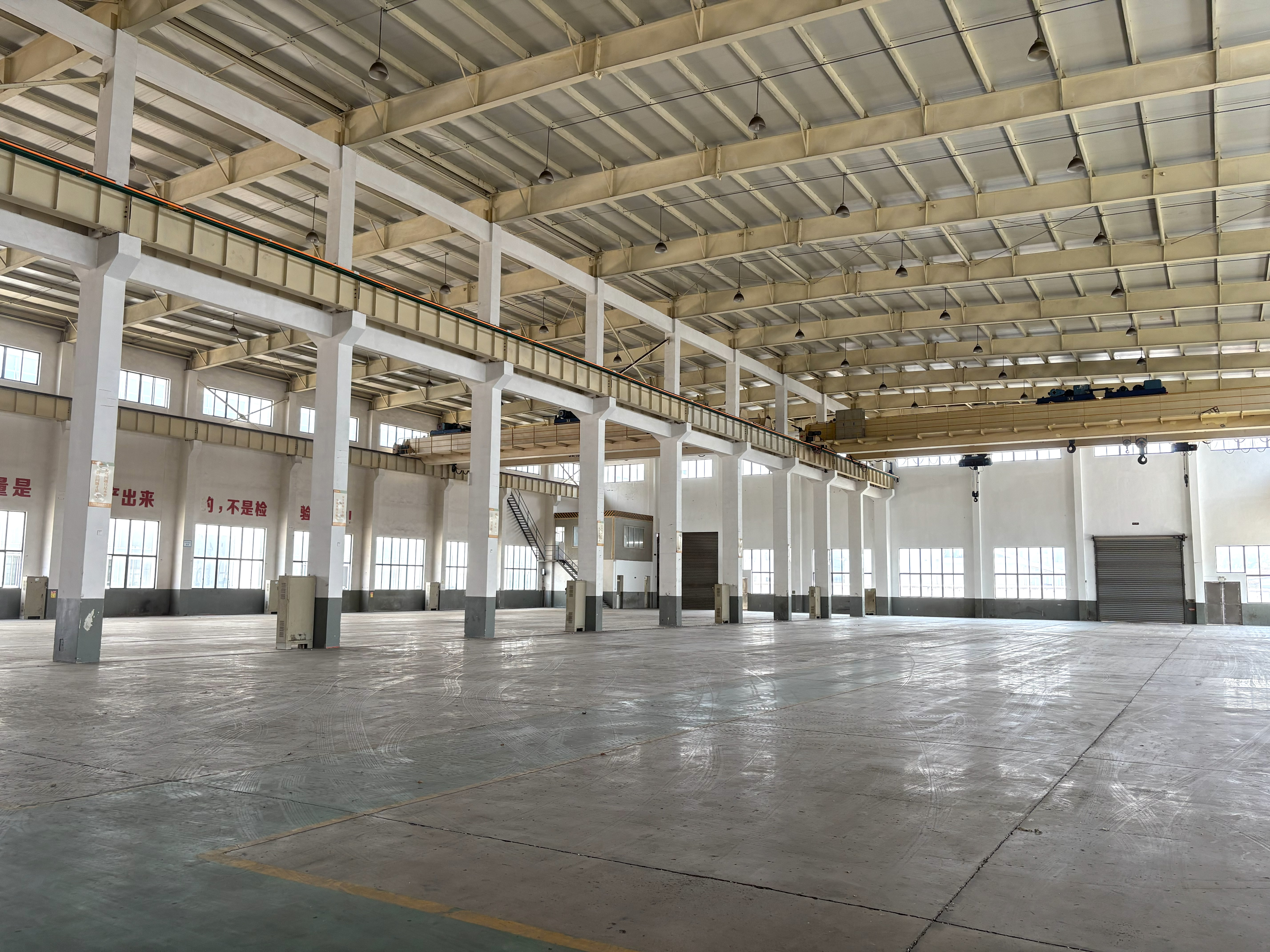
Zonzsin manufacturing facility in Shanghai.
FAQ
Is a battery pack insertion robot the same as a container stuffing machine?
No. Container stuffing usually describes loading loose or palletised cargo, where the load can be pushed or slid into place. An ESS battery pack insertion robot handles a rigid PACK with a dedicated gripper and places it at a defined rack position using a controlled hoisting axis. The container is the workspace in both cases, but the load class and the positioning requirement are different, and only the second machine performs insertion as a machine-controlled motion.
How much load can these machines handle?
Published load capacity is 1500 kg for the rail-fixed ZZX2524 and for the crawler-driven ZZX2522. For the RD16 and ZZX2508, the published specifications in this reference set focus on dimensions, hoisting range, speed and PACK or container compatibility, so the load rating for a specific configuration should be confirmed on that model's datasheet before ordering.
What does a hoisting speed of 100 mm/s mean for line throughput?
It describes the vertical positioning speed of the RD16 hoist during one phase of the cycle. A complete container cycle also includes approach travel, fine alignment, gripper actuation, retraction and the return to the pick position, so hoisting speed alone does not determine packs per hour. Throughput should be estimated from a full cycle description for the actual PACK and rack layout, or measured in a trial.
Which drive configuration suits a 20 ft container line?
It depends on how containers are presented and what the floor allows. A rail-fixed model such as the ZZX2508, whose container range begins at 6058 mm in length, suits fixed stations where a defined path can be installed. The AGV-driven RD16 suits multiple presentation points on a level floor, with a hoisting range of 1.05–3.4 m. The crawler-driven ZZX2522 suits all-terrain ground, with manual handwheel leveling and a hoisting range from 0.8 m. None of the three is automatically correct; the floor and the container flow decide.
Can one robot handle more than one PACK size?
Within a published envelope, yes. The ZZX2508 accepts PACK lengths of 1100–2200 mm, widths of 780–1260 mm and heights of 230–260 mm, and the ZZX2524 specifies gripper changeover in under one minute, which makes switching between PACK types practical on a mixed line. Where a PACK falls outside the envelope, or the fixture does not adapt, the configuration has to be reviewed with the manufacturer rather than assumed.
What information is needed before requesting a quotation or a trial?
Four sets of inputs make a quotation meaningful: PACK type, dimensions and mass; container internal dimensions, rack levels and door opening; site conditions including floor type, electrical supply, compressed air and the temperature range around the line; and the automation interfaces required, such as PLC and MES. The published utilities for the ZZX2508 — AC380V ±10 percent, 50 ±2 Hz and 0.5–0.8 MPa compressed air — show the level of detail that shortens the review. A full specification of the container insertion range, including all four models, is available in the Zonzsin product brochure.
Conclusion
An ESS battery pack insertion robot is defined by what it does at the last metre: it holds a finished PACK with a dedicated interface and places it into a container rack position under machine control. Five tests separate that machine from the cranes, conveyors and manual aids around it — a PACK as the load unit, machine-controlled insertion, a container-specific design, a defined gripper with changeover, and a published compatibility envelope.
The rest of the vocabulary follows from the drive configuration. Rail-fixed models such as the ZZX2508 and ZZX2524 trade mobility for a repeatable fixed approach; the AGV-driven RD16 trades installation for movement between stations; the crawler-driven ZZX2522 trades a prepared floor for all-terrain access. Values such as 1500 kg load capacity, 100 mm/s hoisting speed, a door opening of at least 150 degrees and sub-minute gripper changeover only mean something when attached to the model and configuration they describe — which is the habit a primer should leave behind.
Have Questions or Need More Details?
Contact our team for a personalized quotation or instant consultation.
Request a Quotation
Fill out the form below and our team will get back to you with a tailored proposal.
WhatsApp Direct Chat
Prefer to chat in real-time? Message us on WhatsApp for instant assistance & quick answers.
- Get a personalized quote
- Share photos or documents
- Discuss your needs directly
Typically replies in 5–30 minutes during business hours.