Blade vs CTP Battery Pack Assembly Lines: Which Configuration Lowers Your Per-Pack Cost?
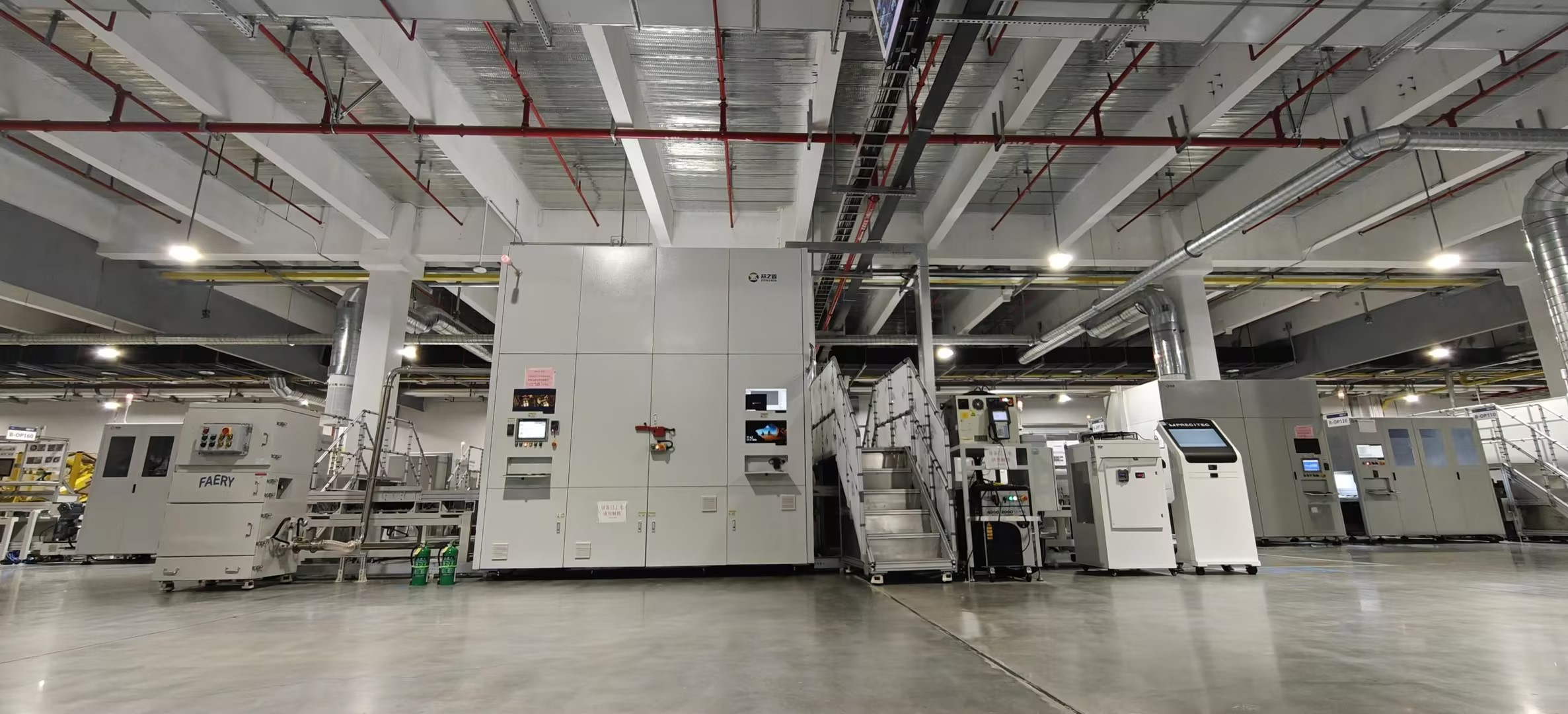
Short answer: on published specifications, neither configuration is cheaper by default. The Zonzsin CTP line (model ZZX2406) and the Zonzsin Blade line (model ZZX2501) sit in the same product family and are both built on a carbon steel / Q235 frame, so build quality is comparable. Per-pack cost separates on four project-specific variables: cell-format fit, published cycle time, layout footprint, and welding qualification performance.
This is a head-to-head decision guide for buyers in the research and evaluation stage of an EV or energy storage pack project. It compares the two configurations using only published Zonzsin specifications and verified third-party data, then converts those specifications into the line items that actually decide cost per pack. Where a figure is not published for a given model, it is marked as an open clarification item rather than assumed.
What Per-Pack Cost Really Includes on an Automatic Battery Pack Assembly Line
Per-pack cost is the fully loaded cost of converting one battery pack, not the purchase price of the machine. On an automatic battery pack assembly line, it has five components:
- Amortized line capital — equipment and installation cost divided by the number of validated packs the line produces over its service life.
- Direct labor and utility cost per pack — operator content per shift plus compressed air and electricity consumed per pack.
- Scrap and rework cost per pack — driven mainly by welding and inspection performance.
- Facility and layout cost per pack — floor area multiplied by cost per square meter, tied up for the life of the line.
- Maintenance, spare parts and service cost per pack — including remote support and on-site intervention over the lifecycle.
Most CTP versus Blade comparisons stop at component one. That is where the wrong decision is made. A line that is cheaper to purchase but slower in validated output, or that needs a bay your building does not have, or that generates weld rework, is more expensive per pack over any realistic production horizon. The published specifications for the ZZX2406 and ZZX2501 give you enough data to model components one through five before you issue an RFQ.
Why CTP and Blade Lines Are Compared in the Same Procurement Cycle
CTP (cell-to-pack) and Blade describe two pack architectures, and the assembly line has to follow the architecture. Zonzsin catalogs both under the same product family — battery PACK assembly line — which is what makes a direct head-to-head possible instead of a supplier-versus-supplier comparison.
The comparison usually appears after the cell has already been selected. EV traction programs and stationary storage programs increasingly specify large prismatic cells, and as cell formats grow larger, handling, fixture and welding requirements become more demanding. A line that was specified for one format does not automatically absorb another, and retrofitting fixtures after installation is one of the most expensive ways to fix a format mismatch.
Budget context matters here as well. Commercial market listings for complete turnkey CTP battery pack production lines typically fall in the US$1,000,000 to US$3,000,000 per set range. That range is useful as a budgeting anchor, but it is not a per-pack number. Two lines in the same price band can land at very different cost per pack once cycle time, automation mode and layout are applied to your specific cell format.
The Shared Baseline: Same Product Family, Same Q235 Carbon Steel Frame
Before comparing differences, it is worth stating what does not differ. The ZZX2406 CTP battery pack assembly line and the ZZX2501 Blade battery pack assembly line are both made of carbon steel / Q235 and are classified in the same product family. Build quality, therefore, is not the differentiator between the two configurations.
- Both are designed for indoor, standard factory conditions and industrial assembly-line conditions.
- Both operate through continuous or shift production, in semi or fully automatic mode with touch screen and program control.
- Both are applied in battery PACK assembly for the EV industry and energy storage, with the CTP line additionally covering C&I applications.
- Project-level requirements are shared: ESD protection, fire prevention measures, temperature, humidity and cleanliness control, plus PACK compatibility and fixture adaptation.
Zonzsin publishes a one-time welding qualification rate of 99.5% and a final welding qualification rate of 99.95% for its EV battery pack assembly line model ZZX2313. That figure is the quality reference for the family. Because the frame construction and the quality-control regime are shared, per-pack cost differences between the CTP and Blade configurations come from configuration — format fit, cycle time, footprint, automation mode and utilities — not from the frame supplier or the brand.
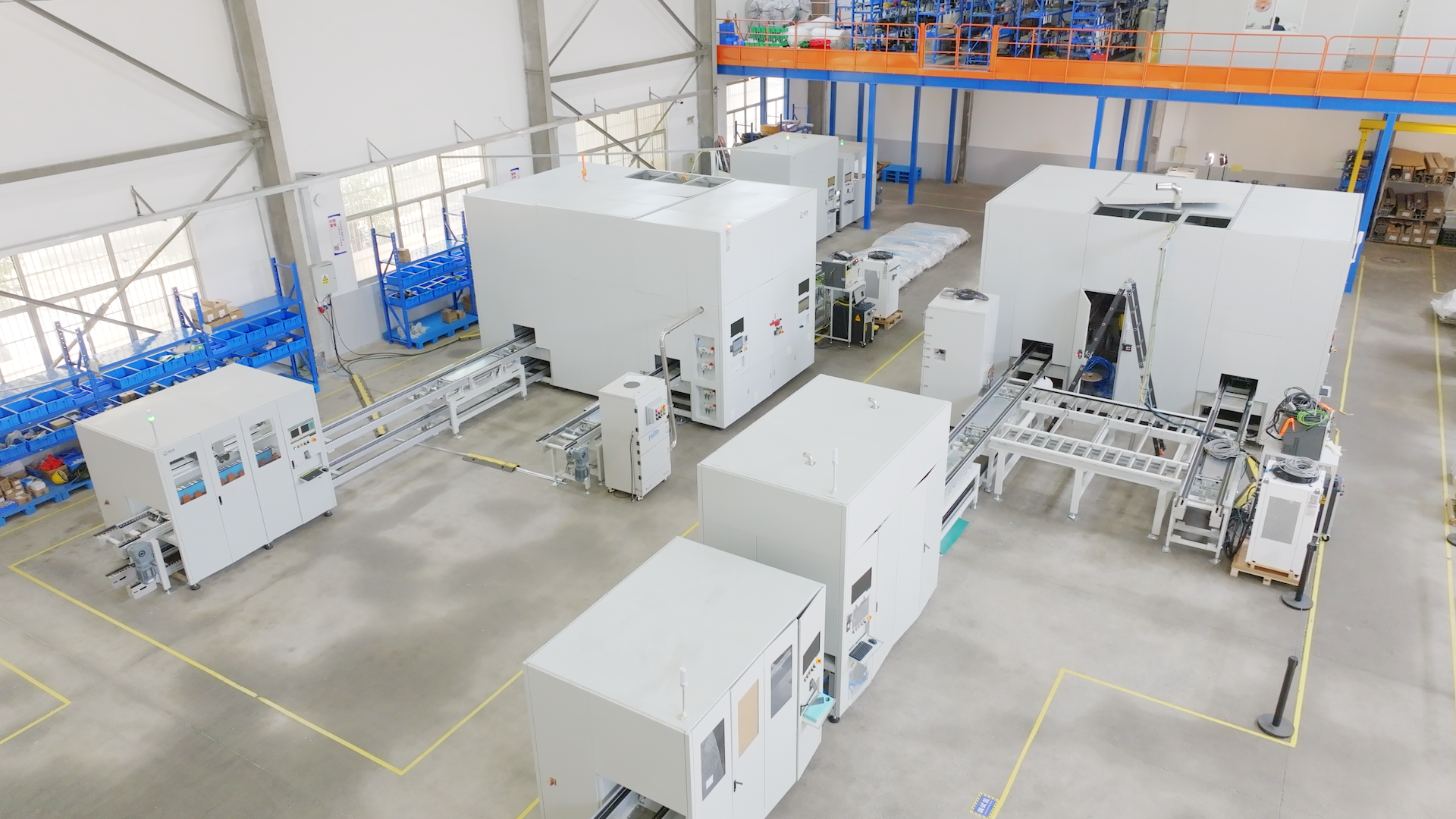
CTP vs Blade in Detail: Published Specifications
CTP configuration — Zonzsin ZZX2406
The ZZX2406 is Zonzsin's CTP battery PACK assembly line, specified for large prismatic cells in EV and energy storage programs. Its published specification is:
- Technology: CTP
- Automation: Semi-automatic
- Cell compatibility: 314Ah and 587Ah
- PACK configuration: 1P96S
- Cycle time: 4 PPM
- Machine dimensions: L58000 × W11000 × H3800
- Frame material: carbon steel / Q235
- Applicable industry: energy storage, EV and C&I
What this means commercially: the published 314Ah and 587Ah coverage allows one line specification to span more than one prismatic cell generation, which reduces the risk of a second capital project when the cell roadmap moves. The published footprint of 58 meters by 11 meters means bay planning has to start at the same time as equipment selection, not after it. Semi-automatic operation is a deliberate commercial position — a larger share of assembly content is carried by operators, which lowers the automation portion of capital cost and moves cost into labor per pack.
The ZZX2406 supports a one-stop process scope that runs from cell feeding and stacking through insulating, wire harness installation, EOL test and charging and discharging test, with matched equipment including vision inspection systems, fixtures and tooling, laser equipment, and assembly and testing stations.
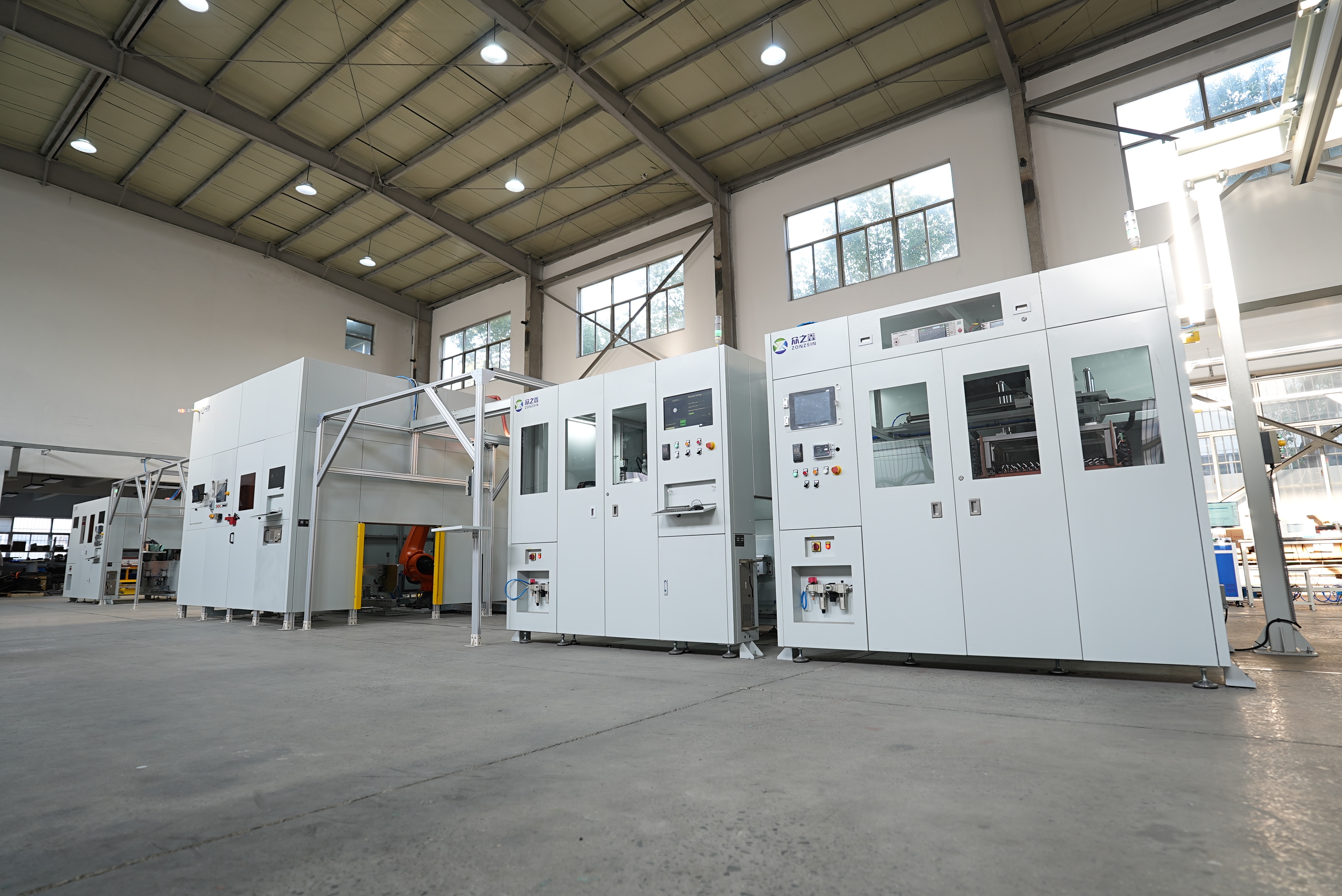
Blade configuration — Zonzsin ZZX2501
The ZZX2501 is Zonzsin's Blade battery PACK assembly line, specified for packs built on blade-type cell form factors. Its published specification is:
- Type: Blade battery PACK assembly line
- Cycle time: 6 PPM, 30 min/PACK
- Compressed air: 0.6 to 0.8 MPa
- Electrical requirement: AC 380V ± 10%, 50 ± 0.5 Hz
- Frame material: carbon steel / Q235
- Applicable industry: EV industry, energy storage
What this means commercially: the published Blade figures describe a line running at 6 PPM with a stated 30 minute per-pack assembly timing, and they define the utility envelope you must already own or build — a compressed air supply in the 0.6 to 0.8 MPa band and a standard 380 V ± 10%, 50 Hz supply. Utility mismatch is a real per-pack cost input: if your plant runs outside that band, compressor or transformer work enters the project and is amortized across every pack the line produces.
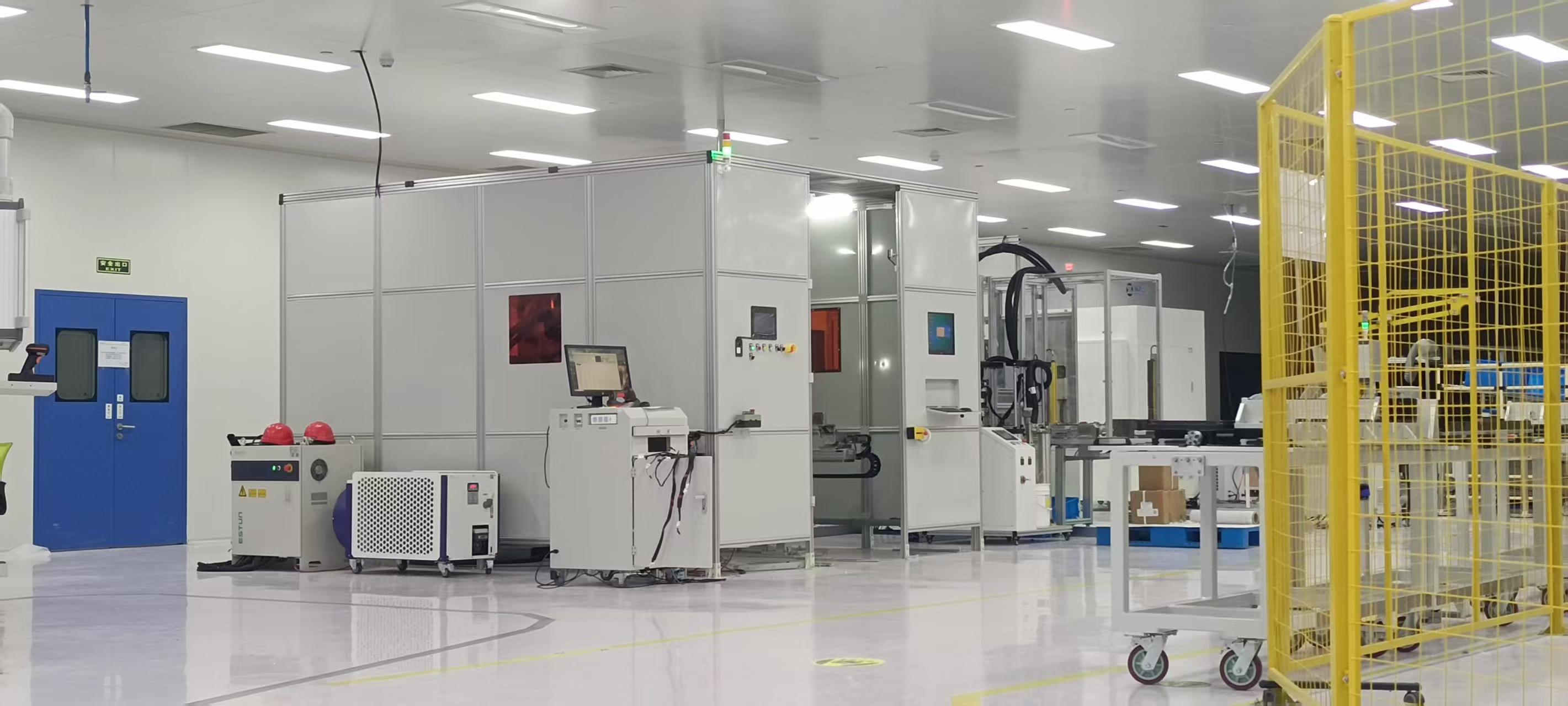
What the published cycle times do and do not tell you
The two models publish different cycle-time figures: 4 PPM for the CTP ZZX2406 and 6 PPM for the Blade ZZX2501. This difference is configuration-driven rather than a quality ranking, and it cannot be applied to your plant until it is normalized against your cell format, pack architecture, automation mode and shift calendar. A common assumption in early evaluation is that a CTP architecture is automatically the faster option; the published Zonzsin specifications do not support that assumption. Treat cycle-time normalization as a formal clarification item during technical review, and ask for the reference conditions behind the PPM figure for the exact model you intend to buy.
Step-by-Step: Modeling Per-Pack Cost for Each Configuration
Step 1 — Fix the cell format before you discuss price. Blade-type cell form factors point to the ZZX2501; prismatic 314Ah or 587Ah cells in a 1P96S configuration point to the ZZX2406. Format mismatch is the most expensive error in this category because it is discovered after fixtures and tooling are built.
Step 2 — Convert published cycle time into packs per shift. Take 4 PPM for the CTP line and 6 PPM with 30 min/PACK for the Blade line, then apply your own shift pattern, planned stops and ramp-up curve. This converts a marketing-comparable number into an output number you can divide capital cost by.
Step 3 — Price the floor area. The ZZX2406 publishes a footprint of L58000 × W11000 × H3800. Multiply that against your real estate cost and the years the space is committed. Installed CTP reference: the line delivered to a customer in India — 1 unit, battery PACK assembly application — is recorded with a U-shape layout that saves space, described as user-friendly, with stable operation across a one-year period. Client types on projects of this class include automotive OEMs, energy storage system integrators, battery cell and PACK manufacturers, and EPC turnkey contractors.
Step 4 — Turn welding qualification into rework cost. Apply the published welding qualification benchmark — one-time 99.5% and final 99.95% on the ZZX2313 EV battery pack assembly line — to your scrap and rework rates. The gap between one-time and final qualification is the rework volume the line absorbs internally rather than shipping to the customer.
Step 5 — Add the utility load. The Blade line publishes compressed air at 0.6 to 0.8 MPa and electrical at AC 380V ± 10%, 50 ± 0.5 Hz. Check your supply against the published band for the model you select and price any upgrade into cost per pack.
Step 6 — Choose the automation split deliberately. The ZZX2406 is published as semi-automatic. Automation level is one of the customization variables Zonzsin offers, alongside cycle time, logo, color and configuration. Semi-automatic economics push cost toward labor per pack; higher automation pushes it toward capital per pack. The correct answer depends on your labor cost and your volume certainty, not on a general preference.
Step 7 — Add maintenance and lifecycle service. Zonzsin states that its modular design approach delivers 20% lower maintenance expenditures. Over a multi-year production horizon, maintenance is a per-pack line item, not an overhead. After-sales coverage includes remote support and on-site installation and commissioning.
Step 8 — Validate with factory testing before signing. Quality control is 100% test, the minimum order quantity is 1 unit, and lead time is 3 to 5 months. Build the acceptance test around your own pack configuration, including PACK compatibility and fixture adaptation.
CTP vs Blade Comparison Table (Published Data Only)
| Comparison point | CTP — ZZX2406 | Blade — ZZX2501 | Effect on per-pack cost |
|---|---|---|---|
| Technology | CTP | Blade battery PACK assembly line | Determines cell-format fit |
| Frame material | Carbon steel / Q235 | Carbon steel / Q235 | Neutral — comparable build basis |
| Published cycle time | 4 PPM | 6 PPM | Sets output per shift |
| Published per-pack timing | Not published for this model | 30 min/PACK | Normalize before comparing |
| Cell compatibility | 314Ah and 587Ah | Blade-type cell form factors | Wrong format drives rework and scrap |
| PACK configuration | 1P96S | Not published for this model | Drives fixture and tooling design |
| Automation mode | Semi-automatic | Not published for this model | Splits cost between capital and labor |
| Machine dimensions | L58000 × W11000 × H3800 | Not published for this model | Facility and layout cost per pack |
| Compressed air | Not published for this model | 0.6 to 0.8 MPa | Compressor sizing and upgrades |
| Electrical requirement | Not published for this model | AC 380V ± 10%, 50 ± 0.5 Hz | Transformer and grid fit |
| Welding qualification rate | Family benchmark: one-time 99.5%, final 99.95% (published on ZZX2313) | Family benchmark: one-time 99.5%, final 99.95% (published on ZZX2313) | Rework and scrap cost per pack |
| Layout reference | India installation: U-shape layout, space saving, user-friendly, stable operation for 1 year | Not published for this model | Space cost per pack |
Cells marked as not published are open clarification items for the technical review, not confirmed absences. Cycle-time figures are published per model and must be normalized to your own shift pattern and cell format before they are used in any cost calculation.
Scenario Matching: Which Configuration Fits Which Project
Scenario 1 — Prismatic EV traction packs in 1P96S. A program using 314Ah or 587Ah prismatic cells in a 1P96S architecture maps directly onto the ZZX2406 CTP configuration. The published cell coverage is the deciding factor here, not the cycle-time number.
Scenario 2 — Stationary storage and container-scale integration. CTP lines are applied in energy storage integration as well as EV, and the delivered reference in India shows how much a U-shape layout can return in a space-constrained plant. If your building is the constraint rather than your capital budget, layout outcome should carry more weight than equipment price.
Scenario 3 — Blade-cell pack programs. Where the pack design is already committed to a blade-type cell form factor, the ZZX2501 Blade battery pack assembly line is the matching configuration, with published 6 PPM and 30 min/PACK timing and a defined utility envelope.
Scenario 4 — Multi-generation cell planning. Zonzsin publishes cell and pack compatibility across 280Ah, 314Ah and 587Ah cells with 1P52S and 1P104S pack configurations on its automatic industrial car battery pack assembly line for 314Ah prismatic cells. If your cell roadmap spans more than one capacity, put the full format list into the technical clarification rather than assuming a single line will absorb it as standard.
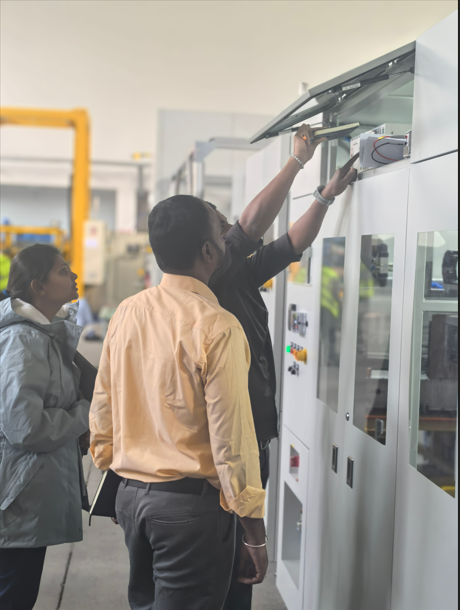
Scenario 5 — Brownfield plant with a fixed available bay. Compare the published ZZX2406 footprint of L58000 × W11000 against the space you actually have, then apply the U-shape layout option used on the Indian CTP installation. If the bay cannot accept the footprint, the Blade configuration or a different layout concept has to be evaluated before pricing begins.
A Three-Question Decision Rule
- What cell format is locked? Blade-type form factor points to ZZX2501; prismatic 314Ah or 587Ah in 1P96S points to ZZX2406.
- What does published cycle time deliver against your required packs per shift? Normalize 4 PPM (CTP) or 6 PPM and 30 min/PACK (Blade) into your own shift calendar before comparing.
- What is your layout envelope and utility supply? A 58 meter by 11 meter footprint and a 0.6 to 0.8 MPa air requirement are project constraints, and constraints convert directly into cost per pack.
If all three answers point to the same model, the configuration decision is settled. If they conflict, the cell format normally wins, because it is the input that cannot be changed after fixtures are built.
FAQ: CTP vs Blade Battery Pack Assembly Lines
What factory conditions and safety requirements do CTP and Blade battery pack assembly lines need?
Both configurations are designed for indoor, standard factory conditions and industrial assembly-line conditions, running through continuous or shift production in semi or fully automatic mode with touch screen and program control. Project-level requirements include ESD protection, fire prevention measures, temperature, humidity and cleanliness control, plus PACK compatibility and fixture adaptation. Both the ZZX2406 and the ZZX2501 use a carbon steel / Q235 frame, and both are applied in the EV industry and energy storage.
Can one line handle both CTP and blade-cell formats?
The ZZX2406 is published as a CTP battery pack assembly line for 314Ah and 587Ah cells in a 1P96S pack configuration, while the ZZX2501 is published as a Blade battery pack assembly line for blade-type cell form factors. They are separate configurations within the same product family. Zonzsin offers customization across cycle time, automation, logo, color and configuration, and PACK compatibility with fixture adaptation is treated as a project requirement — so any multi-format requirement has to be confirmed against a specific format list during technical clarification rather than assumed.
What drives per-pack cost the most?
Cell-format fit, cycle time, layout footprint, automation mode, utility requirement and rework rate. Frame material is not a differentiator, because both models use carbon steel / Q235. For budgeting context, commercial market listings for complete turnkey CTP battery pack production lines typically fall in the US$1,000,000 to US$3,000,000 per set range; that figure is an indicative market range and not a quoted price. Zonzsin states that its modular design approach delivers 20% lower maintenance expenditures, which is a recurring per-pack item over the service life of the line.
How can we validate a CTP or Blade configuration before committing?
Zonzsin applies 100% test quality control and provides remote support plus on-site installation and commissioning after delivery. The welding quality reference published for the family is a one-time qualification rate of 99.5% and a final qualification rate of 99.95% on the ZZX2313 EV battery pack assembly line. Validation should be built around your own pack configuration, including fixture adaptation.
What are the minimum order quantity, capacity and lead time?
Zonzsin operates with a minimum order quantity of 1 unit, a monthly capacity of 3 units, and a lead time of 3 to 5 months, with an export focus on Southeast Asia and the European Union. Shanghai Zonzsin Intelligent Equipment Co., Ltd. was founded in 2019, operates a 6,000 m² factory with 90 employees, including an R&D team of 43 engineers, and holds 50 granted patents. If you are comparing the ZZX2406 and ZZX2501 for a specific pack program, the fastest next step is to send your cell format, pack configuration and target output for a configuration review and quotation — the product brochure is available for download at the link below.
Conclusion
On the published record, the question is not which configuration is better — it is which configuration costs less per pack in your specific project. Both the CTP ZZX2406 and the Blade ZZX2501 belong to the same Zonzsin product family and share a carbon steel / Q235 frame, so the decision turns on cell-format fit, normalized cycle time, layout footprint and welding performance. Choose the CTP configuration when your program runs large prismatic cells at 314Ah or 587Ah in a 1P96S architecture, when semi-automatic economics suit your labor cost, and when a space-saving U-shape layout matters — as it did on the CTP installation referenced in India. Choose the Blade configuration when your pack design is committed to blade-type cell form factors and your plant already meets a 0.6 to 0.8 MPa compressed air supply and an AC 380V ± 10%, 50 ± 0.5 Hz electrical supply.
Before either option is priced, confirm three numbers against your own plant: the PPM figure for the exact model at your cell format, the footprint against your available bay, and the welding qualification data for your configured line. Those three numbers decide per-pack cost more than any purchase discount.
Next step
Download the product brochure for full line specifications, or contact the Zonzsin team directly to review your cell format and pack configuration.
Download the Zonzsin Product Brochure

Shanghai Zonzsin Intelligent Equipment Co., Ltd. — www.zonzsin.com
Contact: Katty.liu — katty.liu@zonzsin.com — Tel / WhatsApp: +86 134-8282-9368
Address: Building 22, No.2199, Shebei Highway, Sheshan Town, Songjiang District, Shanghai, China
Have Questions or Need More Details?
Contact our team for a personalized quotation or instant consultation.
Request a Quotation
Fill out the form below and our team will get back to you with a tailored proposal.
WhatsApp Direct Chat
Prefer to chat in real-time? Message us on WhatsApp for instant assistance & quick answers.
- Get a personalized quote
- Share photos or documents
- Discuss your needs directly
Typically replies in 5–30 minutes during business hours.