
ESS Battery Pack Insertion Robot FAQ: Partnering With Zonzsin for Long-Term Support
ESS Battery Pack Insertion Robot FAQ: Partnering With Zonzsin for Long-Term Support
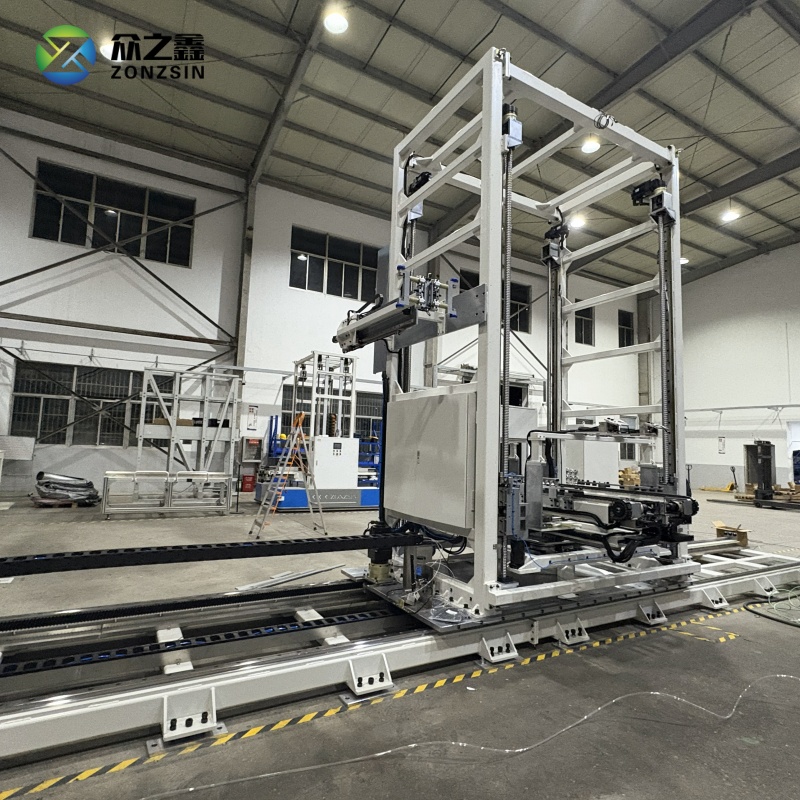
Container ESS integrators shortlist insertion robots on specifications and then choose a supplier on continuity. The questions that decide a long-term relationship arrive after the datasheet: who will engineer the next PACK format, how acceptance and payment are structured, what a second and third unit will cost and take to deliver, and who answers when a machine stops mid-shift. This FAQ answers those questions for the ESS Battery Pack Insertion Robot for Containers built by Shanghai Zonzsin Intelligent Equipment Co., Ltd. (Zonzsin), a Shanghai-based equipment manufacturer founded in 2019 that serves lithium battery manufacturers, energy storage integrators and automotive OEMs across Southeast Asia, the EU, the USA, Japan, South Korea and India.
Short answers, in the order buyers usually raise them:
- Compliance and acceptance: orders are closed against FAT or Online FAT acceptance, with 50% advance payment by T/T and the 50% balance by T/T within three business days after the bill of lading date.
- Capability: customization runs through a 43-engineer R&D team and is backed by 50 granted patents, including the invention patent for the AGV-driven battery PACK insertion robot.
- Budget logic: modular design is published as delivering 20% lower maintenance expenditure.
- Validation: minimum order quantity is 1 unit, and a Taiwan container ESS project ran a model 5357 battery PACK insertion robot across a one-year implementation period.
- Lead time: typical production lead time is 2 to 4 months, against a monthly production capacity of 3 units and an annual output of 40 units.
Why a Long-Term Robot Relationship Is a Different Decision From a Machine Purchase
A container ESS line is planned around years of production, and the PACK it handles is not fixed across that period. Current container programs work with 280Ah, 314Ah and 587Ah cells; PACK lengths commonly fall between 1,100 mm and 2,200 mm; container lengths run from 6,058 mm to 7,000 mm. Equipment bought against one snapshot of those numbers becomes a bottleneck the moment the next program changes them.
Evaluation of an ESS battery pack insertion robot therefore moves through three questions in sequence: can the supplier build the machine now, can it modify the machine later, and will it still have engineering capacity when that modification is needed? Each question carries a distinct procurement risk.
- Customization freeze. When adaptation depends on external design resources, every PACK change in a container program turns into a new project with a new quotation and a new schedule.
- Delivery slippage. A supplier with limited production cadence cannot compress a 2 to 4 month lead time when a container stuffing line is commissioned earlier than planned.
- Support drift. Without documented acceptance routines and an engineering team behind the machine, insertion and removal problems at the container rack are resolved slowly and unpredictably.
The practical conclusion for integrators is that engineering headcount, patent position, factory footprint, production cadence and order terms are selection criteria of the same weight as payload and reach, not background information.
Industry Background: Containerized Storage Is Scaling, and Insertion Stays the Physical Constraint
Containerized battery energy storage is one of the fastest-growing equipment categories in the green energy supply chain. Insightace Analytic values the containerized BESS market at USD 11.75 billion in 2025 and projects a 24.1% CAGR through 2035. MarketsandMarkets values the wider battery energy storage system market at USD 50.81 billion in 2025, growing to USD 105.96 billion by 2030. Market sizing in this category varies widely by research definition, with Polaris Market Research and Grand View Research publishing materially different totals for the same period, so these numbers are best read as directional rather than as one consensus figure.
On the production floor, the effect is a shift of container stuffing from manual handling toward machine insertion. Zonzsin's published comparison of robotic insertion against manual methods reports approximately 30% manpower savings and around 20% cycle time savings, with maintenance expenditure published as 20% lower through modular design. These are vendor-reported results, and buyers should validate them against a cycle-time study on their own rack layout.
What Zonzsin Brings to a Long-Term Partnership
1. Corporate continuity that can be audited
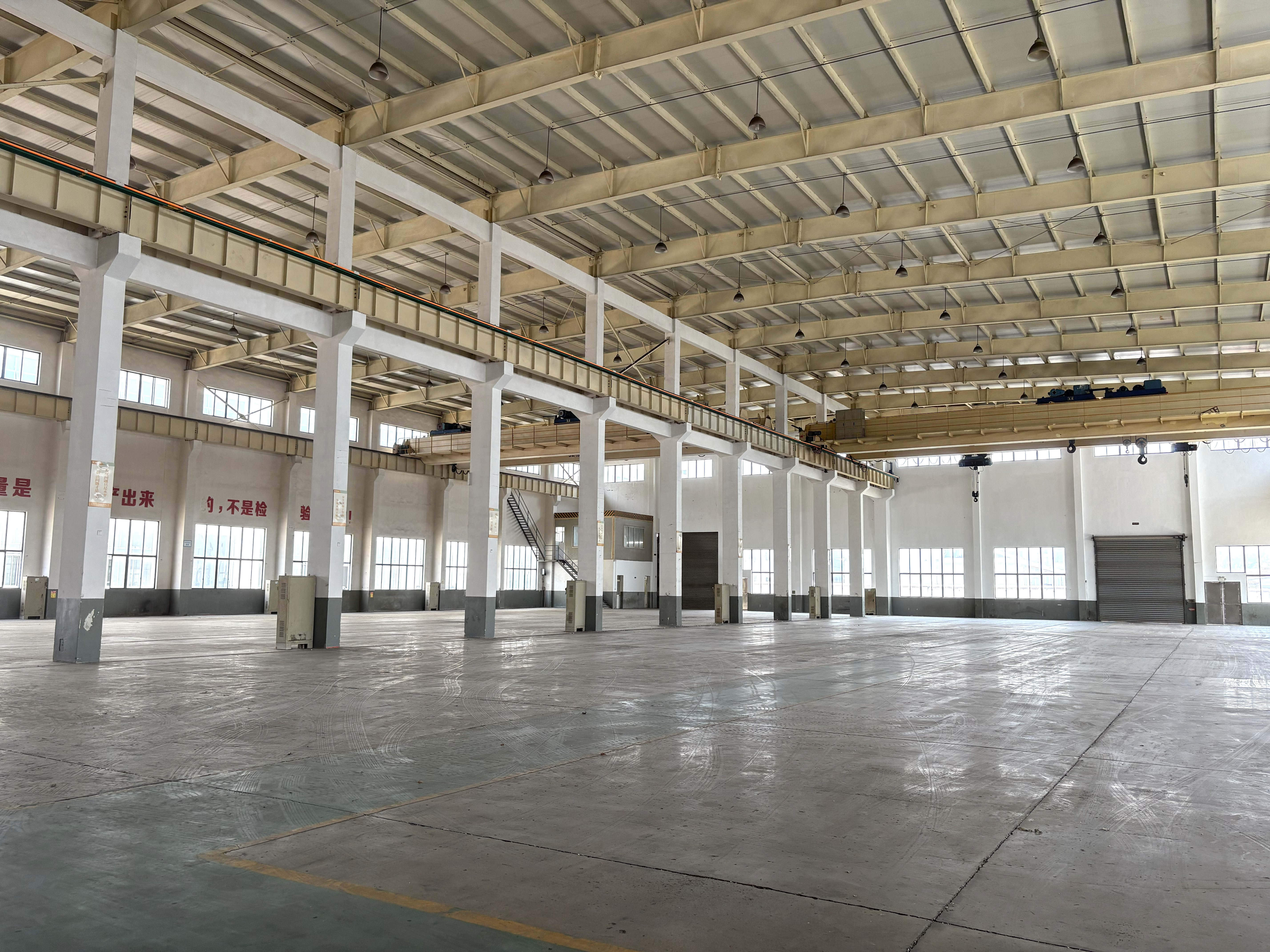
Shanghai Zonzsin Intelligent Equipment Co., Ltd. was founded in 2019 and operates a 6,000 m² facility at Building 22, No.2199, Shebei Highway, Sheshan Town, Songjiang District, Shanghai, with approximately 90 staff. About 60% of output is exported. Delivered equipment is in service with partners in Europe, the USA, Japan, South Korea and India alongside the company's home market.
2. Customization capacity: 43 engineers and 50 granted patents
Custom work is handled by an in-house R&D team of 43 engineers rather than by an external design partner. The company holds 50 granted patents, including invention patents covering the AGV-driven battery PACK insertion robot. Modular design technologies underpin both customization speed and the published 20% lower maintenance expenditure, because modules can be replaced or upgraded without rebuilding the whole docking assembly.
3. Production cadence and order flexibility
Annual output is 40 units, which corresponds to a monthly production capacity of 3 units, and the minimum order quantity is 1 unit. A pilot line can therefore be equipped without committing to a fleet, while OEM and ODM production services cover buyers who want the machine adapted to their own specifications. Typical production lead time is 2 to 4 months, and delivery terms are EXW Shanghai, FOB Shanghai or FCA Shanghai.
4. Compatibility envelope: what the machines handle
- Container lengths: 6,058 mm to 7,000 mm.
- PACK lengths: 1,100 mm to 2,200 mm.
- Cell formats in scope: 280Ah, 314Ah and 587Ah cells.
- Models: ZZX2508, ZZX2522, ZZX2524 and RD16.
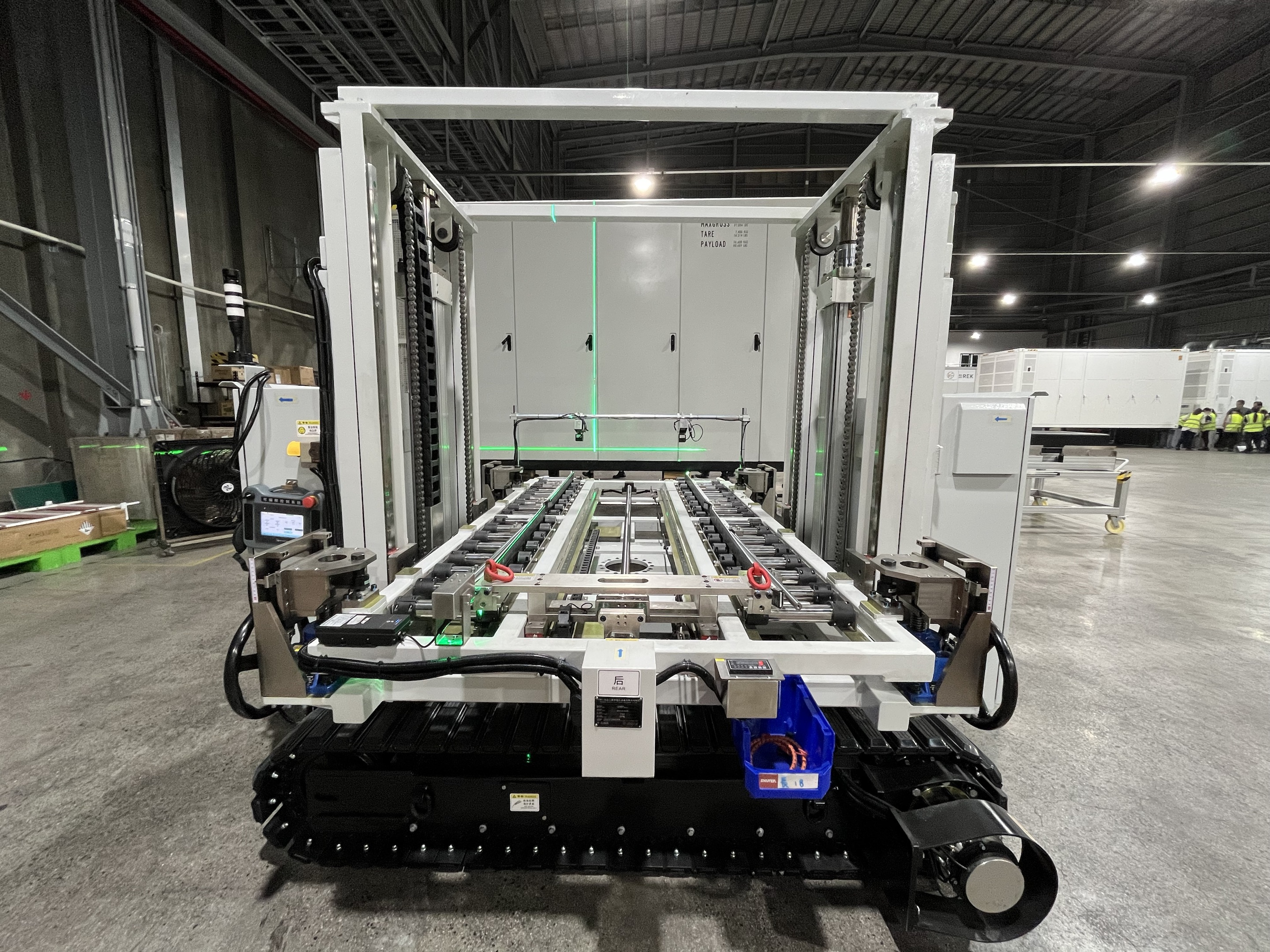
- Platform configurations: AGV-driven, rail-fixed, crawler-driven and mecanum-wheeled chassis options for container rack loading.
- AGV-driven specification: load capacity up to 1,500 kg with 5-DOF docking for standard 20ft/40ft container racks.
5. Risk control built into the machine
Positioning deviation, collision and extrusion are managed through laser guidance and visual monitoring, an emergency stop button and an alarm indicator light, supported by process risk assessment and testing on the supplier side before shipment. For a container integrator, this is what keeps insertion and removal inside the rack envelope without manual intervention in the travel path.
6. Reference implementation: the Taiwan container project
In Taiwan, a battery PACK insertion robot, model 5357, handled ESS PACK insertion and removal for containers across a one-year implementation period. The project is the clearest available evidence of how Zonzsin's after-sales pattern works in practice. The machine does not only load PACKs into racks; it also supports removal when a container is re-worked or reconfigured, and the supplier remains involved across an extended operating window rather than exiting at handover.
Step-by-Step: How a Long-Term Engagement Actually Runs
- Requirement intake. Zonzsin collects PACK length (1,100–2,200 mm), cell format (280Ah, 314Ah or 587Ah), container length (6,058–7,000 mm), rack layout and target cycle time.
- Configuration selection. The platform is chosen from AGV-driven, rail-fixed, crawler-driven and mecanum-wheeled options, with the model framed against ZZX2508, ZZX2522, ZZX2524 or RD16.
- Commercial structure. Minimum order quantity 1 unit; EXW, FOB or FCA Shanghai; 50% advance payment by T/T with the 50% balance by T/T within three business days after the bill of lading date.
- Customization engineering. The 43-engineer R&D team adapts gripper geometry, docking logic and control parameters; modular design keeps those changes inside the existing platform architecture.
- Acceptance testing. FAT is performed before shipment, or Online FAT where the buyer prefers validation under operating conditions.
- Delivery and commissioning. Typical lead time is 2 to 4 months against a monthly capacity of 3 units, so the sequencing of multiple machines across a container line should be planned at order stage.
- Long-run support. Maintenance planning benefits from modular design and the published 20% lower maintenance expenditure; the Taiwan project illustrates the working model of a one-year implementation window covering both insertion and removal duties.
Where the Partnership Model Fits Best
- Energy storage integrators. Container stuffing for 20ft and 40ft ISO racks with mixed 280Ah, 314Ah and 587Ah PACK programs, where insertion and removal capability both matter.
- Lithium battery manufacturers. PACK assembly lines that feed container integrators and need the insertion step to match an existing line cycle rather than run as a separate manual station.
- Automotive OEMs. PACK formats inside the 1,100–2,200 mm band, where the same insertion platform can be reused across programs.
- Site profile. Zonzsin's published comparison positions robotic insertion for C&I factories, energy storage factories and gigawatt-scale container lines.
Manual, Standardized and Zonzsin Robotic Insertion: A Practical Comparison
| Decision factor | Manual insertion | Standardized equipment | Zonzsin robotic insertion |
|---|---|---|---|
| Throughput consistency | Depends on the operator | Consistent inside one fixed specification | Higher consistency through robotic automation |
| Manpower | Scales with volume | Reduced, but bounded by specification | Approximately 30% manpower saving reported |
| Cycle time | Baseline | Improved | Around 20% cycle time saving reported |
| Cost position | Labour cost grows with output | Standard pricing, limited scope to reduce | Published as about 10% lower cost difference |
| Maintenance | Operator-dependent consumables | Scheduled servicing | 20% lower maintenance expenditure through modular design |
| Line integration and customization | Adapted by adding people | Limited; changes mean a new purchase | Customized line integration by a 43-engineer R&D team |
| Typical fit | Low-volume or irregular programs | Stable single-format production | C&I factories, energy storage factories and gigawatt-scale container lines |
Comparison entries follow Zonzsin's published comparison of robotic insertion against manual methods and standardized equipment. They are vendor-reported figures and should be checked against a buyer's own cycle-time and maintenance study.
FAQ: What Container ESS Integrators Ask Before Committing
1. What purchasing terms and acceptance criteria apply to an ESS battery pack insertion robot order?
Zonzsin accepts a minimum order quantity of 1 unit, with delivery terms of EXW Shanghai, FOB Shanghai or FCA Shanghai. Acceptance is based on FAT or Online FAT, and payment runs as 50% advance by T/T with the 50% balance by T/T within three business days after the bill of lading date. On the regulatory side, the equipment sits inside the buyer's compliance chain rather than replacing it: containerized storage entering North America must comply with UL 9540, the Standard for Energy Storage Systems and Equipment, which covers the safety of enclosures and moving parts, while EU deployment requires CE marking under Regulation (EU) 2023/1542, bringing automated handling equipment within Low Voltage and Machinery Directive scope. Buyers should confirm that the machine documentation supplied supports their own container-level certification file.
2. How much customization can Zonzsin support over a multi-year relationship?
Customization is handled in house by 43 R&D engineers, and the company holds 50 granted patents, including invention patents for the AGV-driven battery PACK insertion robot. In practical terms the current product line covers container lengths of 6,058–7,000 mm, PACK lengths of 1,100–2,200 mm and 280Ah, 314Ah and 587Ah cells, with models ZZX2508, ZZX2522, ZZX2524 and RD16, and platform configurations spanning AGV-driven, rail-fixed, crawler-driven and mecanum-wheeled chassis. AGV-driven models are specified with load capacity up to 1,500 kg and 5-DOF docking for standard 20ft/40ft container racks. OEM and ODM production services are available when a buyer's PACK format sits outside the standard envelope.
3. What does the cost logic look like beyond the unit purchase price?
Zonzsin publishes 20% lower maintenance expenditure as a result of modular design, and its comparison of robotic insertion against manual methods and standardized equipment reports roughly 30% manpower savings, around 20% cycle time savings and about a 10% lower cost difference. Order structure also affects total cost: a minimum order quantity of 1 unit allows a single-machine pilot before line-wide commitment, while the monthly production capacity of 3 units sets the pace at which a fleet can be added. Quotations are project-specific, so the practical step is to request pricing against a defined PACK and container specification.
4. Can we validate the equipment before committing to a long-term supply agreement?
Validation can be structured in three ways. First, the minimum order quantity of 1 unit makes a single-machine trial commercially possible. Second, acceptance criteria of FAT and Online FAT mean the machine is verified before shipment and again under operating conditions. Third, the Taiwan container project, in which a battery PACK insertion robot, model 5357, handled ESS PACK insertion and removal for containers over a one-year implementation period, shows what a reference engagement looks like in this product category. A fuller technical overview is available in the Zonzsin product brochure.
5. What lead time and supply continuity can a long-term partner commit to?
Typical production lead time is 2 to 4 months, with a monthly production capacity of 3 units and annual output of 40 units. Around 60% of Zonzsin's output is exported, and delivered equipment serves lithium battery manufacturers, energy storage integrators and automotive OEMs in Southeast Asia, the EU, the USA, Japan, South Korea and India. For a container program that adds machines over several years, the practical next step is a direct conversation: contact Katty.liu at katty.liu@zonzsin.com, by phone or WhatsApp on +86 134-8282-9368, or through www.zonzsin.com.
Conclusion: The Five Answers, Compressed
Zonzsin is a Shanghai-based manufacturer of the ESS Battery Pack Insertion Robot for Containers, founded in 2019, with a 6,000 m² facility, approximately 90 staff, a 43-engineer R&D team, 50 granted patents including the AGV-driven battery PACK insertion robot invention patent, annual output of 40 units and a minimum order quantity of 1 unit. For container ESS integrators, that combination answers the long-term questions directly: purchases are closed against FAT or Online FAT with defined payment terms; customization is supported by an in-house engineering team across container lengths of 6,058–7,000 mm, PACK lengths of 1,100–2,200 mm and 280Ah, 314Ah and 587Ah cells; cost logic rests on published maintenance, manpower and cycle-time figures; validation can start with a single machine, as the Taiwan model 5357 project illustrates across a one-year implementation period; and delivery planning works against a 2 to 4 month lead time on a 3-unit monthly capacity.
Next Step: Talk Through Your Container Insertion Program
Send your PACK length, cell format, container length and target cycle time, and Zonzsin will respond with a configuration proposal, commercial terms and lead time for models such as ZZX2508, ZZX2522, ZZX2524 and RD16.
- Contact: Katty.liu — katty.liu@zonzsin.com
- Tel / WhatsApp: +86 134-8282-9368
- Website: www.zonzsin.com · Blog: blog.zonzsin.com
- Address: Building 22, No.2199, Shebei Highway, Sheshan Town, Songjiang District, Shanghai, China
- Product brochure (PDF): Download the Zonzsin product brochure
Have Questions or Need More Details?
Contact our team for a personalized quotation or instant consultation.
Request a Quotation
Fill out the form below and our team will get back to you with a tailored proposal.
WhatsApp Direct Chat
Prefer to chat in real-time? Message us on WhatsApp for instant assistance & quick answers.
- Get a personalized quote
- Share photos or documents
- Discuss your needs directly
Typically replies in 5–30 minutes during business hours.