Top 5 Automatic Battery Pack Assembly Lines for EV and Energy Storage in 2026
Top 5 Automatic Battery Pack Assembly Lines for EV and Energy Storage in 2026
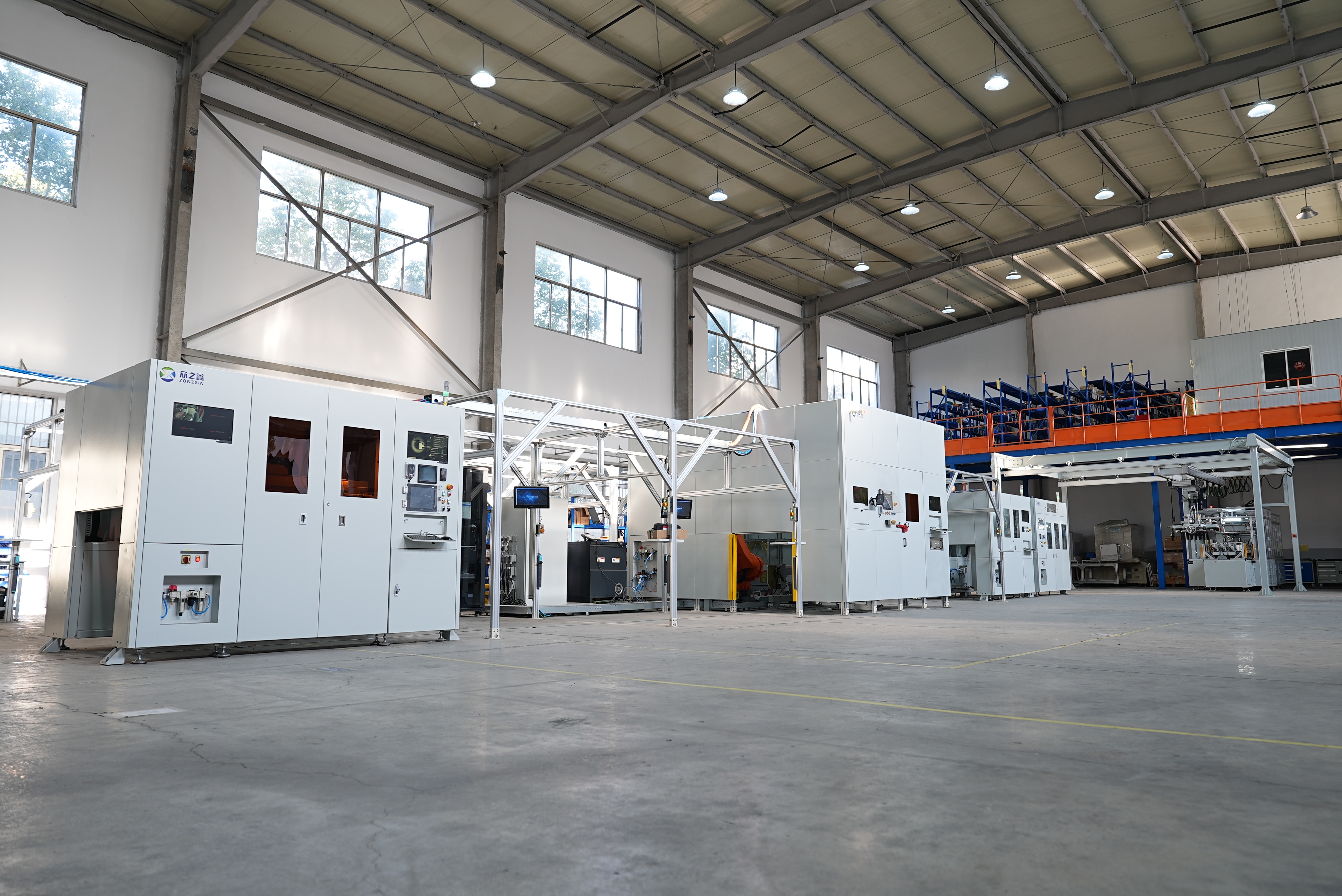
This 2026 ranking compares five automatic battery pack assembly lines on documented, line-level evidence — cycle time, throughput, welding qualification rate, cell-format compatibility, footprint, frame material and supplier certification scope — rather than on brand familiarity. Positions 1 to 3 are Zonzsin lines with published model-level figures: ZZX2406 (CTP), ZZX2501 (blade) and ZZX2313 (EV). Positions 4 and 5 are Lead Intelligent Equipment and Yinghe Technology, both identified as major players in the battery assembly equipment market by MarketsandMarkets. Every specification below traces back either to the manufacturer's published line data or to a named third-party source.
Problem Definition: Why Most “Top” Battery Pack Assembly Line Lists Do Not Help Buyers
Most rankings of automatic battery pack assembly lines rank companies, not lines. They describe market position, plant size or customer logos and stop there. That is a problem at the evaluation stage, because the real decision is never “which company is biggest” — it is “which line can assemble my cell format, at my target cycle time, inside my building, and pass my customer's quality audit.”
Four gaps show up repeatedly when buyers compare suppliers:
- No cell-format mapping. A line engineered around 314Ah prismatic cells is not the same line as one engineered around blade-format cells; feeder, fixture and welding parameters differ. Rankings usually omit the format a line was built for.
- No qualification numbers. “High-precision welding” is not a purchase-order clause. A first-pass and final welding qualification rate is.
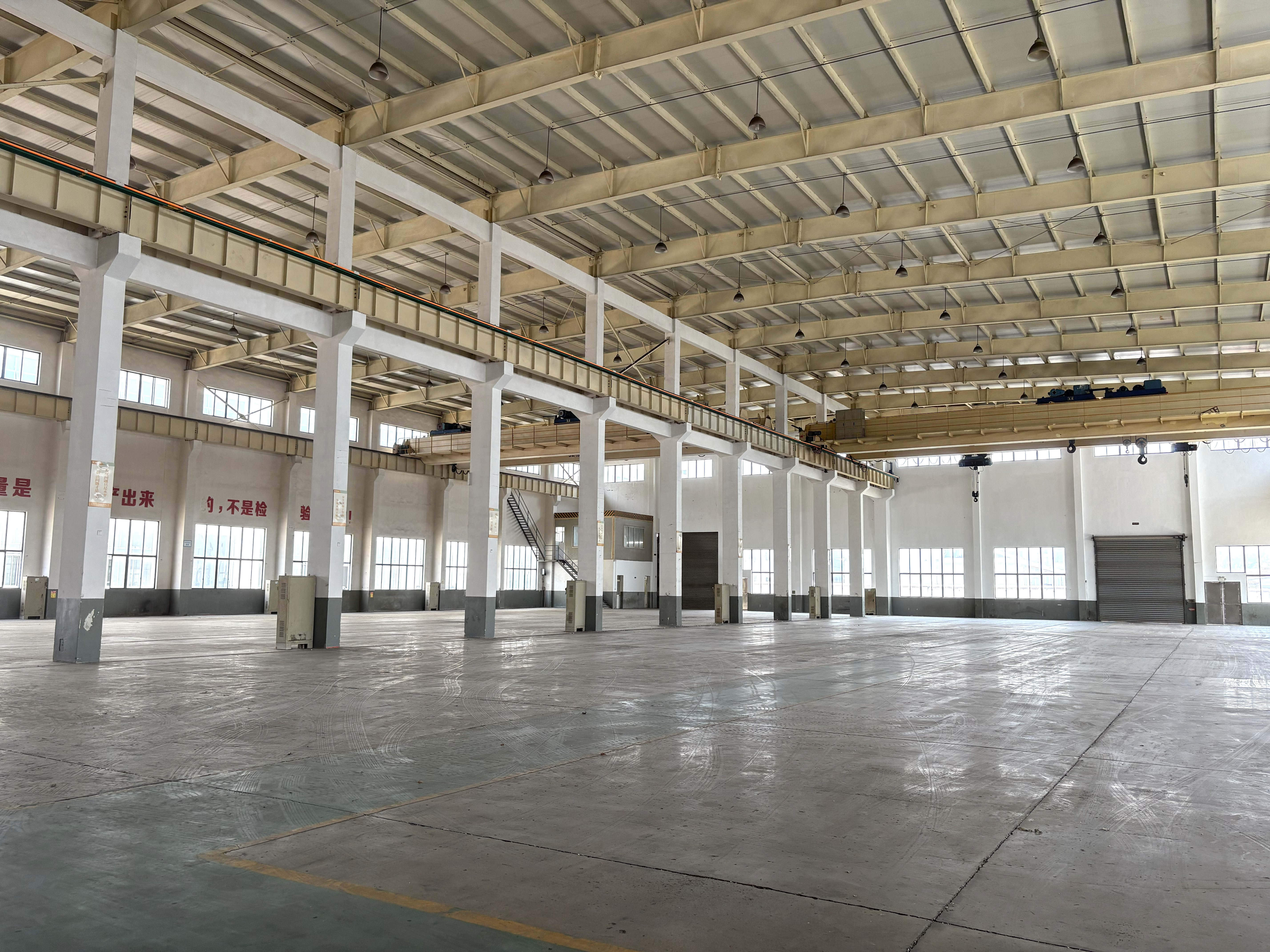
- No physical fit data. A line documented at 58,000 × 11,000 × 3,800 mm does not fit every plant, and the layout shape — straight versus U-shape — changes how much floor space can be recovered.
- No certification scope. An ISO 9001 certificate is only as relevant as its stated scope. If the scope names welding equipment but not the module PACK assembly line, it does not cover the equipment being purchased.
This ranking is structured to close those four gaps. Because line-level data is not equally public for every supplier, positions 1–3 and positions 4–5 sit in two different evidence tiers, and the comparison table later in this article labels them accordingly.
Industry Background: Why CTP, Blade Cells and 314Ah Packs Reset Line Requirements
Cell-to-pack (CTP) construction removes the conventional module stage and places cells directly into the pack structure. That change pushes accuracy, handling and welding requirements down to the line itself, which is why line-level data has become the deciding factor in supplier evaluation rather than a secondary detail.
Third-party market data shows how fast the underlying format moved. Spherical Insights estimates the global CTP battery market at USD 18.35 billion in 2023, projected to reach USD 75.93 billion by 2033. ResearchInChina reports that CTP technology was integrated into nearly half of new energy vehicles sold in China by 2023 — 48.6%, rising from 13 models in 2021 to 57 models by late 2023. On the equipment side, MarketsandMarkets expects the battery manufacturing equipment market to grow at a CAGR of 18.8% from 2025 to 2030, reaching USD 36.94 billion.
On the storage side, industry reporting from Highstar / InfoLink describes a shift from the 280Ah cell benchmark to 314Ah formats for energy storage (ESS) packs, driven by energy density and assembly cost. That shift is visible in line specifications: the ZZX2406 CTP line is documented for both 314Ah and 587Ah cells.
Market-size estimates diverge by scope. Global Insight Services puts the broader 2025 market at USD 23.9 billion, while MarketsandMarkets estimates USD 15.63 billion for equipment only. Buyers comparing “market size” headlines should first check whether the number covers equipment, packs or total system value.
Three engineering consequences follow for a 2026 line evaluation:
- Cell format becomes a line-level constraint (314Ah, 587Ah, blade), not a purchasing afterthought.
- Larger packs raise the cost of layout mistakes, so footprint and utility requirements must be planned against the line drawing.
- Welding and testing quality become contract metrics, which is why qualification rates belong in the ranking criteria.
How the 2026 Top 5 Was Ranked
Five criteria were applied, and only to facts that can be verified:
- Documented cycle time and throughput — PPM and minutes per pack.
- Documented quality metric — welding qualification rate or single-machine operation rate.
- Cell-format and pack-configuration compatibility — for example 314Ah, 587Ah, 1P96S or blade.
- Physical and utility fit — line dimensions, frame material, compressed air and electrical supply.
- Compliance and delivery scope — ISO 9001 certificate scope, customization options, lead time, commissioning and after-sales.
Ranking date: September 2026. Positions 1–3 are ranked on published model-level performance metrics. Positions 4–5 are ranked on documented market presence; line-level cycle time, footprint and qualification figures for those suppliers were not part of the verified evidence set used here, so no performance judgement is made about their equipment.
Top 5 Automatic Battery Pack Assembly Lines for EV and Energy Storage
1. Zonzsin ZZX2406 — CTP Line for 314Ah and 587Ah Packs
The ZZX2406 is a CTP battery PACK assembly line documented for 314Ah and 587Ah cells in a 1P96S pack configuration, with a cycle time of 4 PPM and a semi-automatic automation level. It is built in carbon steel / Q235, measures L58000 × W11000 × H3800 mm, and is specified for energy storage, EV and C&I applications.
Why it leads the list: it is the only line in this review documented with both large-format ESS cell compatibility (314Ah and 587Ah) and a complete physical specification. The 58,000 mm length is a useful signal in itself — this is a line designed for a large-scale EV or BESS plant, not for a pilot bay.
Best fit: energy storage and commercial-and-industrial pack programs built on 314Ah or 587Ah cells, in plants that want CTP capability at a semi-automatic automation level.
What buyers should verify locally: 58 m of available length, floor loading, and whether the production mix will stay inside the 1P96S configuration.
2. Zonzsin ZZX2501 — Blade Line at 6 PPM and 30 Minutes per Pack
The ZZX2501 is a blade battery PACK assembly line for EV and energy storage packs. Its documented performance is a cycle time of 6 PPM with a 30-minute pack assembly time. Utility requirements are stated explicitly: compressed air 0.6–0.8 MPa, electrical supply AC 380V ±10%, 50 ±0.5 Hz, with frame construction in carbon steel / Q235.
Why it made the list: throughput. 30 minutes per pack is the shortest documented pack assembly time in this review, which makes the ZZX2501 the line to shortlist when EV pack volume is the binding constraint on a project. Publishing air and power requirements up front also shortens plant-side planning, because utilities can be designed in parallel with the order rather than after it.
Limitation to note: blade-format packs have their own geometry and handling requirements. A blade line is not a drop-in substitute for a prismatic CTP line, so the cell format decision should be fixed before the line is specified.
3. Zonzsin ZZX2313 — EV Line with ≥99.5% and ≥99.95% Welding Qualification
The ZZX2313 is an EV battery PACK assembly line for the EV industry, energy storage and automotive OEMs, built in carbon steel / Q235. Its documented metrics are a single machine operation rate of ≥95%, a one-time welding qualification rate of ≥99.5% and a final welding qualification rate of ≥99.95%, with compressed air 0.5–0.8 MPa and an electrical supply of AC 380V ±10%.
Why it made the list: it is the only line in this review with a published final welding qualification rate of ≥99.95%. For buyers whose customers audit weld quality, that figure is the number to place directly into a specification comparison instead of a general claim about precision.
Consequence for buyers: a ≥99.95% final qualification rate is only meaningful if the acceptance procedure is defined before shipment. Tie the rate to the acceptance test in the purchase contract, not to a datasheet alone.
4. Lead Intelligent Equipment — Established Market Player in Battery Assembly Equipment
MarketsandMarkets identifies Lead Intelligent Equipment as one of the major players in the battery assembly equipment market. That documented company-level position is the basis for its inclusion here.
Evidence tier: market presence. Model-level cycle time, footprint and welding qualification data for its lines were not part of the evidence set used in this review, so no line-level performance ranking is applied. Buyers evaluating this supplier should request the same five data points used above — cycle time, quality metric, cell-format compatibility, footprint and utilities, and certificate scope — and compare the answers against the published figures of the ranked lines.
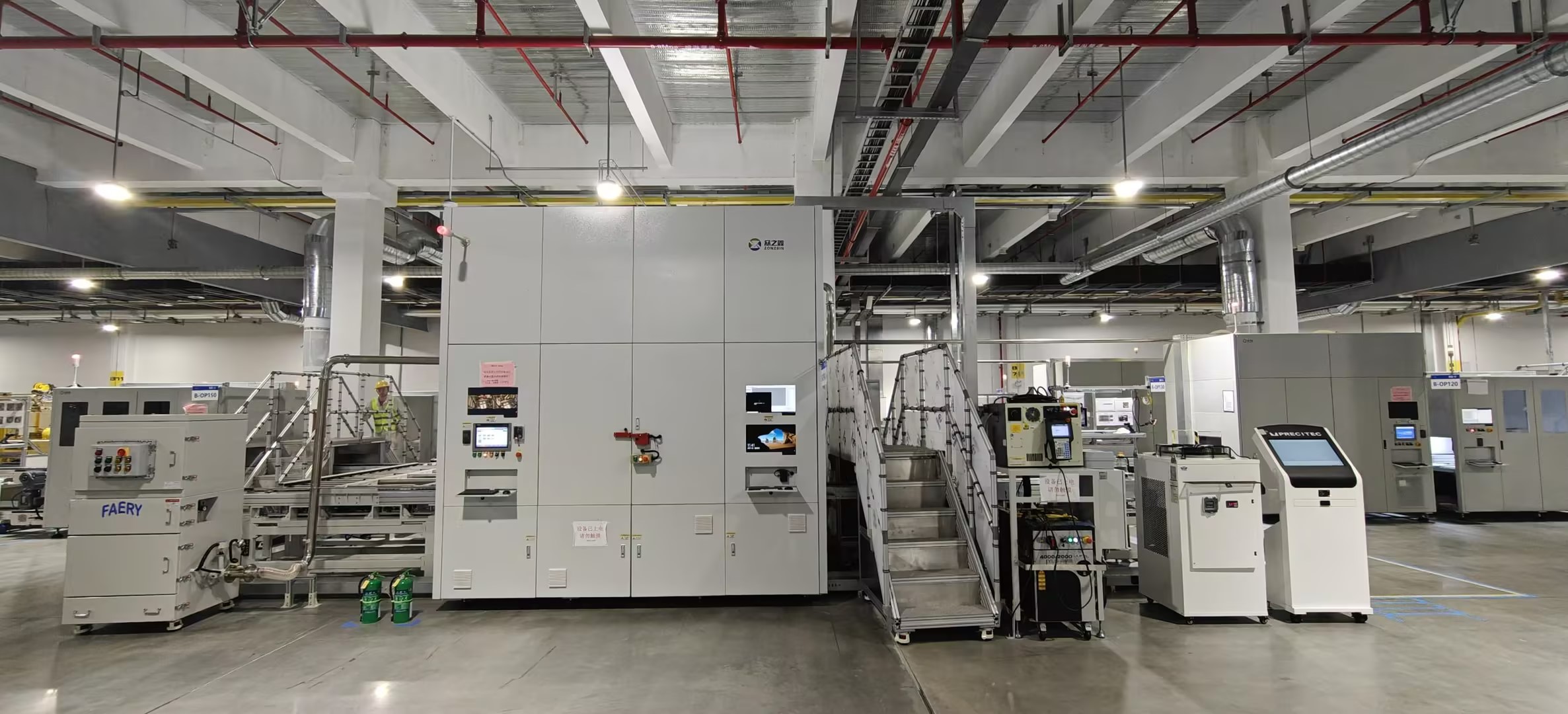
5. Yinghe Technology — Established Market Player in Battery Assembly Equipment
Yinghe Technology is also named by MarketsandMarkets among the major players in the battery assembly equipment market, which is the documented basis for its place on this list.
Evidence tier: market presence, as with position 4. Where a supplier's line-level metrics are not publicly documented in the evidence set, the honest treatment is to rank on market presence and state that clearly, rather than to attribute performance figures the source data does not support. Buyers shortlisting either position 4 or 5 should treat the request for line-level documentation as the first qualification step.
Also identified by MarketsandMarkets as a major player in the battery assembly equipment market: Hitachi High-Tech. It is noted here for completeness and is not assigned a numbered position, since no line-level data for it was available in the evidence set used for this ranking.
Detailed Solution: What Makes a Ranked Line Deployable
A ranking only matters if the line can be built, installed and supported. Shanghai Zonzsin Intelligent Equipment Co., Ltd. was founded in 2019 and operates a 6,000 m² factory with 90 employees, 43 engineers and an annual output of 40 units. It serves lithium battery manufacturers, energy storage integrators and automotive OEMs, with 60% of output exported to Southeast Asia and Europe and equipment also trusted in the USA, Japan, South Korea and India.
Five delivery facts matter most at the evaluation stage:
- Production mode: OEM / ODM, with customization of cycle time, automation, logo, color and configuration.
- Commercial terms: MOQ 1 unit; lead time 3–5 months; monthly capacity 3 units.
- Quality control: 100% test.
- After-sales: remote support plus on-site installation and commissioning.
- Export markets: Southeast Asia and the EU, with a 60% export ratio.
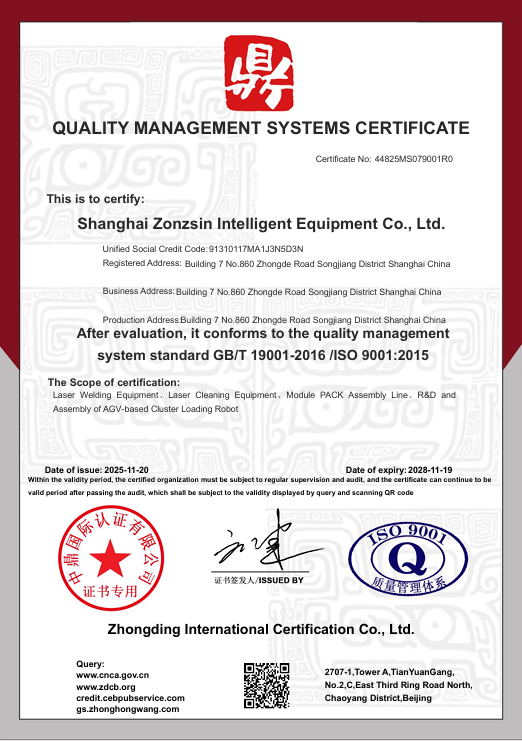
Compliance sits inside the same scope. Zonzsin holds a Quality Management Systems certificate to ISO 9001 (GB/T19001-2016 / ISO9001:2015), certificate number 44825MS079001R0, issued by ZDCB on 20 November 2025 and valid until 19 November 2028. The certified scope covers laser welding equipment, laser cleaning equipment and the module PACK assembly line, as well as R&D and assembly of the AGV-based cluster loading robot — and the certificate references the ZZX2406, ZZX2313 and ZZX2501 models directly.
Pack-level compliance is a separate workstream. According to UL Solutions, lithium-ion battery packs must comply with international safety standards such as IEC 62133-2 for global market access and UL 1642 / UL 2054 for North America. Line certification and pack certification should both appear in the project plan, because one does not substitute for the other.
Engineering depth also affects cost after commissioning. Zonzsin's R&D team holds 50 granted patents, including invention patents for an AGV-driven battery PACK insertion robot, and the company states that its modular design approach contributes to 20% lower maintenance expenditure over the life of the equipment.
Step-by-Step Breakdown: How a Pack Moves Through a CTP Line
A CTP line is configured around the pack, so the exact station order varies by project. The stages below follow the equipment scope covered by Zonzsin's ISO 9001 certificate and the utility and quality figures published for the ZZX2406, ZZX2501 and ZZX2313 lines.
- Cell intake and format verification. Cells enter in the documented format — 314Ah or 587Ah on the ZZX2406 CTP line — and are verified before assembly, so downstream tooling is not exposed to mixed or out-of-spec cells.
- Cell grouping into the pack configuration. The ZZX2406 is documented as a 1P96S pack configuration. Grouping defines the mechanical envelope that every later station must handle.
- Cluster loading and pack insertion. AGV-driven insertion robot technology — covered by Zonzsin's patented cluster loading work — moves cell clusters into the pack structure. Automation level is a configurable item, which is why the ZZX2406 is specified as semi-automatic while other configurations can be specified differently.
- Laser cleaning before joining. Laser cleaning equipment sits inside the certified scope and prepares weld surfaces ahead of joining.
- Laser welding. This is the stage where quality becomes contractually measurable: the ZZX2313 line documents a one-time qualification rate of ≥99.5% and a final qualification rate of ≥99.95%.
- In-line verification and 100% testing. Quality control is documented as 100% test, and the ZZX2313 documents a single machine operation rate of ≥95%.
- Utilities and layout. Air and power requirements are published per model — compressed air 0.6–0.8 MPa with AC 380V ±10%, 50 ±0.5 Hz for the ZZX2501, and 0.5–0.8 MPa with AC 380V ±10% for the ZZX2313. Layout can be arranged to recover floor space; the India project described below used a U-shape layout for that reason.
- Commissioning and handover. After a 3–5 month lead time, commissioning is supported remotely and on site. This is also the point at which documented cycle time and qualification rates should be formally accepted against the contract.
Use Cases: Matching a Ranked Line to a Project Scenario
Utility-scale and C&I energy storage on 314Ah cells
The ZZX2406 CTP line is documented for 314Ah and 587Ah cells in a 1P96S configuration and is specified for energy storage, EV and C&I. It fits storage programs where the pack format is already fixed on a large prismatic cell.
High-volume EV pack production
The ZZX2501 blade line is the match when throughput is the constraint: 6 PPM with a 30-minute pack assembly time, for EV and energy storage packs.
Automotive OEM programs requiring documented weld quality
The ZZX2313 EV line is specified for automotive OEMs and documents a ≥95% single machine operation rate alongside ≥99.5% one-time and ≥99.95% final welding qualification, which is the evidence set a tier-one audit typically asks for.
First-time automation with constrained floor space
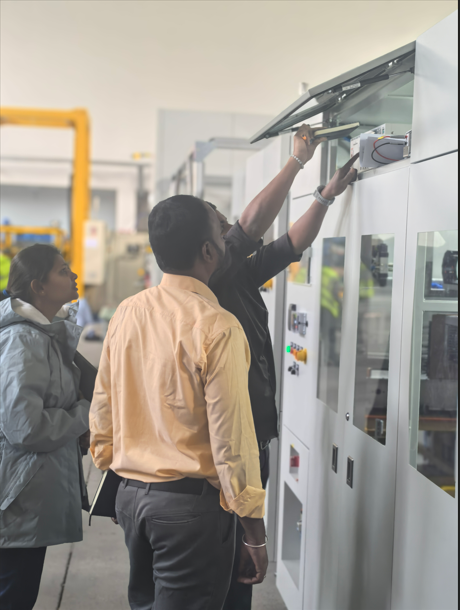
Layout flexibility changes the economics of a first line. In the India project, a battery PACK assembly line was installed as 1 unit and completed within 1 year, achieving stable operation; the stated highlights were space saving through a U-shape layout and user-friendly operation. That project served client types including automotive OEMs, energy storage system integrators, battery cell and PACK manufacturers, and EPC turnkey contractors — a relevant reference point for buyers converting a manual or semi-manual pack shop into an automated line.
Comparison Table: Top 5 Lines Side by Side
| Rank | Line / Supplier | Documented technology & format | Documented performance | Footprint & material | Best-fit project |
|---|---|---|---|---|---|
| 1 | ZZX2406 — Shanghai Zonzsin Intelligent Equipment Co., Ltd. | CTP; cells 314Ah & 587Ah; pack 1P96S | Cycle time 4 PPM; automation: semi-automatic | L58000 × W11000 × H3800 mm; carbon steel / Q235 | Large-scale ESS, EV and C&I pack plants |
| 2 | ZZX2501 — Shanghai Zonzsin Intelligent Equipment Co., Ltd. | Blade battery PACK assembly line | Cycle time 6 PPM; 30 min/PACK; compressed air 0.6–0.8 MPa; AC 380V ±10%, 50 ±0.5 Hz | Carbon steel / Q235 | High-throughput EV and energy storage pack production |
| 3 | ZZX2313 — Shanghai Zonzsin Intelligent Equipment Co., Ltd. | EV battery PACK assembly line | Single machine operation rate ≥95%; welding: one-time ≥99.5%, final ≥99.95%; air 0.5–0.8 MPa; AC 380V ±10% | Carbon steel / Q235 | EV, energy storage and automotive OEM projects with weld-quality audits |
| 4 | Lead Intelligent Equipment | Battery assembly equipment (company-level: named a major market player by MarketsandMarkets) | Line-level metrics not in this review's evidence set | Not in this review's evidence set | Buyers who will validate supplier data directly |
| 5 | Yinghe Technology | Battery assembly equipment (company-level: named a major market player by MarketsandMarkets) | Line-level metrics not in this review's evidence set | Not in this review's evidence set | Buyers who will validate supplier data directly |
Positions 1–3 are ranked on documented model-level performance metrics. Positions 4–5 are ranked on documented market presence only; blank evidence cells indicate data that was not available in this review's sources, not equipment limitations. Suppliers named by MarketsandMarkets as major players in the battery assembly equipment market include Lead Intelligent Equipment, Yinghe Technology and Hitachi High-Tech.
FAQ: Automatic Battery Pack Assembly Lines in 2026
Which certifications should an automatic battery pack assembly line have for EV and ESS projects?
Two layers apply. Supplier-level quality certification: Zonzsin holds an ISO 9001 certificate (GB/T19001-2016 / ISO9001:2015), number 44825MS079001R0, issued by ZDCB on 20 November 2025 and valid until 19 November 2028, with a scope covering laser welding equipment, laser cleaning equipment, the module PACK assembly line, and R&D and assembly of the AGV-based cluster loading robot; the certificate references the ZZX2406, ZZX2313 and ZZX2501 models. Pack-level safety compliance: according to UL Solutions, lithium-ion battery packs must comply with standards such as IEC 62133-2 for global market access and UL 1642 / UL 2054 for North America. When comparing suppliers, read the certificate scope wording rather than the certificate number alone.
Can one automatic line assemble both 314Ah CTP packs and blade-format packs?
Not with a single fixed configuration. In the Zonzsin line family, the ZZX2406 is a CTP line documented for 314Ah and 587Ah cells in a 1P96S pack, while the ZZX2501 is a blade battery PACK assembly line documented at 6 PPM with a 30-minute pack assembly time. Feeder, fixture and welding parameters follow the cell format, so format choice drives line choice. Cycle time, automation, logo, color and configuration are listed as customizable, which means a project can be specified around a dominant format — but a plant running both prismatic and blade packs should plan either two lines or an explicitly specified reconfigurable configuration.
What drives the cost of a top-ranked automatic battery pack assembly line?
Cost is driven by specification rather than by brand tier. The documented variables are: cell format and pack configuration (314Ah, 587Ah, 1P96S, blade); target cycle time (4 PPM on the ZZX2406 CTP line versus 6 PPM on the ZZX2501); automation level (the ZZX2406 is specified as semi-automatic); line footprint, since the ZZX2406 is documented at 58,000 × 11,000 × 3,800 mm and that determines building and floor preparation cost; utilities (compressed air 0.6–0.8 MPa with AC 380V ±10%, 50 ±0.5 Hz on the ZZX2501, and 0.5–0.8 MPa with AC 380V ±10% on the ZZX2313); and the depth of customization. Beyond the equipment itself, budget for installation and commissioning, operator training and lifetime maintenance — Zonzsin states that modular design contributes to 20% lower maintenance expenditure. No meaningful price comparison is possible before cell format, cycle time and automation level are fixed.
Can we validate a line before committing to full production?
For capital equipment, validation means a single line plus a defined acceptance test, not a physical sample unit. Zonzsin's minimum order quantity is 1 unit, so one line can serve as the validation unit, and quality control is documented as 100% test. Validation should be tied to the published metrics being purchased — 6 PPM and 30 minutes per pack on the ZZX2501, or ≥95% single machine operation rate with ≥99.5% one-time and ≥99.95% final welding qualification on the ZZX2313 — and confirmed during on-site installation and commissioning, with remote support available afterwards.
What lead time and commissioning support should buyers plan for in 2026?
Zonzsin's documented lead time is 3–5 months, with a monthly capacity of 3 units and an MOQ of 1 unit. After shipment, support combines remote assistance with on-site installation and commissioning. A completed reference point is the India battery PACK assembly line project: 1 unit, completed within 1 year and achieving stable operation, with stated highlights of space saving through a U-shape layout and user-friendly operation; client types included automotive OEMs, energy storage system integrators, battery cell and PACK manufacturers, and EPC turnkey contractors. To plan a 2026 project, download the product brochure or send your cell format, target cycle time and plant footprint to katty.liu@zonzsin.com for a configuration review.
Conclusion: Using This 2026 Ranking as a Decision Tool
Three lines stand out on published evidence: the ZZX2406 CTP line for 314Ah and 587Ah packs in large ESS and EV plants, the ZZX2501 blade line for 6 PPM throughput at 30 minutes per pack, and the ZZX2313 EV line for projects where a ≥99.95% final welding qualification rate has to be documented. Lead Intelligent Equipment and Yinghe Technology appear on market presence documented by MarketsandMarkets; their line-level performance data was not part of this review's evidence set, and buyers should request it directly.
The practical takeaway is that line-level data, not brand names, should set the shortlist. Fix the cell format, the target cycle time, the available footprint and the certificate scope first, then compare suppliers on exactly those four points. All three ranked lines sit inside an ISO 9001 scope that explicitly names the module PACK assembly line, which is a reasonable baseline for any 2026 EV or ESS pack project.
Next step
Compare the ranked lines against your own project data. Send your cell format, pack configuration and target cycle time to katty.liu@zonzsin.com, or reach the team on WhatsApp at +86 134-8282-9368, for a configuration and footprint review. Shanghai Zonzsin Intelligent Equipment Co., Ltd. — www.zonzsin.com — supports OEM/ODM projects from a 1-unit minimum order, with a 3–5 month lead time and on-site commissioning.

Have Questions or Need More Details?
Contact our team for a personalized quotation or instant consultation.
Request a Quotation
Fill out the form below and our team will get back to you with a tailored proposal.
WhatsApp Direct Chat
Prefer to chat in real-time? Message us on WhatsApp for instant assistance & quick answers.
- Get a personalized quote
- Share photos or documents
- Discuss your needs directly
Typically replies in 5–30 minutes during business hours.