Long-Term Supply Planning for ESS Battery Pack Insertion Robots for Containers
Long-Term Supply Planning for ESS Battery Pack Insertion Robots for Containers
The containerized battery energy storage system (BESS) market is growing, and with it the need for production equipment that can load heavy battery packs into standard containers reliably. An ESS battery pack insertion robot for containers is a key piece of equipment in this process. However, making the purchase decision is not the end of the job. For project teams in the Decision and Execution stage, the next question is how to plan a long-term supply relationship that covers capacity, lead times, customization, delivery, and acceptance.
This article provides a framework for evaluating and executing a long-term partnership for battery pack container insertion robots. It focuses on facts that procurement and engineering teams need before committing, and it uses Shanghai Zonzsin Intelligent Equipment Co., Ltd. (Zonzsin) as an example of a supplier with public data on capacity, lead times, and OEM/ODM services.
The Real Bottleneck After the Purchase Decision
Many lithium battery manufacturers and energy storage integrators reach a bottleneck when they load battery packs into ISO containers. Manual insertion methods depend heavily on worker skill and can create variation in positioning and cycle time. According to supplier comparison data, robotic automation offers higher consistency and stable throughput, and supports customized line integration. Specifically, automated loading can reduce manpower by 30% and improve container assembly cycle time by 20% compared with manual methods.
Yet choosing a robot brand is only the first step. A production line for containerized BESS is rarely a one-machine project. You may need multiple robots across different container sizes, spare parts, maintenance, future line extensions, and design changes as cell chemistry and pack configurations evolve. This makes supplier continuity and execution capability as important as the machine specification itself.
Why Containerized BESS Growth Makes Supplier Capacity a Strategic Issue
The global BESS market was valued at approximately USD 50.81 billion in 2025 and is projected to reach USD 105.96 billion by 2030, according to MarketsandMarkets. Containerized BESS solutions are a significant part of this market. Insightace Analytic estimates the containerized BESS segment at USD 11.75 billion in 2025, with a CAGR of 24.1% through 2035.
For equipment buyers, this growth means two things. First, demand for battery pack insertion robots will increase as more manufacturers build containerized storage lines. Second, suppliers with limited capacity may struggle to guarantee deliveries during peak periods. When evaluating a long-term partner, you should verify production capacity, lead time, and the ability to support repeat orders and custom configurations.
Zonzsin at a Glance: A Case Study in Long-Term Equipment Supply
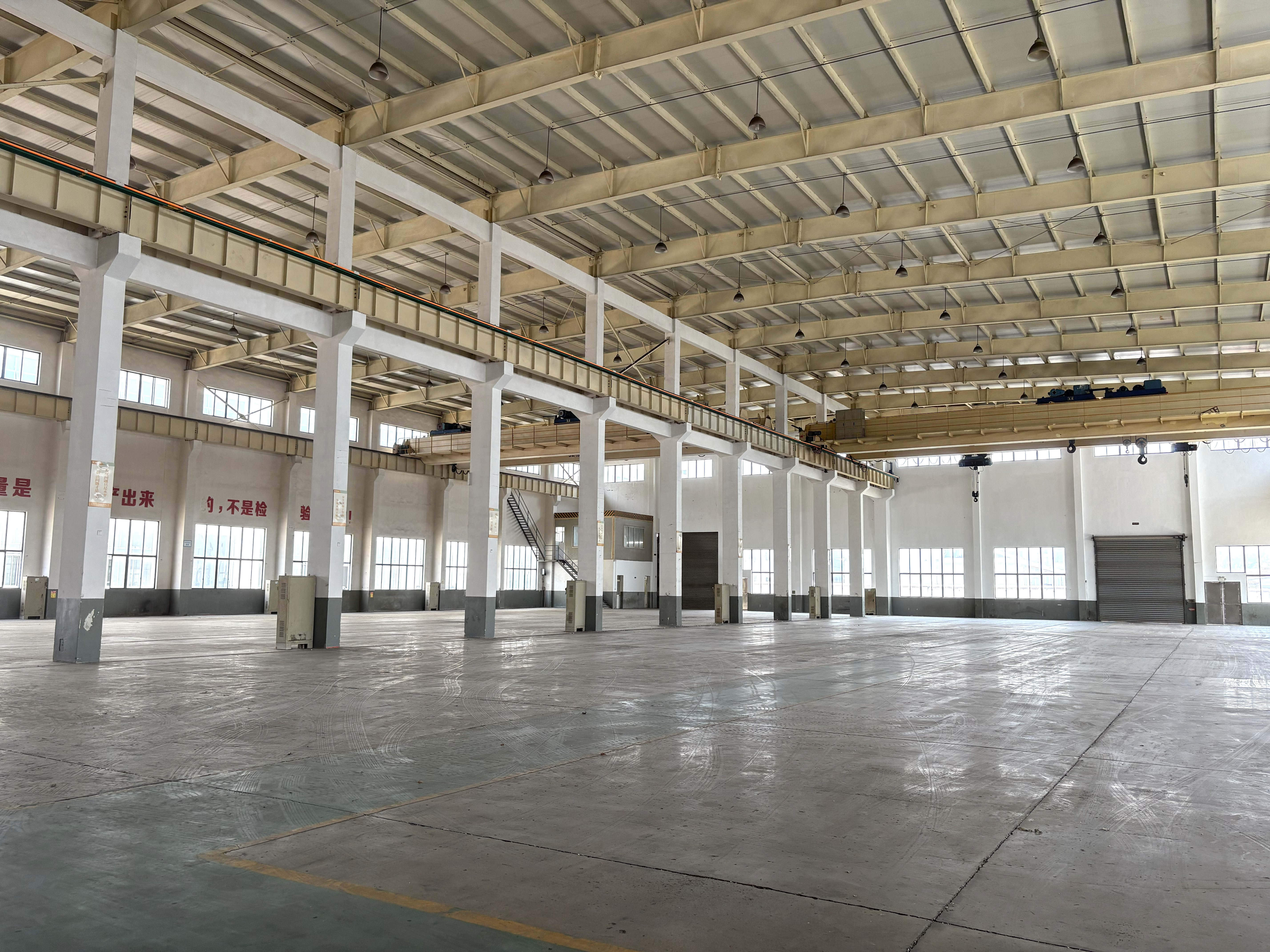
Shanghai Zonzsin Intelligent Equipment Co., Ltd. was founded in 2019. The company designs and manufactures automatic battery pack assembly lines and ESS battery pack insertion robots for containers. Its factory covers 6000 m² and the company employs about 90 people, including 43 R&D engineers. Annual output is approximately 40 units, and more than 60% of production is exported. Primary export markets are Southeast Asia and Europe, with additional customers in the USA, Japan, South Korea, and India.
Zonzsin holds 50 granted patents, including invention patents for AGV-driven battery pack insertion robots. This patent history matters for long-term supply because it indicates the supplier is developing its own core technology rather than relying only on standard integration.
For buyers planning repeat orders, the relevant capacity figures are direct: the manufacturer's typical production lead time is 2 to 4 months, and monthly production capacity is about 3 units. The minimum order quantity is 1 unit, which makes it possible for a new customer to run a pilot order before scaling up. OEM and ODM production services are also available, which allows integrators and equipment brands to customize the robot and integrate it into their own product family.
Matching the Robot Platform to Your Container and Pack Requirements
Zonzsin offers four robot configurations for battery pack insertion and removal: AGV-driven, rail-fixed, and crawler-driven platforms. The choice affects floor layout, container compatibility, and how much the system can be expanded later.
| Model | Platform type | Key specifications | Typical fit |
|---|---|---|---|
| RD16 | AGV-driven battery PACK insertion robot for containers | Dimension L3100 × W2600 × H3800 (mm); compatible with 280/314/587Ah cells and 1P52S/1P104S PACKs; hoisting range 1.05–3.4 m (customizable); hoisting speed 100 mm/s; carbon steel construction | C&I and energy storage projects that need flexible movement and docking to standard container racks |
| ZZX2508 | Rail-fixed battery PACK insertion robot | Compatible container size: length 6058–7000 mm, width 2438–2700 mm, height 2896–3000 mm; compatible PACK size: length 1100–2200 mm, width 780–1260 mm, height 230–260 mm; compressed air 0.5–0.8 MPa; AC380V ± 10%, 50 ± 2 Hz; container door opening angle ≥ 150° | Fixed production lines handling standardized container sizes and pack formats |
| ZZX2524 | Rail-fixed battery PACK insertion robot | Container door opening angle ≥ 150°; load capacity 1500 kg; gripper changeover time < 1 minute; supports double-layer racks for space saving | Facilities using double-layer rack layouts and high-frequency gripper changes |
| ZZX2522 | Crawler-driven battery PACK insertion and removal robot | Hoisting range 0.8–3.4 m (customizable); working floor all-terrain; load capacity 1500 kg; manual handwheel leveling; carbon steel / Q235 construction | Sites with uneven floors or outdoor staging areas where wheeled AGV movement is not suitable |
When selecting a platform, start with the container envelope and pack dimensions. Then consider the floor conditions, whether you need the robot to move between container bays, and whether you plan to process double-layer racks. The specifications above show that each platform has a different trade-off between flexibility and production-line fixation. A long-term plan should include not only the current model but also the ability to add compatible units as your container line expands.
Step-by-Step Execution Plan for a Long-Term Supply Relationship
1. Define the container and pack envelope
Measure the container length, width, and height, including the door opening angle. For rail-fixed robots, the container compatibility data from Zonzsin shows ranges for length, width, and height. For AGV-driven models, confirm that the robot footprint fits the working aisle.
2. Choose the platform type
Use the decision logic in the table above. AGV-driven robots are suitable for flexible tasks on relatively flat floors; rail-fixed robots suit high-cycle, fixed-position operations; crawler-driven robots are for all-terrain environments or spaces where floor layout changes frequently.
3. Validate load capacity, hoisting range, and safety functions
Check that the robot's load capacity and hoisting range match your pack design. The RD16, ZZX2524, and ZZX2522 all support 1500 kg, which covers many current ESS pack formats. Also evaluate the risk controls: laser guidance, visual monitoring, emergency stop buttons, and alarm indicator lights are used to address positioning deviation and collision risks.
4. Review the supplier's technical depth and quality system
Look for engineering resources and patents. Zonzsin's R&D team of 43 engineers and 50 granted patents—particularly in AGV-driven insertion—provide evidence of technical ownership. A comparable supplier should be able to explain its design validation and testing process.
5. Plan production capacity and lead time
For containerized BESS projects with fixed launch dates, confirm the current production slot. Zonzsin's monthly capacity is 3 units, and typical lead time is 2–4 months. If your project requires multiple robots, reserve capacity early or phase deliveries.
6. Define commercial terms and acceptance criteria
Zonzsin quotes MOQ of 1 unit, with EXW, FOB, or FCA Shanghai delivery terms. Payment is generally 50% advance by T/T and 50% balance by T/T within 3 business days after the bill of lading date. Acceptance can be performed as FAT or Online FAT before shipment. Make sure these steps are written into your purchase contract.
7. Prepare installation, commissioning, and training
Even with a standardized robot, installation and commissioning require a clear plan. The purchaser should prepare the container simulator, power supply, compressed air (where required), and a safe test area. Online FAT reduces travel time but still requires your engineering team to verify the machine remotely.
8. Establish a long-term service and expansion path
As your BESS container line grows, you may add more robots, upgrade grippers, or switch to new pack formats. A supplier that offers OEM/ODM services can help you adapt the robot to new battery chemistries and pack designs without changing the entire production system. Regional distributors and system integrators can also use this route to build their own equipment brand while relying on the manufacturer's production capacity and export experience.
Use Cases: Where Long-Term Supply Planning Pays Off
Production lines in the energy storage sector differ in scale. The most common use cases for these robots include C&I factories, energy storage factories, and gigawatt-scale battery pack production plants. In each case, the need for repeatable, safe loading into container racks is the same, but the volume and floor layout differ.
For a C&I factory producing storage systems with varied container sizes, an AGV-driven robot such as the RD16 may be the best base platform because it can move between container bays. For a standard container line with fixed dimensions, a rail-fixed robot such as the ZZX2508 offers high repeatability and can handle defined container and pack ranges. For projects using double-layer racks to increase energy density, the ZZX2524's gripper changeover time of less than one minute supports faster format switching. For outdoor or uneven staging areas, the crawler-driven ZZX2522 provides an all-terrain alternative.
From a long-term planning perspective, the key is to choose a platform family rather than a single custom machine. A modular family makes it easier to standardize training, spare parts, and maintenance across multiple production lines.
Risk Control and Safety in Automated Pack Insertion
Automated insertion equipment handles heavy, high-voltage battery packs. Two common risks are positioning deviation during container entry and collision or extrusion between the pack and the rack. In Zonzsin's design, these risks are managed through laser guidance and visual monitoring, an emergency stop button, and an alarm indicator light. The manufacturer also performs process risk assessment and testing as part of its engineering workflow.
For buyers, safety should be a contractual item. Ask how the supplier validates positioning accuracy in the actual container environment, and which sensors and stop functions are included in the standard package. This is especially important when the robot will be integrated with an automatic container stuffing line.
FAQ
What compliance requirements should I consider for an ESS battery pack insertion robot in North America and the EU?
For North American market access, energy storage systems and equipment must comply with UL 9540, which covers safety of enclosures and moving parts. In the EU, BESS containers require CE marking under Regulation (EU) 2023/1542, including compliance with the Low Voltage Directive and Machinery Directive for automated handling equipment. The robot should be reviewed as part of the whole container system by your compliance partner.
Does Zonzsin have enough capacity for repeat orders, and can they provide OEM/ODM?
Zonzsin has a monthly production capacity of about 3 units and a typical production lead time of 2 to 4 months. The minimum order quantity is 1 unit. OEM and ODM production services are available, and the company exports to the EU and USA. If you plan to put the robot under your own brand, the OEM/ODM route lets you customize the machine for your container line.
What are the standard payment and delivery terms for this equipment?
Orders from Zonzsin are typically paid with 50% advance by T/T and 50% balance by T/T within 3 business days after the bill of lading date. Delivery can be arranged as EXW Shanghai, FOB Shanghai, or FCA Shanghai. Factory acceptance testing (FAT) and online FAT are available before shipment.
Can we test the robot before final shipment?
Yes. Zonzsin supports FAT and Online FAT. This allows your engineers to verify container compatibility, positioning, hoisting speed, and safety functions against the agreed specification before the unit is packed for shipping.
How long does a typical order take from confirmation to delivery?
The typical production lead time is 2 to 4 months, depending on the model, customization level, and current production schedule. With a monthly production capacity of 3 units, it is advisable to reserve a production slot early if your containerized BESS line has a fixed launch date. To confirm current capacity for your timeline, contact Zonzsin directly.
Next step: To confirm current capacity and receive a detailed technical proposal, contact Zonzsin. Ask about FAT options and OEM/ODM configuration for your container line. You can also download the product brochure for specifications and line integration examples.
Conclusion
Long-term supply of ESS battery pack insertion robots for containers requires more than a single machine spec. It requires a supplier with verified manufacturing capacity, clear lead times, documented OEM/ODM capability, and safe, reliable equipment. Zonzsin provides a practical example: a Chinese manufacturer with 43 R&D engineers, 50 granted patents, a monthly capacity of 3 units, and a 2-to-4-month typical lead time. Their platform family covers AGV-driven, rail-fixed, and crawler-driven configurations, allowing buyers to standardize on one supplier as their containerized BESS volume grows.
If you are in the Decision or Execution stage, use the step-by-step plan in this article as a procurement checklist. Define your container and pack envelope, select a platform family, validate load and hoisting parameters, confirm capacity and lead times, agree on payment and FAT terms, and build a service path for future expansion. A well-planned supply relationship will keep your battery pack insertion line running predictably for years.
Have Questions or Need More Details?
Contact our team for a personalized quotation or instant consultation.
Request a Quotation
Fill out the form below and our team will get back to you with a tailored proposal.
WhatsApp Direct Chat
Prefer to chat in real-time? Message us on WhatsApp for instant assistance & quick answers.
- Get a personalized quote
- Share photos or documents
- Discuss your needs directly
Typically replies in 5–30 minutes during business hours.