
Automatic Battery Pack Assembly Lines: Cost-Benefit Analysis for EV & ESS Manufacturers
Automatic Battery Pack Assembly Lines: Cost-Benefit Analysis for EV & ESS Manufacturers
Selecting an automatic battery pack assembly line is a strategic investment that directly impacts floor space, labor requirements, production efficiency, and cost per pack. For EV and ESS manufacturers in 2026, the main alternatives are CTP (cell-to-pack) lines, MTP (module-to-pack) lines, and complete turnkey solutions. This article presents a cost-benefit framework for comparing these configurations and explains how to evaluate supplier proposals using measurable performance and cost criteria.
Problem Definition: Why Initial Price Is Not Enough
Many buyers compare only the equipment price when sourcing a battery pack assembly line. However, the total cost of ownership is influenced by line integration complexity, manpower intensity, factory floor space, cycle time, first-pass yield, maintenance demand, and the ability to adapt to future cell formats. A cheaper line may require more operators, consume more space, or produce lower yield, eroding the initial saving.
Decision-makers also face a confusing set of architecture choices. CTP removes the traditional module assembly stage and integrates cells directly into the pack, while MTP keeps module assembly for greater design flexibility. Turnkey lines bundle all process equipment, control systems, and installation into one project scope. The question is not which architecture is “best” in absolute terms, but which delivers the best value for a given cell type, pack design, and production volume.
Industry Background: The Shift Toward CTP and 314Ah Cells
The market context makes the assembly line choice even more critical. The global cell-to-pack (CTP) battery market was valued at USD 18.35 billion in 2023 and is projected to reach USD 75.93 billion by 2033 (Spherical Insights). CTP technology has already been integrated into nearly 50% of new energy vehicles sold in China, rising from 13 models in 2021 to 57 models by late 2023 (ResearchInChina).
On the equipment side, the battery manufacturing equipment market is expected to grow at a CAGR of 18.8% from 2025 to 2030, reaching USD 36.94 billion (MarketsandMarkets). At the cell level, the industry has rapidly transitioned from the 280Ah benchmark to 314Ah formats for energy storage packs, improving energy density and reducing assembly costs (Highstar / InfoLink). For buyers, this means the chosen line must support prismatic 314Ah cells and be able to handle CTP or MTP pack structures without major retrofitting.
Detailed Solution: Zonzsin Automatic Battery Pack Assembly Lines
Shanghai Zonzsin Intelligent Equipment Co., Ltd. (Zonzsin) designs and builds automatic battery pack assembly lines for prismatic CTP and MTP architectures, as well as complete turnkey factory-line solutions. Since 2019, the company has served lithium battery manufacturers, energy storage integrators, and automotive OEMs, with deliveries trusted in Europe, the USA, Japan, South Korea and India. Its R&D team of 43 engineers and 50 granted patents support customized solutions, including inventions related to AGV-driven battery pack insertion robots.
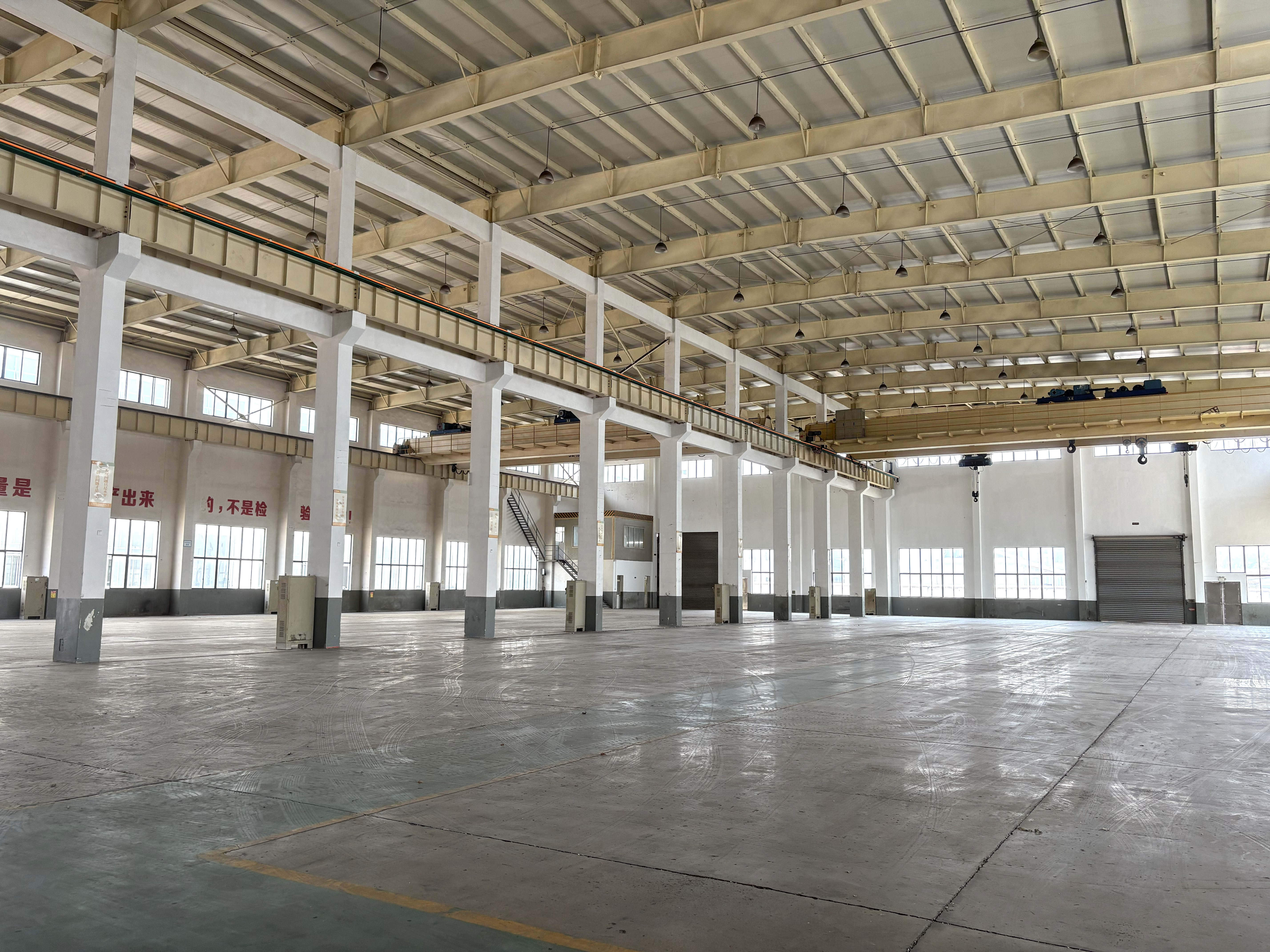
Zonzsin's new factory building (3113 m²) in Shanghai, China.
In a cost-benefit comparison, Zonzsin's automatic line delivers the following measurable advantages over alternatives such as ATW and LEAD INTELLIGENT:
- Optimized space utilization: The system reduces the floor area needed for battery pack assembly, lowering facility and material-handling costs.
- 20% cycle time improvement: More packs can be produced in a given time compared to conventional line configurations.
- 50% manpower saving: Automation replaces repetitive manual operations, directly reducing the largest variable operating cost.
- 20% price saving: Under an equivalent scope, the Zonzsin line is priced 20% lower than alternatives from ATW and LEAD INTELLIGENT.
- Customized line integration: Unlike standardized products, Zonzsin supports tailored integration to meet specific cell dimensions, process orders, and factory layouts.
- Long-term unit cost reduction: Although the initial investment is higher than a pure manual assembly setup, efficiency and yield gains decrease the cost per pack over the line's lifetime.
- Maintenance support: The line is designed for maintainability, with technical personnel, periodic calibration, spare parts management, and remote support available.
These characteristics make Zonzsin's line particularly suitable for medium-to-high volume production lines and PACK assembly scenarios that demand high consistency and yield.
Step-by-Step: How to Compare Automatic Battery Pack Assembly Line Proposals
To translate the cost-benefit analysis into a procurement decision, use the following six-step framework.
Step 1: Define Your Cell and Pack Architecture
Confirm whether your product roadmap uses CTP (cells integrated directly into pack) or MTP (cells assembled into modules first). Confirm the cell format (e.g., 280Ah, 314Ah), mechanical dimensions, busbar layout, and pack structure, because these determine the line's handling, welding, and testing stations.
Step 2: Estimate Production Volume and Available Floor Space
Medium-to-high volume production justifies a fully automatic line. If your annual output is low, a semi-automatic line with manual stations may offer a faster payback. Zonzsin's line is designed for medium-to-high volume settings that require consistent, repeatable output.
Step 3: Model Total Cost of Ownership (TCO)
Include capital expenditure, installation, operator wages, floor space, energy consumption, scrap and rework costs, and maintenance. A 20% cycle time improvement and 50% manpower saving can shift the unit cost curve significantly. Calculate the expected cost per pack for each supplier configuration over a 5-10 year horizon.
Step 4: Evaluate Customization Capability
Check whether the supplier can integrate your specific requirements, such as unique cell carriers, laser welding process parameters, AGV interfaces, or customized testing protocols. Zonzsin's core difference from ATW and LEAD INTELLIGENT is its support for tailored line integration per specific requirements.
Step 5: Inspect Safety and Quality Controls
Battery pack assembly involves high-voltage components and lithium cells, so safety is a non-negotiable part of the line design. Look for protective design and interlocks, safety sensors, ESD grounding/protection, and dedicated test stations. Process risk assessment and testing should be part of the supplier's quality system.
Step 6: Request a Project-Level Quote and Payback Estimate
Compare quotes that include the line layout, cycle time simulation, list of deliverables, and assumptions on yield and labor. A credible payback calculation must be based on your specific production volume and cell design, not on generic industry averages.
Use Cases: Matching the Line Configuration to Your Project
Large-Scale ESS Production with 314Ah Prismatic Cells
Stationary energy storage projects are moving to 314Ah large prismatic cells. A CTP line eliminates module assembly and improves the volumetric utilization of the pack, which helps meet energy density targets. Zonzsin offers CTP automatic battery assembly production lines that can be engineered for 314Ah cell dimensions.
EV Traction Battery Packs with High-Volume Quality Requirements
Automotive OEMs require extremely low defect rates on weld joints, seal integrity, and electrical isolation. An automatic line with tight process control and in-line testing provides the consistency needed for high-volume EV production. The cycle time improvement directly contributes to meeting production targets with fewer parallel lines.
Flexible Multi-Model Pack Production
MTP modular battery pack assembly systems retain the module stage, making it easier to switch between different pack designs and cell formats on the same line. This architecture suits suppliers that handle multiple vehicle platforms or a mix of EV and ESS products.
Greenfield Plant or Full Capacity Expansion
For a new factory, a complete turnkey CTP lithium battery pack factory line reduces integration risk. One supplier responsible for the entire line ensures that conveyors, robots, welding stations, test equipment, and MES/ERP interfaces work together. Turnkey solutions also shorten the time from equipment delivery to production ramp-up.
Comparison Table: CTP vs MTP vs Turnkey Architecture
| Architecture | Integration level | Space utilization | Production flexibility | Typical best-fit | Automation complexity |
|---|---|---|---|---|---|
| CTP (cell-to-pack) | Cells assembled directly into the pack; no separate module assembly stage | High, reduces module handling and pack volume | Lower, since cell-to-pack design is more specialized | Standardized high-volume packs, especially ESS and EV with one main cell format | High, requires precise cell handling and alignment |
| MTP (module-to-pack) | Cells are grouped into modules first, then modules are assembled into the pack | Moderate, because module housings occupy additional space | Higher, easier to adapt to multiple pack designs on one line | Low-to-mid volume production or multi-product factories | Moderate, with additional module assembly stations |
| Turnkey line | Complete line from cell intake to finished pack output, implemented as one integrated solution (can be CTP or MTP based) | Optimized for the specified factory layout | Dependent on the chosen architecture and supplier customization | New plants, major capacity expansion, or manufacturers lacking in-house line integration expertise | Managed end-to-end by the supplier; higher initial integration effort |
Comparison Table: Zonzsin vs ATW and LEAD INTELLIGENT
| Comparison point | Zonzsin automatic battery pack assembly line |
|---|---|
| Customized line integration | Distinct advantage; supports tailored line integration for specific requirements |
| Price vs alternatives | 20% price saving compared to alternatives such as ATW and LEAD INTELLIGENT |
| Manpower requirement | 50% manpower saving |
| Space utilization | Optimized space utility |
| Cycle time | 20% cycle time improvement |
| Target production profile | Medium-to-high volume lines; assembly scenarios requiring high consistency and yield |
| Operational support | Maintenance by technical personnel; periodic calibration; spare parts management; remote support |
| Upfront investment vs manual line | Higher than pure manual solutions; long-term per-unit cost may decrease due to efficiency and yield gains |
FAQ
What safety features are included in Zonzsin's automatic battery pack assembly lines?
Zonzsin implements protective design and interlocks, safety sensors, and ESD grounding/protection in its assembly lines. The company also performs process risk assessment and testing at dedicated test stations. For global market access, lithium-ion battery packs typically need to meet international safety standards such as IEC 62133-2, and UL 1642 / UL 2054 for North America.
What technical advantages does Zonzsin's line offer over ATW and LEAD INTELLIGENT?
Zonzsin's automatic battery pack assembly lines provide optimized space utilization and a 20% cycle time improvement. They are designed for medium-to-high volume production and packs requiring high consistency and yield. Compared to ATW and LEAD INTELLIGENT, Zonzsin supports customized line integration tailored to specific requirements.
Is Zonzsin's line more cost-effective than ATW and LEAD INTELLIGENT?
Compared to these alternatives, Zonzsin offers 20% price saving and 50% manpower saving. The initial investment is higher than pure manual solutions, but long-term per-unit cost may decrease due to efficiency and yield gains. The specific payback period depends on the project and should be calculated with a detailed quote. To get a project-level estimate, download the Zonzsin product brochure or contact the sales team for a tailored cost analysis.
Download the Zonzsin Product Brochure
Review detailed specifications of Zonzsin automatic battery pack assembly lines, including CTP and MTP configurations. Download brochure (PDF).
Conclusion
When choosing an automatic battery pack assembly line for EV or ESS applications, buyers should compare total cost of ownership, not just the initial equipment price. The market shift toward CTP technology and 314Ah prismatic cells makes architecture compatibility, space efficiency, and customization capability decisive factors. Zonzsin's automatic lines combine a 20% cycle time improvement, 50% manpower saving, and optimized space utilization with tailored line integration, offering a measurable value advantage for medium-to-high volume production. Start the evaluation by downloading the brochure and requesting a project-level quote.
Have Questions or Need More Details?
Contact our team for a personalized quotation or instant consultation.
Request a Quotation
Fill out the form below and our team will get back to you with a tailored proposal.
WhatsApp Direct Chat
Prefer to chat in real-time? Message us on WhatsApp for instant assistance & quick answers.
- Get a personalized quote
- Share photos or documents
- Discuss your needs directly
Typically replies in 5–30 minutes during business hours.