
Automatic Battery Pack Assembly Lines: CTP, MTP and Turnkey Basics
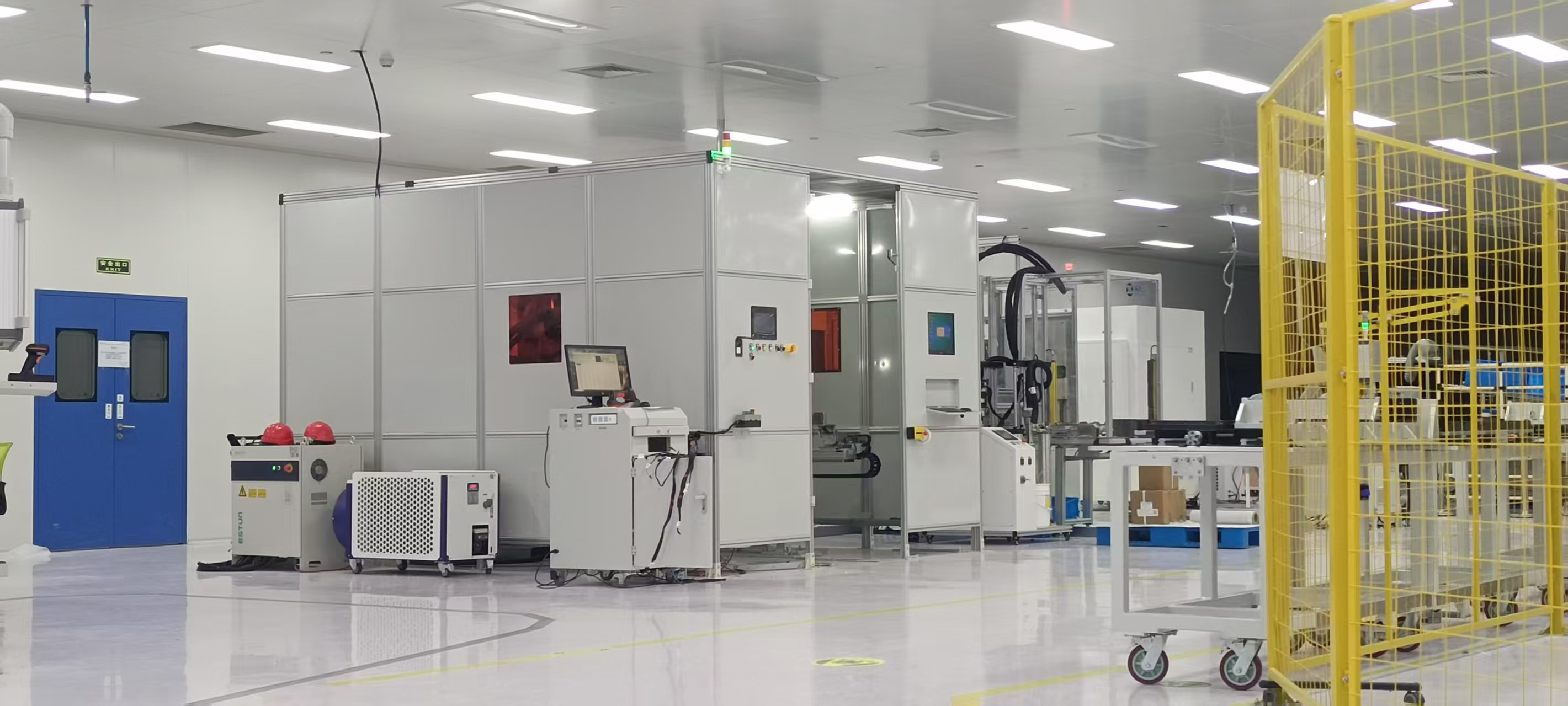
Automatic Battery Pack Assembly Lines: CTP, MTP and Turnkey Basics
For EV and ESS manufacturing teams, the term automatic battery pack assembly line usually appears early in the search for production equipment. But moving from awareness to meaningful supplier research requires more than knowing that such lines exist. Buyers also need to understand cell-to-pack (CTP), module-to-pack (MTP), blade cell configurations, turnkey scope, and why the 314Ah format has changed assembly planning.
This article is written as a discovery and early research reference. It explains what an automatic battery pack assembly line does, why the category is important now, how model-level documentation helps buyers compare options, and what information should be prepared before contacting a supplier.
Why Automatic Battery Pack Assembly Lines Matter in Current EV and ESS Markets
The first reason the category deserves close attention is the speed of CTP adoption. ResearchInChina reported that by 2023, CTP technology was integrated into nearly half of new energy vehicles sold in China, with the number of CTP-equipped models rising from 13 models in 2021 to 57 models by late 2023.
The market-level trend is also visible in industry projections. Spherical Insights valued the global cell-to-pack battery market at USD 18.35 billion in 2023 and projected it to reach USD 75.93 billion by 2033. Separately, MarketsandMarkets expected the battery manufacturing equipment market to grow at a CAGR of 18.8% from 2025 to 2030, reaching USD 36.94 billion.
For procurement and engineering teams, these signals point to a practical shift: pack assembly lines are no longer simple conveyor systems. They are increasingly designed around specific cell formats, pack architectures, quality targets, and facility constraints.
What Is an Automatic Battery Pack Assembly Line?
An automatic battery pack assembly line is a production system in which cells and pack components are brought together through a sequence of orienting, assembling, joining, testing, and inspection operations. A complete line may include station tooling, fixtures, laser equipment, vision inspection systems, assembly stations, and testing stations.
In the documentation used for this article, battery pack assembly line products are typically built from Q235 carbon steel and are intended for applications such as EV industry, energy storage, automotive OEMs, and commercial and industrial energy storage projects.
The operating environment matters in the same way as the machine itself. Typical documented conditions include indoor industrial assembly-line use, standard factory conditions, continuous or shift-based production, and semi-automatic or fully automatic operation. Control is often managed through touch screens and program control systems. Standard project requirements may include ESD protection, fire prevention measures, temperature and humidity control, cleanliness control, and pack-specific fixture adaptation.
Industry Background: Reading CTP, MTP, and Turnkey Terms
Battery pack architecture determines how an assembly line is laid out. In module-to-pack (MTP) production, cells are first formed into modules, and modules are then assembled into the final pack. Cell-to-pack (CTP) production removes or reduces the module layer, placing cells more directly into the pack envelope. CTP can improve energy density by reducing structural parts and may shorten some assembly steps, but it increases the importance of cell handling precision, insulation, and testing.
For prismatic cells, the industry has also moved quickly toward large-format products. Industry reporting associated with Highstar and InfoLink noted that the market shifted from the previous 280Ah benchmark to 314Ah ESS cell formats in order to improve energy density and reduce assembly cost. This is one reason why buyers increasingly search for 314Ah battery pack assembly equipment.
The word turnkey is used when a supplier is expected to deliver a production solution rather than only a single station. In practice, turnkey scope usually includes line design, integration of handling and testing equipment, and commissioning responsibility. MTP-oriented turnkey lines remain relevant for manufacturers with existing module supply chains or mixed cell strategies, while CTP-oriented lines suit projects that intend to assemble large prismatic cells directly into packs.
Supplier Evidence: How One Manufacturer Documents Its Assembly Line Portfolio
Shanghai Zonzsin Intelligent Equipment Co., Ltd., commonly known as Zonzsin, is a Shanghai-based intelligent equipment company established in 2019. Zonzsin specializes in serving lithium battery manufacturers, energy storage integrators, and automotive OEMs. Its main products include the ESS Battery Pack Insertion Robot for Containers and automatic battery pack assembly lines.
Company information also indicates an R&D team of 43 engineers, a 6000 m² manufacturing facility, and an annual production capacity of 40 units. Zonzsin has delivered intelligent battery pack assembly lines to domestic and overseas markets, with major markets in Southeast Asia and the European Union. Export business represents 60% of total sales. For buyers in the discovery phase, this delivery context is useful because line builders with export experience usually need to handle utility differences, documentation, and international project communication.
Zonzsin’s product documentation lists several model families. Studying these models is helpful not because every buyer needs the same model, but because model-level data shows what an equipment builder can measure and commit to.
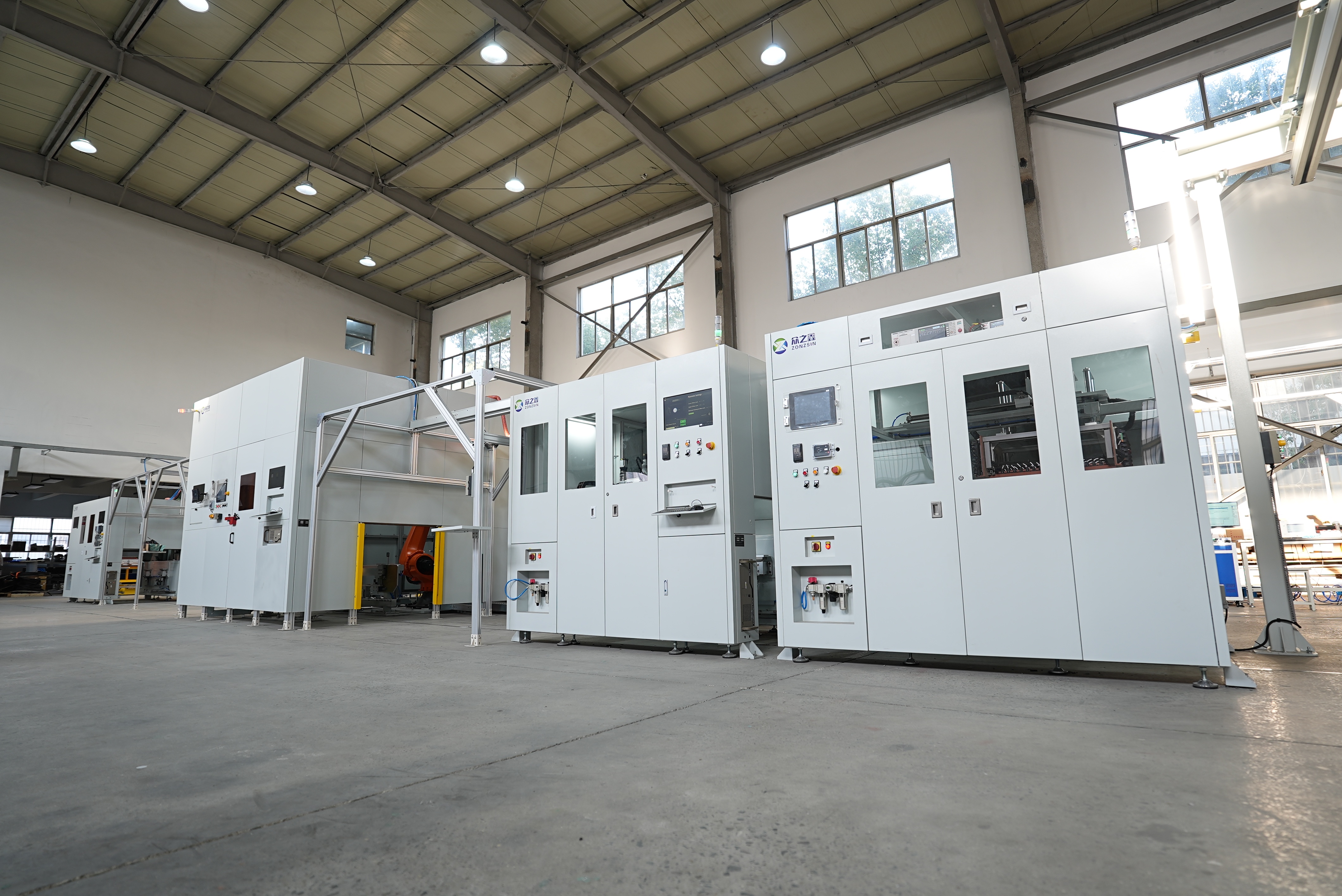
CTP Battery Pack Assembly Line: Model ZZX2406
ZZX2406 is one of the model-level products identified in the material supplied for this article. It is formally classified as a CTP battery pack assembly line. The documented line dimensions are 58000 × 11000 × 3800 mm, which gives buyers an early indication of required floor space.
The line specification includes a cycle time of 4 PPM and a semi-automatic operating mode. The technology direction is CTP, and the line is documented for battery cells such as 314Ah and 587Ah. The pack configuration listed is 1P96S. Typical application areas include energy storage, EV manufacturing, and commercial and industrial use. As with other Zonzsin lines, the primary structural material is Q235 carbon steel.
Blade Battery Pack Assembly Line: Model ZZX2501
ZZX2501 is documented as a Blade battery pack assembly line. Its material is carbon steel/Q235, and its electrical requirement is AC 380V ±10%, 50+0.5 Hz. Compressed air is specified at 0.6 to 0.8 MPa. The documented cycle time is 6 PPM, with a pack assembly time of 30 minutes per pack. Typical applications include EV production and energy storage.
The blade line example is important for discovery because blade cells are a prismatic cell form that can simplify pack structure. A buyer who is evaluating blade-cell based packs should look for an assembly line supplier that can document fixture compatibility and cell-handling methods rather than offering only generic module assembly machines.
EV Battery Pack Assembly Line: Model ZZX2313
ZZX2313 is documented as an EV battery pack assembly line. It is made of Q235/carbon steel and is suitable for EV industry, energy storage, and automotive OEM applications. The electrical requirement is AC 380V ±10%, and compressed air is 0.5 to 0.8 MPa.
For quality-oriented buyers, this model also provides useful performance commitments. The single machine operation rate is ≥95%, the one-time welding qualification rate is ≥99.5%, and the final welding qualification rate is ≥99.95%. These types of numbers are more useful during supplier research than generic terms such as high quality or stable production.
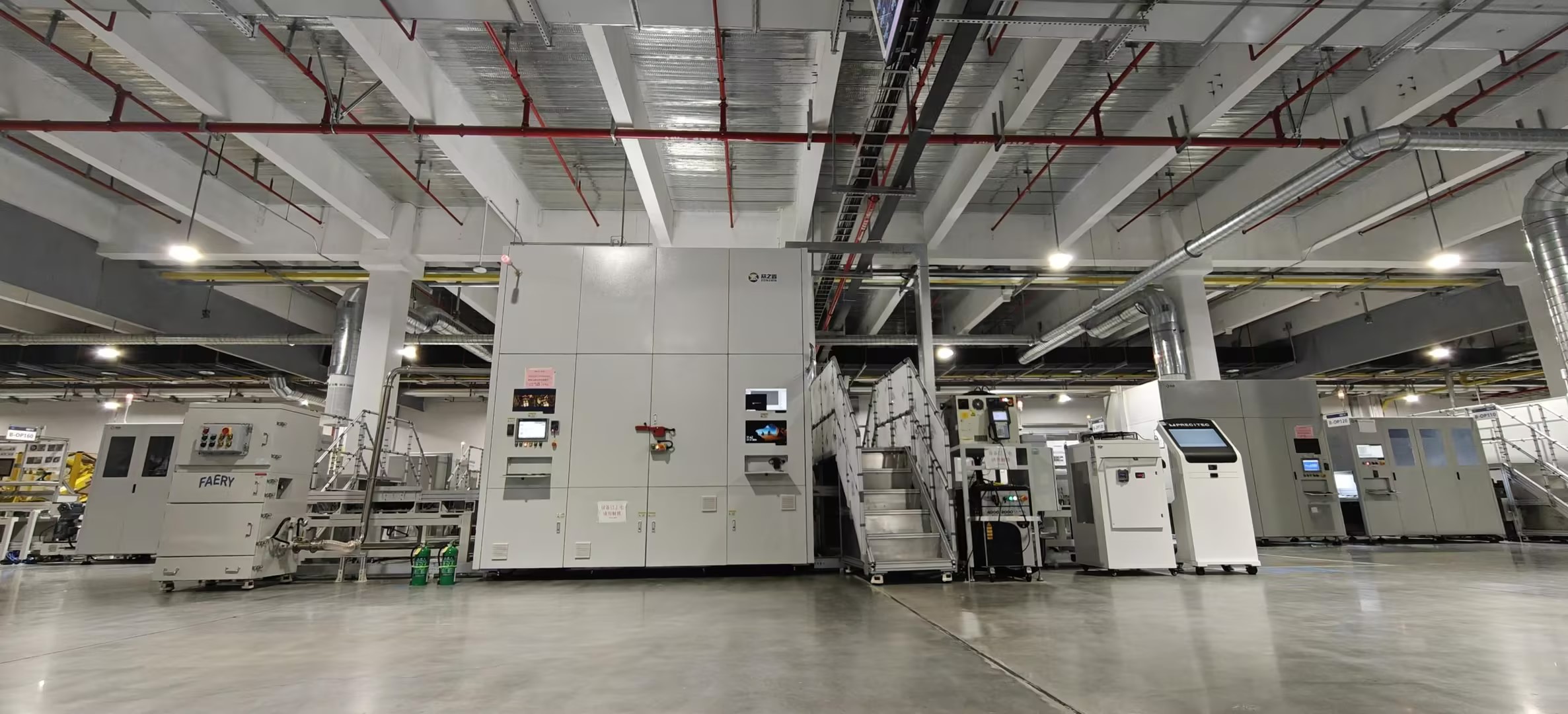
Step-by-Step: How to Scope an Automatic Battery Pack Assembly Line
In the Awareness and Research stages, buyers often ask what information should be gathered before they request a quotation. A structured scoping process helps reduce ambiguity.
- Define the pack architecture. Decide whether the project is CTP, MTP, blade-cell based, or a hybrid strategy. This single decision changes the line configuration significantly.
- Confirm cell format and pack grouping. If the project uses large prismatic cells, record whether they are 314Ah, 587Ah, or another format and whether the pack is 1P96S or different. A line must be matched to cell geometry and pack layout.
- Choose the automation level. Semi-automatic lines are suitable for some EV and C&I projects; fully automatic lines are often preferred for high-volume continuous production. Touch screen control and program control are common documented features.
- Define throughput and quality targets. Look for line-level numbers such as cycle time in PPM, single machine operation rate, and welding qualification rates. These metrics help buyers compare different proposals.
- Identify supporting equipment. Vision inspection, fixtures, tooling, laser equipment, assembly stations, and testing stations are often part of the complete line ecosystem. The line scope should state which of these elements are included.
- Review facility conditions. Confirm available electrical supply, compressed air pressure, floor dimensions, ESD protection, temperature and humidity control, cleanliness requirements, and fire prevention measures.
- Ask about delivery evidence. A supplier should be able to show which industries it has served and whether it has shipped lines to markets such as Southeast Asia or the European Union.
Use Cases and Application Environments
Documented application scenarios for automatic battery pack assembly lines include EV industry manufacturing, energy storage system integration, automotive OEM production, and commercial and industrial energy storage projects. In each case, the line operates in an indoor standard factory setting and may run continuous or shift-based production.
One specifically documented project scenario is India, where battery pack assembly projects may require the same types of supporting equipment used in other regions. For India-based integrators, early questions should include logistics, voltage compatibility, installation support, and whether the line layout fits the local factory.
From a functional perspective, automatic battery pack assembly lines for EV and BESS projects are used for the physical assembly of battery packs. The operation mode can be semi-automatic or fully automatic. Program-controlled touch screens are normally used to manage the assembly sequence. Because pack compatibility and fixture adaptation are listed as special requirements, buyers should plan to share pack drawings and cell dimensions early.
Comparison Table: Documented Line Families at a Glance
The following table compares the documented model families used in this article. It does not rank suppliers; it is intended to show how line documentation can help buyers ask more precise questions.
| Line category | Documented model | Typical applications | Key documented characteristics |
|---|---|---|---|
| CTP battery pack assembly line | ZZX2406 | Energy storage; EV and C&I | CTP technology; 314Ah and 587Ah cells; 1P96S pack; 4 PPM; semi-automatic; 58000 × 11000 × 3800 mm |
| Blade battery pack assembly line | ZZX2501 | EV industry; energy storage | 6 PPM; 30 min/PACK; AC 380V ±10%, 50+0.5 Hz; compressed air 0.6–0.8 MPa; Q235 material |
| EV battery pack assembly line | ZZX2313 | EV industry; energy storage; automotive OEMs | Single machine operation rate ≥95%; one-time welding qualification ≥99.5%; final welding qualification ≥99.95%; AC 380V ±10% |
For a proprietary manufacturing line, these models should be treated as documented starting points rather than interchangeable catalogue products. The final line still needs to be adapted to the project’s pack architecture and factory environment.
Standards and Compliance Context for Battery Pack Production
Assembly equipment is only part of the compliance story. Lithium-ion battery packs themselves must satisfy international safety requirements for shipment and market access. UL Solutions documentation identifies IEC 62133-2 for global market access, and UL 1642 or UL 2054 for North America. Pack assembly lines should therefore include the testing and traceability steps needed to support these pack-level standards.
Beyond pack safety standards, buyers should review how the line builder documents factory conditions, welding quality, utility interfaces, and station-level test procedures. In an earlier research stage, it is often more valuable to ask for line parameter sheets than to rely on marketing descriptions.
Frequently Asked Questions
What is an automatic battery pack assembly line?
An automatic battery pack assembly line is a production system that assembles lithium-ion cells, structural components, busbars, insulation and related parts into complete battery packs. It is used by lithium battery manufacturers, energy storage integrators, and automotive OEMs. Typical supporting equipment includes vision inspection systems, fixtures and tooling, laser equipment, assembly stations, and testing stations.
What does CTP mean in battery pack assembly?
CTP stands for cell-to-pack. It means cells are integrated into the battery pack with fewer module-level components than older pack designs. In the product documentation used here, the ZZX2406 line is classified as a CTP battery pack assembly line and supports 314Ah and 587Ah cells. CTP has become especially visible because it was integrated into nearly half of new energy vehicles sold in China by 2023, according to ResearchInChina.
How is MTP different from CTP?
MTP stands for module-to-pack. In an MTP process, cells are first made into modules, and modules are then assembled into a pack. CTP reduces that intermediate step. The choice between MTP and CTP depends on cell format, pack design, supply agreements, and whether the project already has module-level production capacity.
Why is 314Ah relevant to battery pack assembly equipment?
The industry has moved from the previous 280Ah benchmark toward 314Ah formats for ESS battery packs. The change improves energy density and can reduce assembly cost. A CTP assembly line that documents support for 314Ah cells gives buyers a more direct starting point for large-prismatic ESS pack projects.
What should a discovery-phase buyer do after comparing line models?
The most useful next step is to share the planned cell format, pack configuration, target cycle time, factory utilities, and required automation level with the line supplier. For projects evaluating Zonzsin lines, the company’s product brochure and contact channels are available for further technical discussions.
Ready to discuss your battery pack assembly line project?
You can download the Zonzsin product brochure here: Zonzsin Battery Pack Assembly Line Brochure.
For a direct inquiry, contact Katty Liu at katty.liu@zonzsin.com or via WhatsApp at +86 134-8282-9368.
Conclusion
Discovery in battery production equipment should be evidence-based. Automatic battery pack assembly lines are not generic purchases; they reflect decisions about CTP or MTP architecture, prismatic cell format, supporting equipment, quality targets, and factory conditions.
For EV and ESS project teams, the practical starting point is to define the pack architecture, then look for suppliers that can document their line performance and delivery experience. Models such as ZZX2406, ZZX2501 and ZZX2313 from Shanghai Zonzsin Intelligent Equipment Co., Ltd. provide concrete examples of CTP, blade, and EV pack assembly line categories. In a research phase, these documented parameters are more valuable than broad claims because they can be examined, compared, and aligned with project requirements.
Have Questions or Need More Details?
Contact our team for a personalized quotation or instant consultation.
Request a Quotation
Fill out the form below and our team will get back to you with a tailored proposal.
WhatsApp Direct Chat
Prefer to chat in real-time? Message us on WhatsApp for instant assistance & quick answers.
- Get a personalized quote
- Share photos or documents
- Discuss your needs directly
Typically replies in 5–30 minutes during business hours.