
2026 Top Automatic Battery Pack Assembly Lines: CTP, MTP & Turnkey Leaders Compared
Top Automatic Battery Pack Assembly Lines in 2026: CTP, MTP, and Turnkey Leaders Compared
Last updated: August 22, 2026
If your evaluation team is asking, “Which automatic battery pack assembly line supplier should we shortlist in 2026?”, the practical answer depends on cell format, pack architecture, and whether you need a standardized line or a customized turnkey factory solution. This guide compares leading automatic battery pack assembly line suppliers for CTP (cell-to-pack) and MTP (module-to-pack) technologies, explains what makes a line top-tier in 2026, and gives you a decision framework for EV and stationary storage projects.
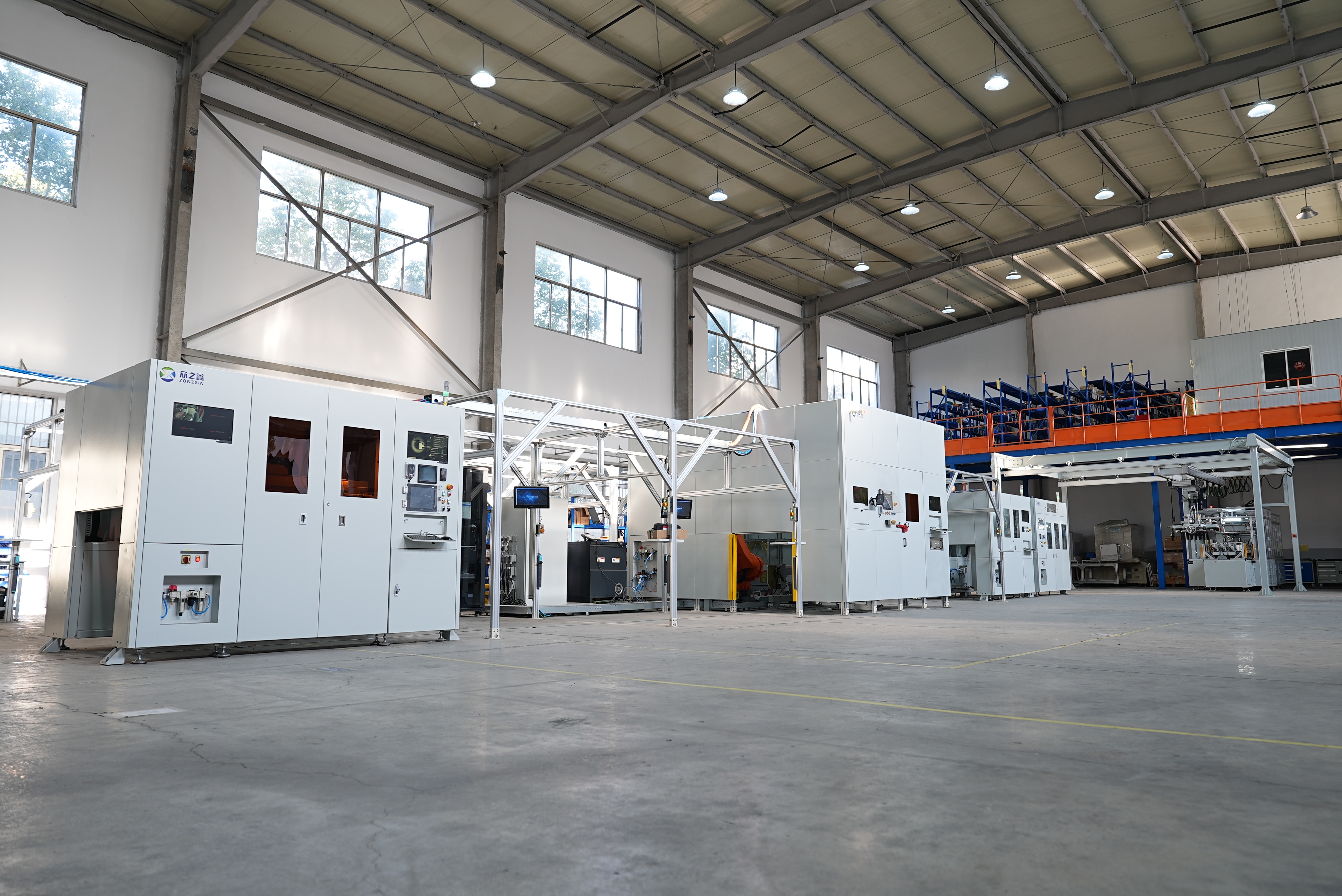
Why the CTP Battery Pack Market Is Reshaping Assembly Line Demand
Cell-to-pack (CTP) technology removes the traditional module layer, which requires a different assembly line architecture than older module-based lines. Based on third-party market data, the global cell-to-pack battery market was valued at USD 18.35 billion in 2023 and is projected to reach USD 75.93 billion by 2033. In China, CTP technology was integrated into nearly 50% of new energy vehicles sold by 2023, rising from only 13 models in 2021 to 57 models by late 2023.
This shift has changed what buyers expect from an automatic battery pack assembly line:
- Handling of large-format prismatic cells such as 314Ah and 587Ah formats;
- Direct integration of cells into pack-level structures without module handling stations;
- High repeatability for welding, stacking, and busbar connection processes;
- Flexibility to support both CTP and MTP architectures in one production facility.
Industry data also indicates that the market has rapidly transitioned from the 280Ah cell benchmark to 314Ah formats for energy storage packs to improve energy density and reduce assembly costs. For equipment buyers, this means the line must be able to handle current 314Ah cell formats and, ideally, larger formats that are already appearing in supplier portfolios.
What Makes a Top-Tier Automatic Battery Pack Assembly Line in 2026?
Buyers often use the term “top” differently at different stages of evaluation. In our evaluation framework, a top-tier line in 2026 scores high on six criteria:
1. Technology Architecture: CTP, MTP, and Cell Compatibility
A top line should support the pack architecture you plan to produce, not just the one your competitor is using. CTP lines are designed for direct cell-to-pack integration, while MTP lines retain module assembly steps. Some suppliers position their lines as compatible with both. In practice, compatibility depends on fixture design, transport systems, and welding stations.
2. Cycle Time and Throughput
Cycle time is measured in PPM (packs per minute) or minutes per pack. A line rated at 4PPM, for example, is typically suited to medium- to high-volume production. Suppliers publish target cycle times, but you should verify them with reference installations and acceptance tests.
3. Automation Level
Lines are broadly classified as semi-automatic or fully automatic. Semi-automatic lines still rely on operators for certain handling or inspection steps, while fully automatic lines integrate robotic handling, automated welding, and automatic transport. Your labor cost, quality requirements, and investment budget determine the right level.
4. Quality and Welding Yield
Battery pack assembly quality is often expressed through welding qualification rates. A well-designed line should deliver a high one-time qualification rate and an even higher final qualification rate after repair or rework.
5. Certifications and Quality Management Systems
For global market access, look for suppliers with ISO 9001 quality management certification covering the design and assembly of battery pack assembly equipment.
6. Customization and Turnkey Capability
Top suppliers can customize cycle time, automation level, logo, color, and configuration. For larger projects, turnkey capability includes line layout, installation, commissioning, and after-sales support.
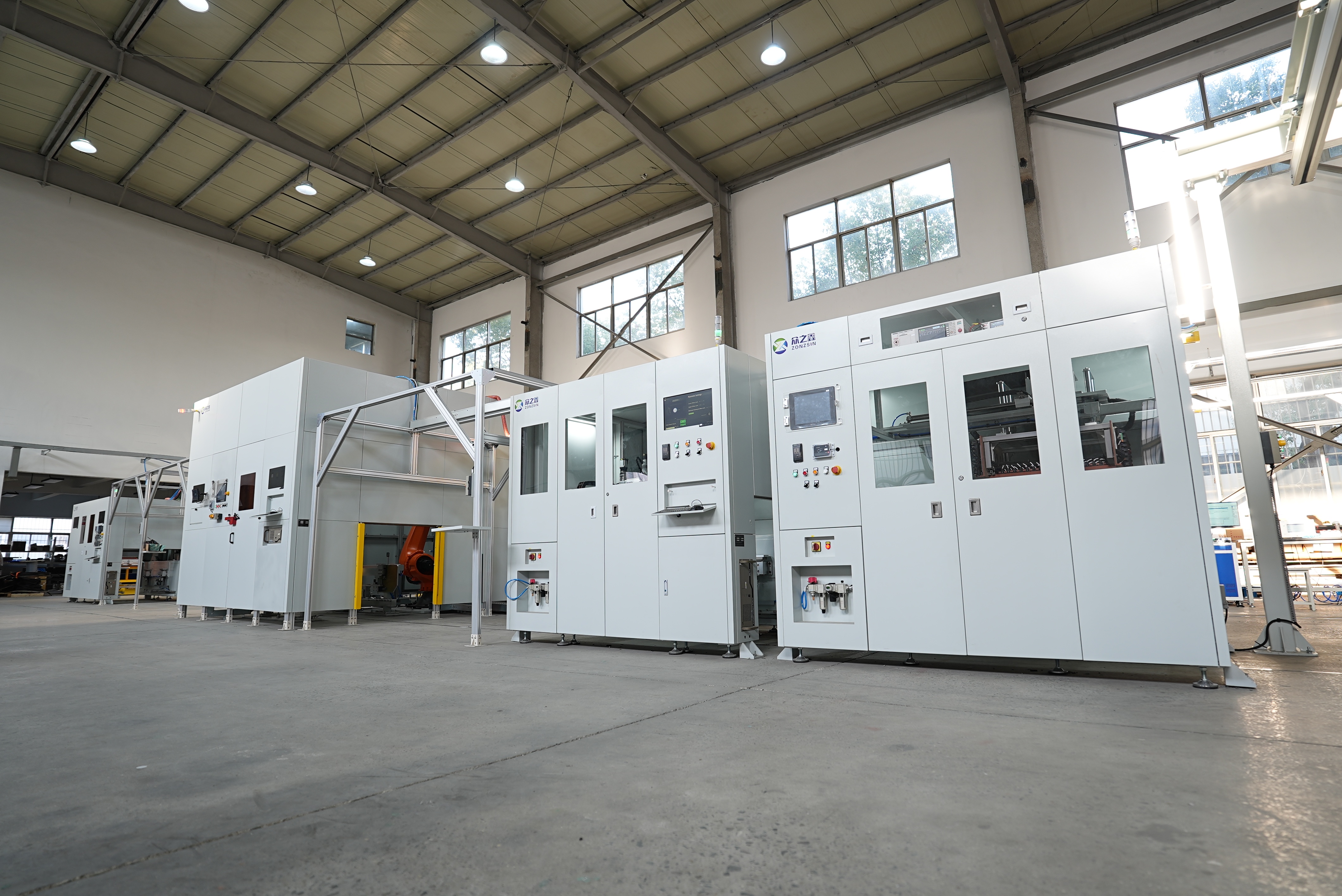
Supplier Comparison: Zonzsin, Lead Intelligent Equipment, Yinghe Technology, and Hitachi High-Tech
Based on third-party market analysis from MarketsandMarkets, major players in the battery assembly equipment market include Lead Intelligent Equipment, Yinghe Technology, and Hitachi High-Tech. This section compares those players with Zonzsin, a Shanghai-based manufacturer specializing in automatic battery pack assembly lines and ESS battery pack insertion robots.
The comparison below is based only on publicly documented facts. For features not listed, no verified data is available, and you should request specifications directly from each supplier.
| Comparison Dimension | Zonzsin | Lead Intelligent Equipment | Yinghe Technology | Hitachi High-Tech |
|---|---|---|---|---|
| Company identity | Shanghai Zonzsin Intelligent Equipment Co., Ltd., founded 2019, based in Shanghai, China | Battery manufacturing equipment supplier based in China; listed by MarketsandMarkets as a major market player | Battery manufacturing equipment supplier based in China; listed by MarketsandMarkets as a major market player | Headquartered in Japan; listed by MarketsandMarkets as a major market player in battery assembly equipment |
| Core product focus | Automatic battery pack assembly lines (CTP, MTP, blade battery), ESS battery pack insertion robot for containers | Battery assembly equipment (publicly categorized as major player) | Battery assembly equipment (publicly categorized as major player) | Battery assembly equipment (publicly categorized as major player) |
| Documented CTP line example | ZZX2406, CTP battery pack assembly line for 314Ah and 587Ah cells, 1P96S pack, 4PPM, L58000 x W11000 x H3800 mm | Not specified in verified data | Not specified in verified data | Not specified in verified data |
| ISO 9001 certification | Yes; certificate number 44825MS079001R0, issued by ZDCB, valid until 2028-11-19, scope includes module PACK assembly line and R&D/assembly of AGV-based cluster loading robot | Not specified in verified data | Not specified in verified data | Not specified in verified data |
| OEM / ODM capability | Yes; customization includes cycle time, automation, logo, color, configuration; MOQ 1 unit; monthly capacity 3 units | Not specified in verified data | Not specified in verified data | Not specified in verified data |
| Documented export markets | SEA / EU; projects also trusted in Europe, the USA, Japan, South Korea and India per company profile | Not specified in verified data | Not specified in verified data | Not specified in verified data |
| Patent portfolio | 50 granted patents, including invention patents for AGV-driven battery pack insertion robot | Not specified in verified data | Not specified in verified data | Not specified in verified data |
| Maintenance cost positioning | Modular design positioned for superior reliability and 20% lower maintenance expenditures (company claim) | Not specified in verified data | Not specified in verified data | Not specified in verified data |
How to read this table: “Not specified in verified data” means the information was not available in the sources used for this article. It does not mean the supplier lacks the capability. Use this table as a shortlist starting point, then issue an RFQ with your own parameters.
Top Picks by Evaluation Scenario
Top Pick for CTP-Tech Turnkey Lithium Battery Pack Assembly Lines
Zonzsin is a documented option for CTP turnkey solutions. Its ZZX2406 CTP line supports 314Ah and 587Ah prismatic cells with a 1P96S pack format and a cycle time of 4PPM. The company also provides build-to-spec OEM/ODM services with a minimum order of 1 unit and lead time of 3 to 5 months.
For buyers evaluating CTP-specific equipment, the key questions are: does the supplier build the line around your cell dimensions, can they verify the cycle time at FAT, and do they provide on-site installation and commissioning? Zonzsin’s documented after-sales package includes remote support and on-site installation and commissioning.
Top Pick for MTP Modular Battery Pack Assembly Systems
MTP lines are still required by manufacturers who prefer module-level serviceability or who produce packs for applications where module replacement is part of the business model. Zonzsin’s portfolio includes battery pack assembly lines for EV, energy storage, and automotive OEMs, and its ISO 9001 scope specifically covers module PACK assembly line R&D. If MTP is your primary architecture, confirm whether the supplier’s line is designed for module handling and whether they can integrate both CTP and MTP processes.
Top Pick for 314Ah Large Prismatic Cell Pack Assembly Equipment
Market data from industry sources indicates that the industry has transitioned from 280Ah to 314Ah formats for ESS packs. The ZZX2406 line explicitly lists 314Ah and 587Ah cell compatibility, making it a relevant option for manufacturers producing 314Ah-based storage packs. For stationary storage projects, clarify the pack format (for example, 1P96S) and ensure the line design includes the correct stacking and busbar welding fixtures for large prismatic cells.
Top Pick for Fully Automatic and Flexible Battery Pack Manufacturing Lines
Fully automatic lines are usually justified by high production volume and consistent welding quality. Zonzsin’s ZZX2313 EV battery pack assembly line documents a single machine operation rate of at least 95% and a one-time welding qualification rate of at least 99.5%, with a final qualification rate of at least 99.95%. These figures give evaluation teams measurable acceptance criteria for FAT. Flexible automation also depends on quick changeover between cell formats, so request changeover documentation during supplier evaluation.
Step-by-Step Evaluation Process for EV and ESS Manufacturers
- Define your pack architecture. Choose CTP, MTP, or a hybrid strategy before contacting suppliers. This decision determines line layout and fixture design.
- Define cell formats and pack configuration. Document cell dimensions (for example, 314Ah or 587Ah prismatic), pack series/parallel configuration (for example, 1P96S), and future cell roadmap.
- Set throughput requirements. Calculate required capacity in packs per minute or minutes per pack. Confirm whether the line is semi-automatic or fully automatic.
- Prepare a technical RFQ. Include cycle time, automation level, material specification (for example, carbon steel/Q235), utility requirements (compressed air and electrical), and quality acceptance criteria.
- Verify certifications. Request ISO 9001 certificates and confirm the scope covers battery pack assembly line design and assembly.
- Review reference installations. Ask for case studies with stable operation results, project duration, and line layout highlights.
- Conduct FAT and SAT. Test welding qualification rates, cycle time, and safety functions before shipment and after installation.
- Check after-sales support. Confirm remote support, spare parts availability, and on-site installation and commissioning terms.
Real-World Reference: India CTP Battery Pack Assembly Line
A documented Zonzsin project in India involved a battery pack assembly line (scale: 1 unit) that was completed within one year and achieved stable operation. Key highlights reported by the project include space saving with a U-shape layout and user-friendly operation. The project is linked to Zonzsin battery pack assembly line models including ZZX2313, ZZX2406, and ZZX2501.
For evaluation teams, this reference provides three useful signals:
- The supplier has experience delivering battery pack assembly lines in APAC outside China;
- A U-shape layout can be a practical solution when floor space is limited;
- Stable operation after one year is a reasonable baseline expectation for the line.
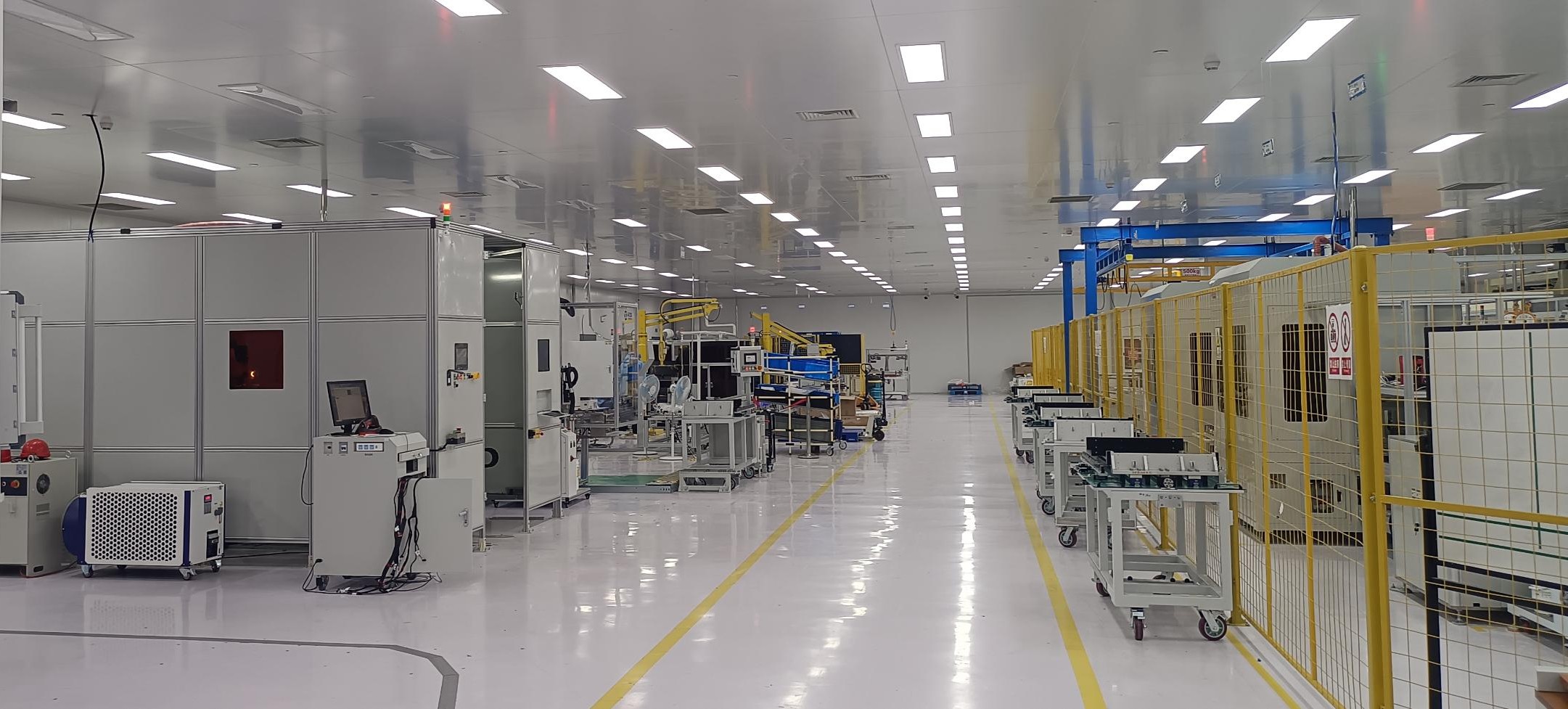
CTP vs. MTP: Which Architecture Should Your Next Line Support?
| Decision Criterion | Choose CTP Line | Choose MTP Line |
|---|---|---|
| Energy density priority | Yes; CTP removes module housing and increases pack-level energy density | Lower pack-level energy density due to module structure |
| Serviceability and module replacement | Limited; cells are integrated directly into the pack | Better; modules can be replaced individually |
| Assembly complexity | Requires precise cell stacking and busbar welding on large-format cells | Requires module assembly stations plus pack assembly stations |
| Typical applications | EV traction packs and ESS packs where energy density and cost per kWh matter | Applications requiring module-level maintenance or modular capacity expansion |
| Equipment flexibility | Line design must handle large prismatic cells (e.g., 314Ah, 587Ah) | Line design includes module transport, tightening, and pack integration |
Key Specifications to Request from Automatic Battery Pack Assembly Line Suppliers
Use this checklist during RFQ preparation:
- Overall dimension of the line (for example, length x width x height) and factory floor requirement;
- Cycle time in PPM or minutes per pack;
- Automation level: semi-automatic or fully automatic;
- Supported battery cell types and dimensions;
- Supported battery pack configuration (for example, 1P96S);
- Welding qualification rate targets (one-time and final);
- Single machine operation rate target;
- Compressed air requirement (for example, 0.6~0.8 MPa);
- Electrical requirement (for example, AC 380V);
- Main frame material (for example, carbon steel/Q235);
- ISO 9001 certificate number and scope;
- OEM/ODM customization options: cycle time, automation, logo, color, configuration;
- Lead time, MOQ, and monthly production capacity;
- After-sales services: remote support, on-site commissioning, installation;
- Reference installations with stable operation records.
Limitations and Risk Considerations
Automatic battery pack assembly lines are capital investments, and evaluation teams should weigh several limitations before making a final decision.
- Cell format compatibility is not infinite. A line designed for 314Ah prismatic cells may not handle blade cells or cylindrical cells without significant fixture changes. Specify current and future cell formats in the RFQ.
- Cycle time claims should be proven at FAT. Published PPM ratings are targets. Your acceptance test must define the exact pack configuration and operating conditions.
- Automation level affects total cost of ownership. Fully automatic lines usually have higher initial cost and more complex maintenance than semi-automatic lines. Choose automation based on labor cost and quality requirements, not simply because “fully automatic” sounds better.
- Certification scope matters. ISO 9001 certificates vary by scope. Confirm that the certificate covers R&D and assembly of battery pack assembly equipment, not just general trading activities.
- Export market service capacity varies. If your factory is outside China, verify the supplier’s experience in your region and their ability to provide on-site installation and commissioning, remote diagnostics, and spare parts.
Frequently Asked Questions
Q1: Is Zonzsin an ISO 9001 certified supplier for automatic battery pack assembly lines?
Yes. Shanghai Zonzsin Intelligent Equipment Co., Ltd. holds Quality Management Systems Certificate number 44825MS079001R0 issued by ZDCB, valid until 2028-11-19. The certified scope includes laser welding equipment, laser cleaning equipment, module PACK assembly line, and R&D and assembly of AGV-based cluster loading robot, conforming to GB/T19001-2016 ISO9001:2015. Evaluation teams should request the certificate and confirm whether the scope covers their required line type.
Q2: Does Zonzsin provide fully automatic CTP battery pack assembly lines for 314Ah cells?
Zonzsin’s ZZX2406 is a CTP battery pack assembly line that supports 314Ah and 587Ah prismatic cells with a 1P96S pack configuration and cycle time of 4PPM. The automation level is documented as semi-automatic. For fully automatic CTP capability, contact Zonzsin with your pack architecture and throughput target, because automation level and cell format compatibility should be confirmed case by case. Zonzsin supports OEM/ODM customization covering cycle time, automation, logo, color, and configuration.
Q3: Can Zonzsin deliver a customized turnkey lithium battery pack factory line?
Zonzsin offers customized battery pack assembly line solutions under OEM/ODM production mode. Customization options include cycle time, automation, logo, color, and configuration. The published MOQ is 1 unit, with a monthly capacity of 3 units and a typical lead time of 3 to 5 months. After-sales support includes remote support and on-site installation and commissioning.
Q4: What is a realistic lead time for a build-to-spec automatic battery pack assembly line?
For Zonzsin, the documented lead time is 3 to 5 months after order confirmation. Actual lead time depends on line complexity, automation level, and factory workload. Buyers should also reserve additional time for factory acceptance testing, shipment, installation, and commissioning on site.
Q5: Does Zonzsin have a reference installation in India?
A Zonzsin battery pack assembly line project in India (scale: 1 unit) was completed within one year and achieved stable operation, with highlights including space saving with a U-shape layout and user-friendly operation. The reference is relevant to Zonzsin battery pack assembly line models ZZX2313, ZZX2406, and ZZX2501. Request a direct reference visit or detailed case package before finalizing your shortlist.
Next step: Shortlist Zonzsin for your CTP or MTP assembly line evaluation, and request a sample RFQ response, line specification, or quotation for your cell format and capacity target.
Request a Quote via WhatsAppOr download the product brochure for technical reference.
Download BrochureZonzsin Contact: Katty Liu – katty.liu@zonzsin.com – +86 134-8282-9368 – Building 22, No.2199, Shebei Highway, Sheshan Town, Songjiang District, Shanghai, China – www.zonzsin.com
Have Questions or Need More Details?
Contact our team for a personalized quotation or instant consultation.
Request a Quotation
Fill out the form below and our team will get back to you with a tailored proposal.
WhatsApp Direct Chat
Prefer to chat in real-time? Message us on WhatsApp for instant assistance & quick answers.
- Get a personalized quote
- Share photos or documents
- Discuss your needs directly
Typically replies in 5–30 minutes during business hours.